





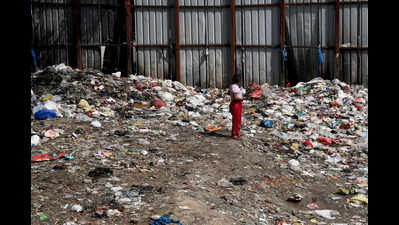
New Delhi: Painting a grim picture of neglect, railway tracks across the national capital are lined by charred waste, discarded plastic and rotting debris line.Recently, Municipal Corporation of Delhi (MCD), along with Indian Railways, had launched a special sanitation drive to remove garbage from railway tracks, focusing on clearing construction and demolition (C&D) debris, lifting legacy waste and improving overall cleanliness in vulnerable areas.However, dumping of garbage continues unabated in most areas, undermining the clean-up efforts. An inspection of the railway tracks presented a mixed picture, with several stretches found in a deplorable condition – strewn with garbage and debris — and others relatively cleaner and better maintained.A spot visit by TOI on Thursday afternoon to areas near railway tracks in Kishanganj, Azadpur, Sabzi Mandi and Daya Basti revealed heaps of waste. At Kishanganj, burnt clothes, plastic and debris were scattered across the tracks. Concrete sleepers and overgrown vegetation stood amid charred remains, indicating instances of open burning. The tracks run parallel to unauthorised houses, and several residents could be seen hanging clothes close to the area.A 54-year-old railway maintenance staff member highlighted the challenges faced while carrying out his duties, saying garbage from nearby clusters invariably accumulates along the tracks.“I have to maintain the tracks and check that no nut or bolt is loose for the smooth running of trains. Due to the garbage, I first have to remove the waste with my hands… It feels very dirty, but it is my job. Some workers do come to clean the area, but they often shift the garbage from one side to another. It is not a proper solution,” he told TOI, not wishing to be named.In Azadpur, with informal settlements coming up along the tracks, litter could be seen scattered along the rail corridor. Towering residential buildings in the background highlight the stark contrast between rapid urban development and the grim living conditions near the tracks.Amar Singh, a 45-year-old who stays in the area with his family, said although large amounts of garbage have been cleared over time, indiscriminate dumping remains a major concern. “People going to their offices often throw household waste along the tracks. Some even consume alcohol here, which worsens the problem,” he said.Acknowledging that cleanliness drives were underway and the situation had improved in some areas, residents noted that sustained efforts and public cooperation were necessary.Similarly, near Sabzi Mandi station, waste and discarded materials blanketed the sides of operational railway lines beneath overhead electric wires. Children were seen walking and playing near open dumping grounds, underscoring the environmental and health risks faced by residents living in the vicinity.In contrast, the area near the railway track in Daya Basti appeared relatively cleaner compared to other locations. Although some garbage was visible, the stretch showed noticeable improvement and better maintenance.Authorities claim significant progress has been made. An MCD official said the sanitation drive is currently underway and will continue for the next three years. “We are committed to cleaning the tracks on a sustained basis. The garbage had accumulated over time due to a lack of regular cleaning, but the process is now in progress. All remaining and previously inaccessible stretches will also be cleared in the coming years,” the official said.According to MCD, the initiative has covered nearly 103km, with about 18,500 metric tonnes of legacy waste removed. So far, 49.7km of garbage-affected tracks have been cleared across 123 stretches. The civic body stated that inaccessible tracks were cleaned using 20 railway bogies in Karol Bagh zone while the railway stretch from Azadpur to Badli has been completely cleared.To support the operation, authorities deployed 550 sanitation workers, 34 tippers, 14 rickshaws, 28 trucks, 11 JCBs, nine refuse compactors and seven other vehicles. Additionally, 61 twin bins were installed along these stretches to discourage dumping by residents of nearby jhuggi clusters.