











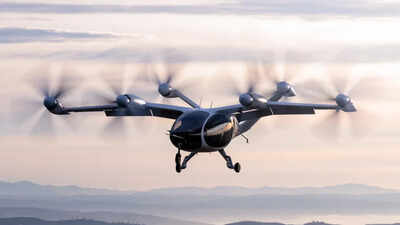
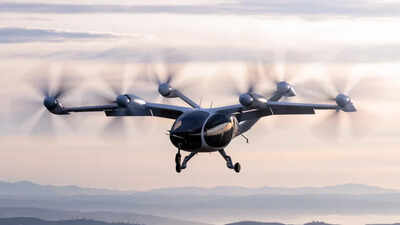
The US Federal Aviation Administration (FAA) is stepping up efforts to support the deployment of air taxis, supersonic passenger aircraft, drones and commercial space launches, as it looks to modernise aviation regulations and accelerate the adoption of next-generation technologies.Speaking to Reuters at the Farnborough International Airshow, FAA deputy administrator Chris Rocheleau said the agency was working to streamline certification and regulatory processes while allowing companies greater flexibility to innovate.“We want to make sure that we’re not being too prescriptive in those standards, and that we’re letting the industry drive the innovation,” Rocheleau said.
FAA using pilot programme to prepare for air taxi rollout
The FAA launched an electric vertical take-off and landing (eVTOL) Integration Pilot Program last year to help manufacturers begin deploying the new class of aircraft.The programme involves eight partner companies across 26 US states, with data gathered from the trials expected to support future certification efforts.“The whole idea behind this is to take this new technology, these new aircraft, and put them into the national airstream in a safe and efficient manner,” Rocheleau said.Air taxi developers are racing to obtain regulatory approval for eVTOL aircraft, which are designed to take off and land vertically and could eventually be used for short urban trips and airport transfers, offering an alternative to congested roads.Archer Aviation CEO Adam Goldstein compared the rollout of air taxis to Google’s self-driving vehicle programme.“I think the world has learned a lot in how the autonomous vehicles have launched,” Goldstein told Reuters.He said the FAA’s pilot programme would allow companies to introduce the technology gradually.“The FAA pilot program gives the eVTOL industry the ability to roll this out to a couple cities in a confined area that we can kind of work through the kinks in the system,” Goldstein said.
Industry working towards commercial operations
The push comes as aviation companies continue efforts to bring electric air taxis into commercial service.According to CNBC, aerospace company Beta Technologies recently completed the first test flights under the US government’s eVTOL pilot programme, transporting manufactured organs between airports in Maryland and Virginia. The flights covered about 275 nautical miles.The pilot programme was launched under an executive order issued last year and covers eight projects across 26 states. Beta is currently participating in seven of those projects.The company expects certification of its conventional electric aircraft in 2027 and its eVTOL aircraft in 2028.Meanwhile, Archer Aviation, Beta Technologies and Macquarie Capital recently formed America’s Consortium for Electric Skyways (ACES) to develop charging infrastructure for electric aircraft.The consortium plans to establish up to 250 interoperable charging sites across major US airports and metropolitan areas over the next decade to support commercial eVTOL operations.
FAA also pushing to revive supersonic travel
Beyond air taxis, the FAA is also moving to pave the way for the return of commercial supersonic passenger flights.The agency proposed the first of two new rules in June to lift a ban imposed in 1973 on supersonic flights over land.A second proposal will define acceptable noise limits during take-off, landing and supersonic cruise, with both rules expected to be finalised by mid-2027.“We think the rules are old and outdated,” Rocheleau told Reuters.Once the regulatory framework is in place, aircraft manufacturers will still need to obtain certification from the FAA and other aviation regulators before supersonic passenger aircraft can enter commercial service.The era of regular commercial supersonic travel ended in 2003, when the Concorde fleet operated by Air France and British Airways was retired after 27 years in service.Alongside air taxis and supersonic aircraft, the FAA is also working to expand drone operations and support a growing number of commercial space launches as part of its broader push to integrate emerging aviation technologies into the US airspace system.