













The United States continued their impressive FIFA World Cup 2026 campaign with a controlled 2-0 victory over Australia at Seattle Stadium, securing qualification for the Round of 32 and ending a 96-year wait for consecutive victories at a men’s World Cup.Mauricio Pochettino’s side followed their emphatic 4-1 victory over Paraguay with another disciplined performance in Group D, defeating a dangerous Australian team through a first-half own goal from Cameron Burgess and a maiden World Cup strike from Alex Freeman. The result moved the co-hosts onto six points from two matches and guaranteed their place in the knockout rounds with a group game still to play.For the United States, the significance stretched beyond qualification. It marked the first time since the inaugural World Cup in 1930 that the USMNT had won their opening two matches at a men’s World Cup. Back then, the Americans defeated Belgium 3-0 and Paraguay 3-0 before eventually finishing third, which remains the nation’s best-ever World Cup result.
USA strike twice before half-time
The Americans started with confidence despite the absence of captain Christian Pulisic, who missed the match while continuing to manage a calf injury.Australia arrived in Seattle full of belief after their impressive 2-0 victory over Türkiye on Matchday One, but the United States quickly imposed themselves on proceedings through superior possession and movement.The breakthrough arrived in the 11th minute following a sharp attacking move down the right flank. Weston McKennie threaded an incisive pass into the path of Folarin Balogun, who burst into the right side of the penalty area. Under pressure from recovering defenders, Balogun drove a dangerous low ball across the six-yard box towards Yunus Musah arriving at the far post.Australian defender Cameron Burgess desperately attempted to intervene but could only divert the ball beyond his own goalkeeper. The deflection flew past Mat Ryan and into the roof of the net, handing the United States an early 1-0 advantage.

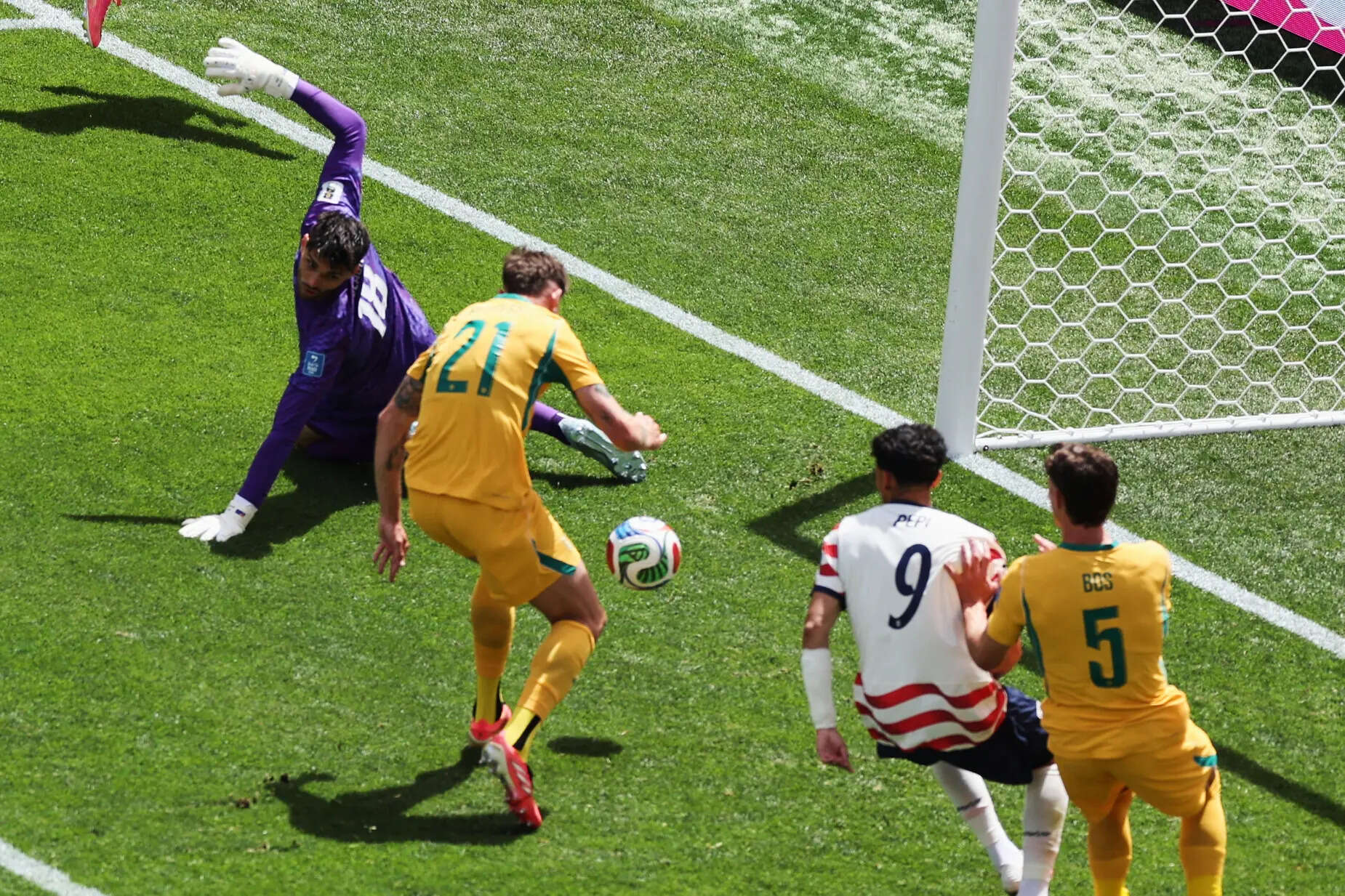
Australia’s Cameron Burgess (21) scores an own goal during the World Cup Group D soccer match between the United States and Australia in Seattle, Friday, June 19, 2026. (AP Photo/Maddy Grassy)
The goal settled the hosts and they continued to dictate the tempo. Their dominance was rewarded again shortly before the interval through sustained pressure following a set-piece sequence.Australia initially managed to clear a corner kick but only as far as Sergiño Dest on the edge of the penalty area. The full-back struck a powerful effort through a crowded penalty area, with the shot taking a significant deflection and looping high towards the back post.Alex Freeman reacted quickest. Timing his movement perfectly, the defender rose above his marker and powered a downward header from point-blank range beyond Ryan in the 43rd minute.

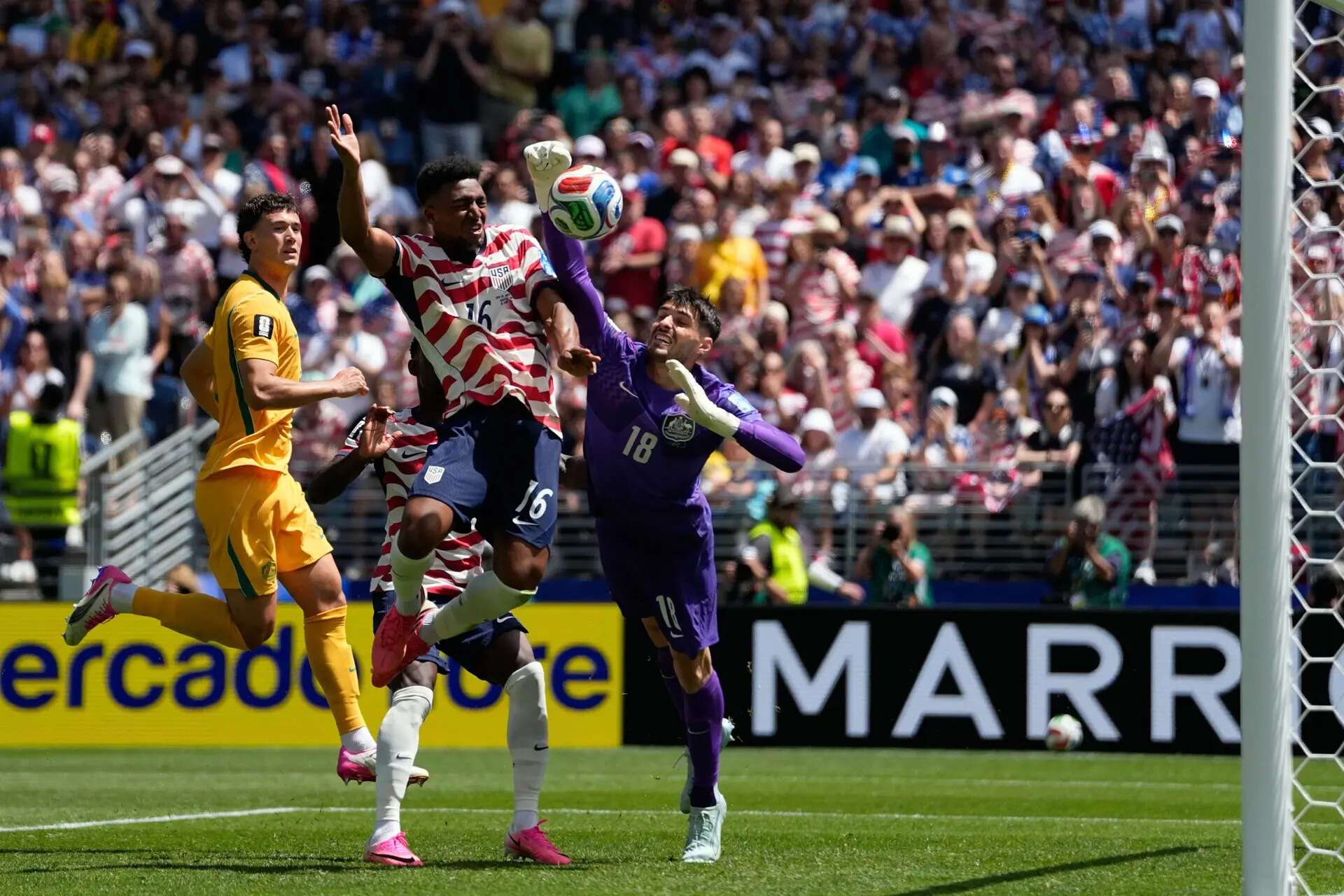
United States’ Alex Freeman, center, scores his side’s second goal past Australia goalkeeper Patrick Beach during the World Cup Group D soccer match between the United States and Australia in Seattle, Friday, June 19, 2026. (AP Photo/Lindsey Wasson)
A brief semi-automated VAR review checked for a potential offside infringement before the goal was confirmed, sending the United States into the break with a commanding 2-0 lead.

United States’ Alex Freeman (16), second left, celebrates after scoring his side’s second goal during the World Cup Group D soccer match between the United States and Australia in Seattle, Friday, June 19, 2026. (AP Photo/Manu Fernandez)
Australia respond but USA stand firm
The second half told a different story. Recognising the need for a response, Australia manager Tony Popovic altered both his shape and approach after the interval. The Socceroos emerged with greater urgency and immediately began pushing the United States deeper into their own half.Riley McGree and Jackson Irvine took control of midfield areas, helping Australia establish lengthy passing sequences and significantly increase their attacking threat. The Australians produced several of their best passages of football during this spell, moving the ball quickly and creating openings that had been absent during the first half.
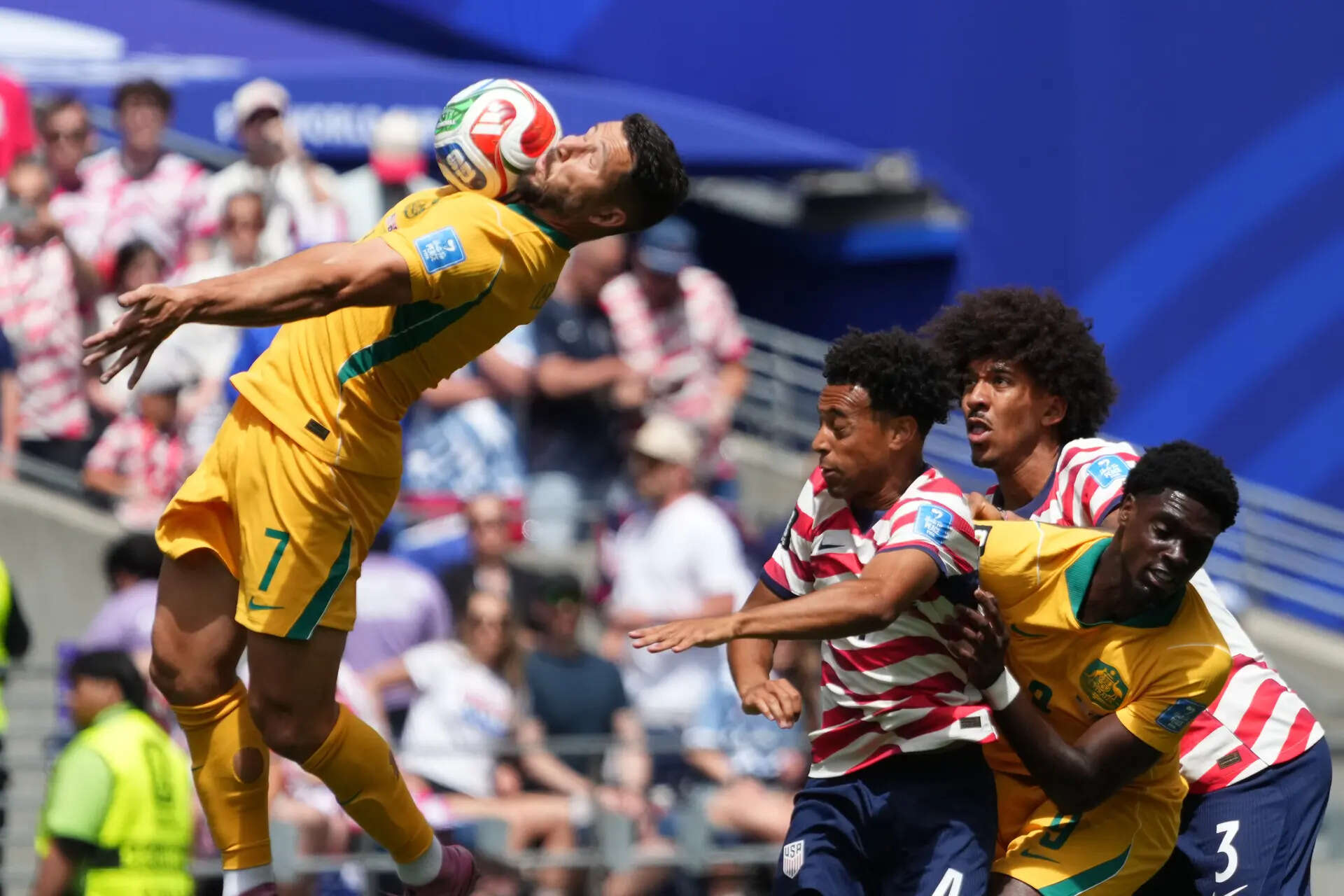
Australia’s Mathew Leckie (7) receives the ball during the World Cup Group D soccer match between the United States and Australia in Seattle, Friday, June 19, 2026. (AP Photo/Ted S. Warren)
Substitute Nestory Irankunda injected further energy into the attack. The young winger repeatedly troubled the American defence with his pace, twice beating his marker down the right wing before delivering dangerous low crosses across the face of goal.Australia’s clearest opening arrived in the 72nd minute. A slick passing move involving Irvine, McGree and Mitchell Duke carved directly through the centre of the American defence, but Duke’s final effort drifted agonisingly wide of the post.The Socceroos also threatened from set pieces, with Harry Souttar’s aerial presence creating problems inside the box. One towering header forced goalkeeper Matt Turner into an important fingertip save to preserve the clean sheet.
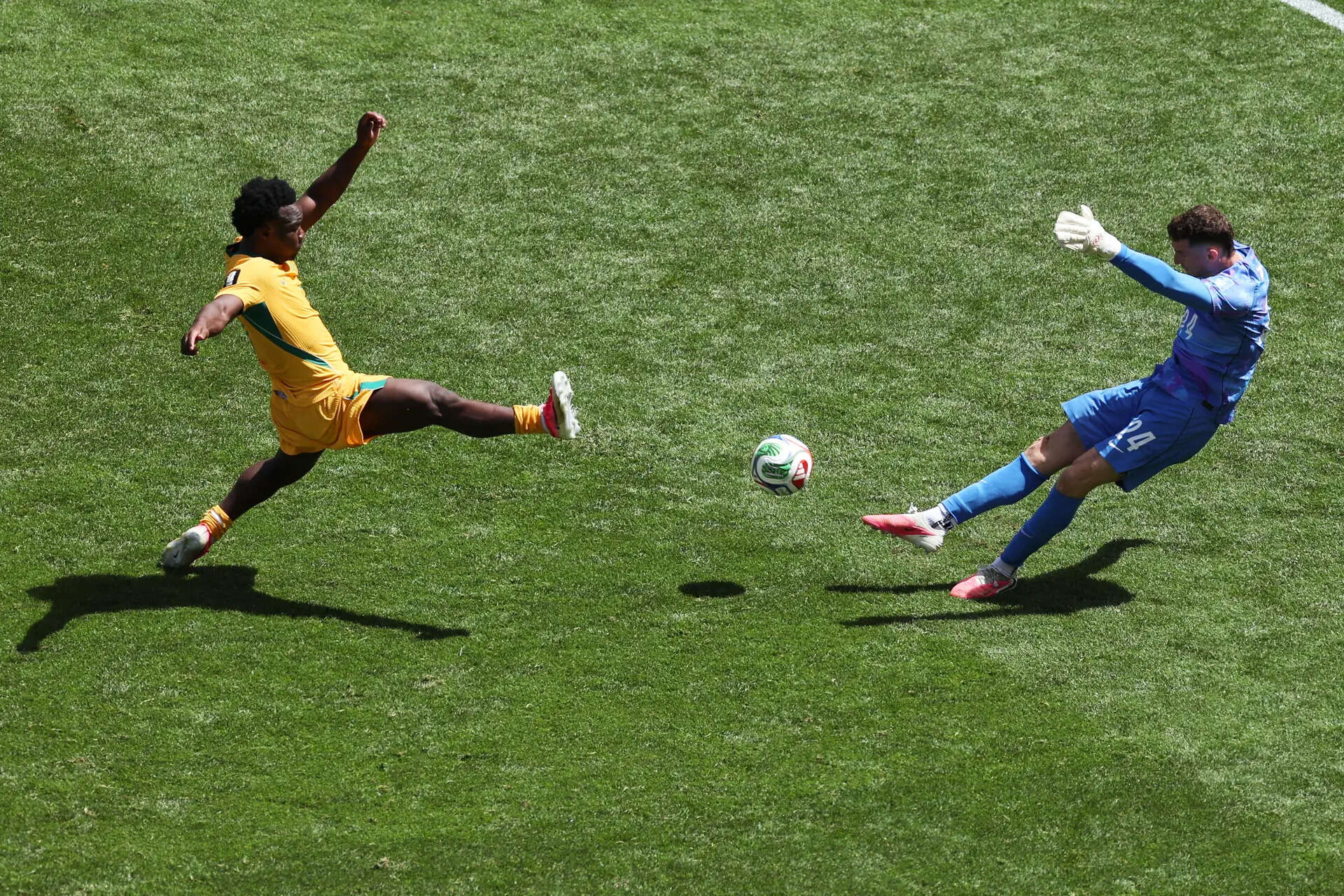
United States goalkeeper Matt Freese (24) clears the ball under pressure from Australia’s Nestory Irankunda (17) during the World Cup Group D soccer match between the United States and Australia in Seattle, Friday, June 19, 2026. (AP Photo/Maddy Grassy)
As the pressure mounted, the United States adopted a more defensive approach. Veteran defenders Tim Ream and Walker Zimmerman marshalled the back line effectively, helping the hosts absorb repeated Australian attacks during the closing stages.Frustration eventually boiled over in the 88th minute when Balogun and Souttar became involved in a heated confrontation, resulting in yellow cards for both players. The increasingly physical nature of the contest reflected Australia’s desperation to find a route back into the game.However, despite their improved second-half display, the Socceroos lacked the finishing touch required to alter the outcome. After six minutes of stoppage time, the final whistle confirmed a 2-0 victory for the hosts.
Historic milestone and Group D implications
The statistics reflected the United States’ overall control. The co-hosts finished with 63 per cent possession, completed 494 accurate passes compared to Australia’s 249, and outshot the Socceroos 8-5. Both sides registered two shots on target, but the Americans proved far more clinical in decisive moments.The victory sends the United States into the Round of 32 and places them firmly at the top of Group D. Australia remain alive heading into the final round of fixtures but now face a more complicated path to the knockout stages.

US fans during the World Cup Group D soccer match between the United States and Australia in Seattle, Friday, June 19, 2026. (AP Photo/Manu Fernandez)
For Pochettino’s side, though, this was about more than qualification. Ninety-six years after the United States recorded consecutive World Cup victories during the inaugural tournament in Uruguay, a new generation has finally matched that achievement. With qualification already secured and momentum building, the co-hosts are beginning to emerge as one of the more intriguing teams of the tournament.