






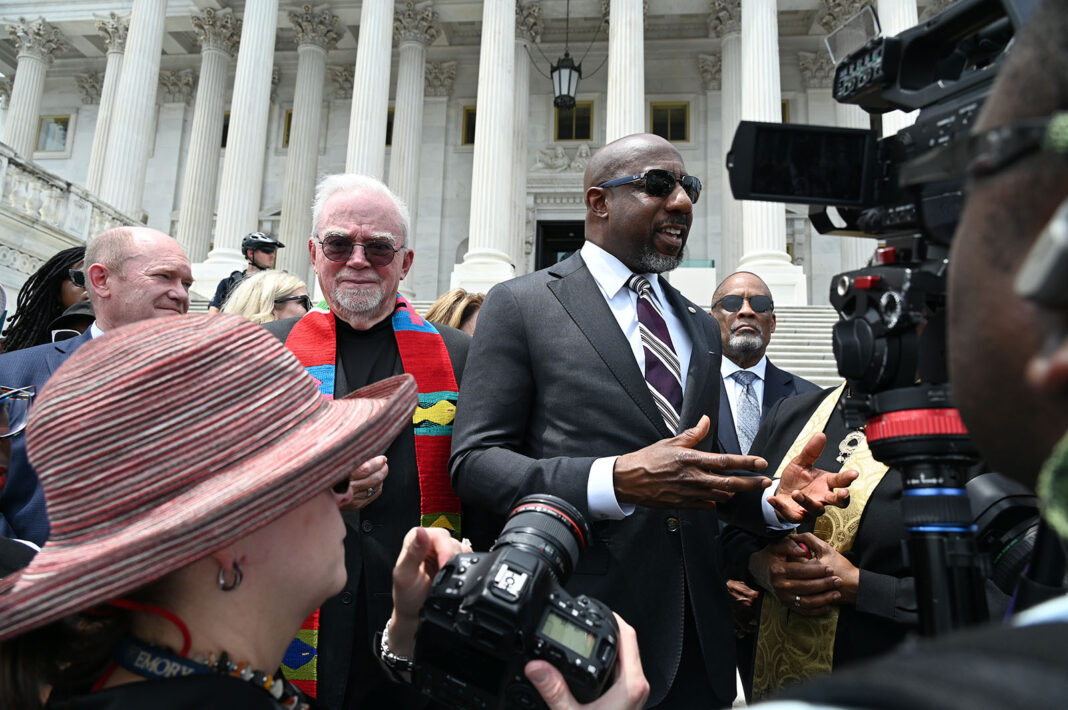
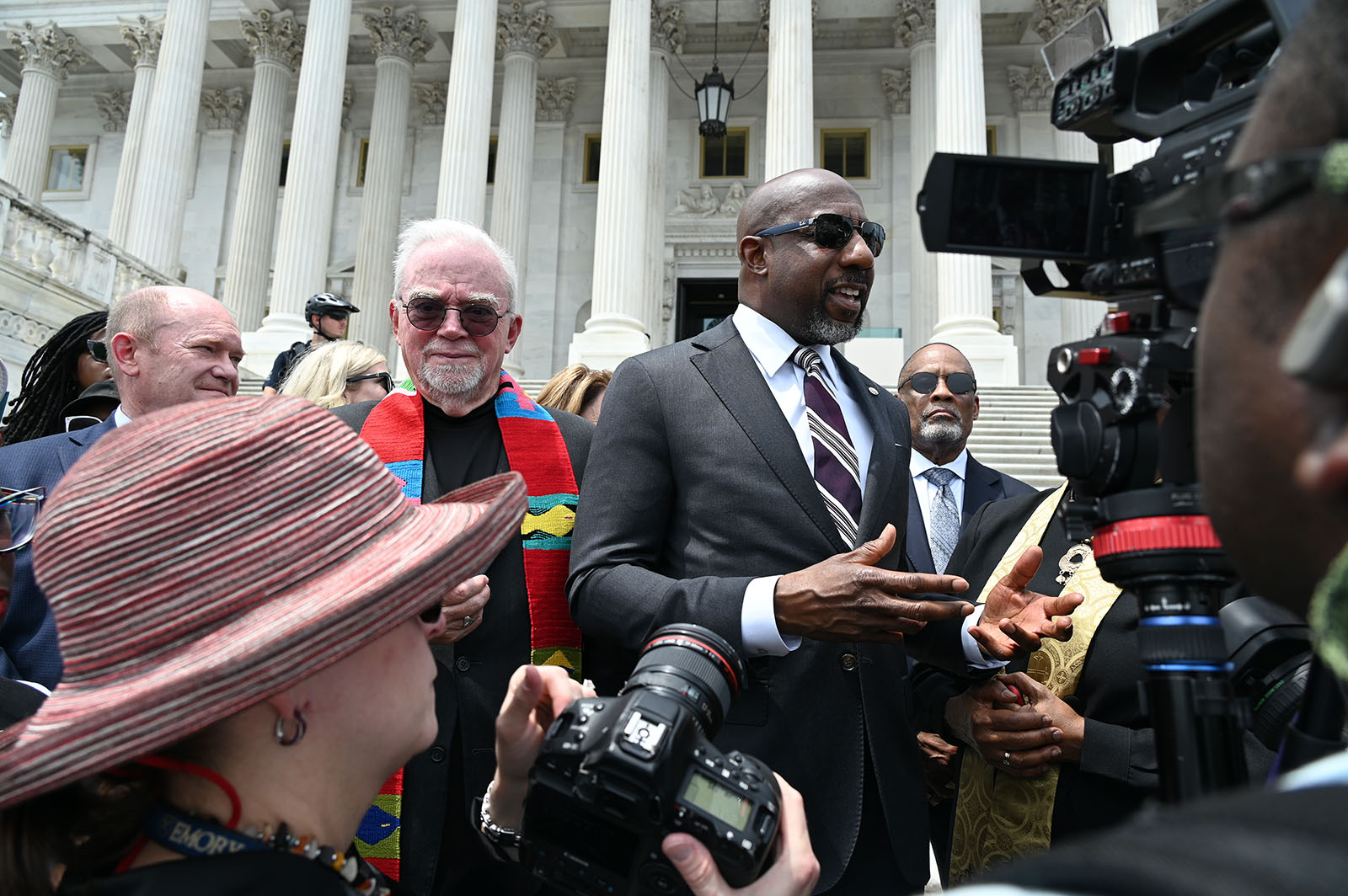
WASHINGTON (RNS) — When Sen. Raphael Warnock of Georgia walked into Speaker Mike Johnson’s office last month, the two men already held starkly different political views. By the time the meeting ended 30 minutes later, it was clear they also sit on different ends of the Christian spectrum.
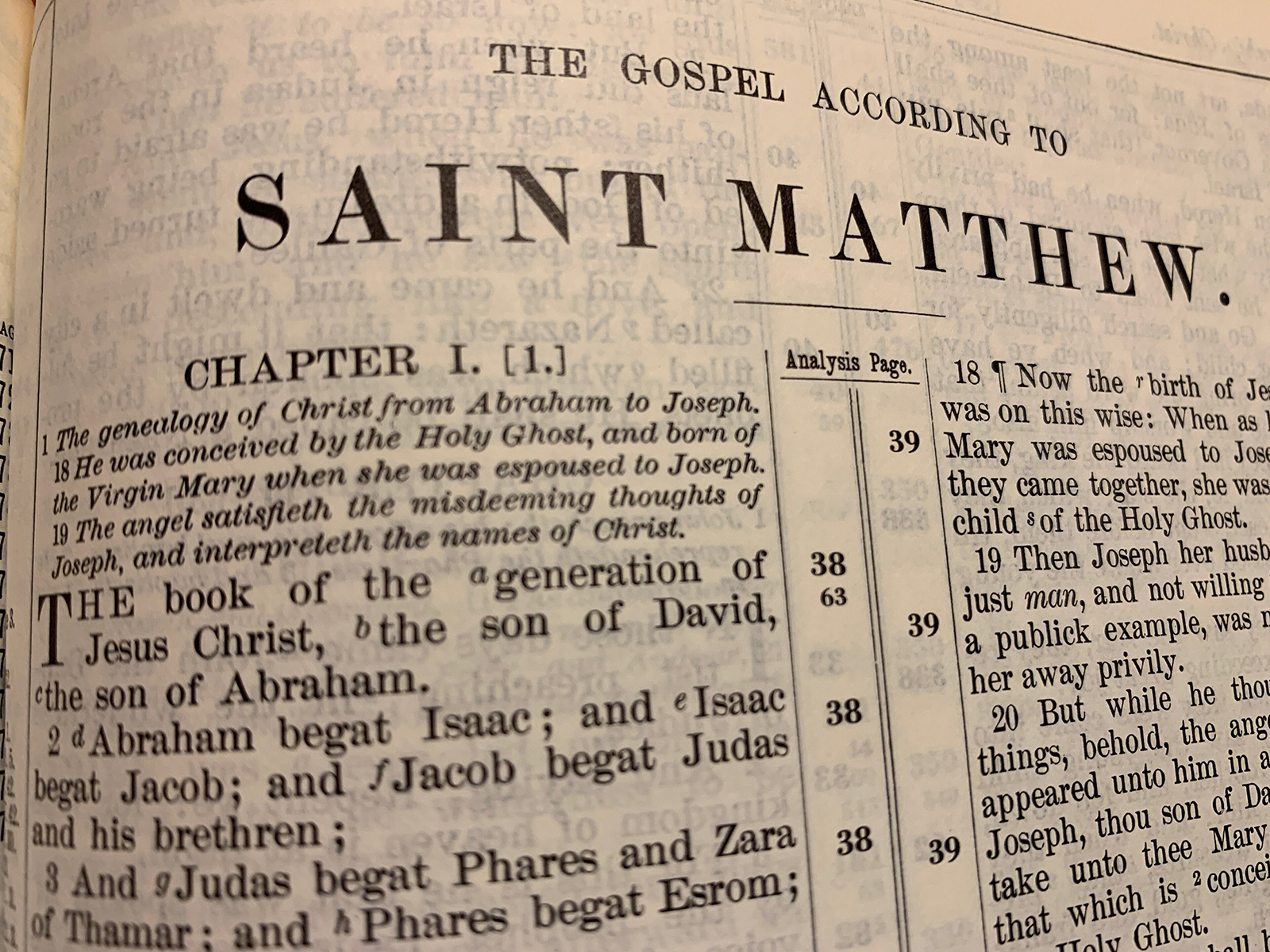
Warnock, a Democrat and pastor of a prominent Black church, had raised questions in an interview with The New York Times a few days prior about whether the speaker’s Republican politics reflected his professed faith. The senator described himself as a “Matthew 25 Christian,” referring to a biblical passage that features Jesus telling his followers a parable in which “all the nations” are judged by how they care for the “least of these” — described as the hungry, the stranger and the imprisoned, among others. How, Warnock had told the Times, do you “say a long prayer, hold hands with your fellow legislators and then cut a trillion dollars out of Medicaid?”
In response, Johnson, a Southern Baptist from Louisiana, called for the confab and offered a diametrically opposing interpretation of Matthew 25.
“He told me that Matthew 25 was about individuals, and not nations,” Warnock told Religion News Service, referring to Johnson. “The text actually says nations.”
Warnock, a member of the Progressive National Baptist Convention who holds a Ph.D. in systematic theology and recently published a faith-themed book, added: “It’s a very narrow individualistic faith, and I think it has consequences for the kind of policy you end up with.”
The Johnson-Warnock meeting, which the Democrat has otherwise described as “respectful,” added to the brewing debate over Matthew 25 that has been building over the last year, pitting mainline pastors, Black protestants and the pope against evangelical politicians put on the defensive amid outspoken religious criticisms of President Donald Trump’s policies.
Matthew 25 itself is hardly unheard of among Democrats. Former Vice President Al Gore, former Transportation Secretary Pete Buttigieg and Rep. Alexandria Ocasio-Cortez have all publicly cited it in the past. But the passage received a moment of global recognition in November, when Pope Leo invoked Matthew 25 after he was asked by reporters about the president’s immigration policies.
The Bible, Leo quipped, “says very clearly: at the end of the world, we’re going to be asked, ‘how did you receive the foreigner?’”
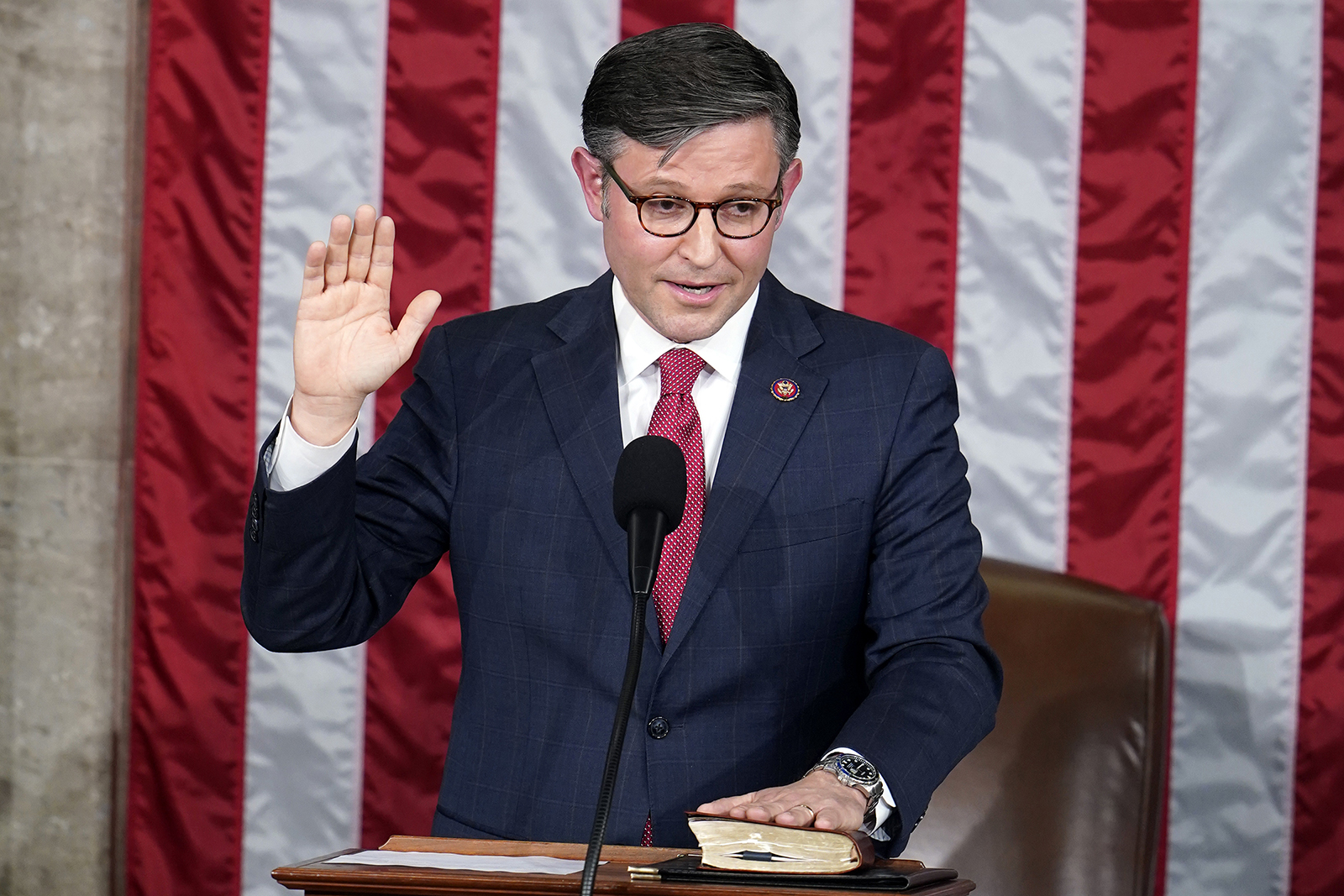
When a reporter for Migrant Insider asked Johnson in February if he had any response to Leo, Johnson insisted Matthew 25 was directed at individuals, “not to the civil authorities,” and later published a lengthy post on X expanding on his reasoning.
The post proved divisive. It was celebrated by evangelical conservatives such as author Allie Beth Stuckey and Tony Perkins, head of the Family Research Council, while more than 40 Catholic Democrats in the House signed a letter that amounted to a theological rebuke of Johnson. The Rev. William Barber II, a prominent anti-poverty activist and Protestant, called for Johnson to participate in a public theological debate about immigration.
How Johnson, who has not attended seminary or pursued degrees in theology or biblical studies, arrived at his interpretation is not clear. Representatives for the speaker declined multiple requests for an interview on the topic, and his precise take on Matthew 25 does not appear to be universally held within the SBC, Johnson’s denomination. The SBC’s congregation-focused structure generally precludes uniformly conscripting specific Bible interpretations in a formalized way, and a spokesperson for the denomination deferred to the Ethics and Religious Liberty Commission, the group’s political arm. Asked about the passage, an ERLC spokesperson told RNS the group does not “have a position” on the interpretation of Matthew 25.
But there have been many interpretations over time, and other evangelical thinkers have offered takes similar to Johnson’s, albeit with different twists. In an email to RNS, Pastor Robert Jeffress, a longtime Trump supporter and prominent Southern Baptist pastor in Texas, argued that, while there are “many passages in the Bible that encourage care for those who are unable to help themselves,” Matthew 25 “is not one of them.” Instead, he insisted the “least of these” is a reference to “a specific group of Jewish evangelists” mentioned in the Book of Revelation.
Judith Gundry, an evangelical scholar and New Testament professor at Yale Divinity School, told RNS in an email that there are Bible verses that urge followers of Jesus to aid the vulnerable. But mention of the “least of these, my brothers and sisters” in Matthew 25, she argued, is a reference to disciples who are “fleeing persecution.”
Gundry insisted her interpretation is “not peculiarly Evangelical,” and noted a biblical passage can have political implications regardless of how different scholars determine its context. But Heath Carter, a professor of American Christianity at Princeton Theological Seminary, said the broader debate over Matthew 25 may reflect “deeper, longer-standing divides” among U.S. Christians that date back at least a century.
On one side of the theological chasm, he said, are those who believe Christianity is “oriented around the salvation of individual souls” and that “the way that you change society is by changing every soul within it.” Their de facto opponents, however, hold that “inequality and social problems spring from structural or systemic roots” and argue that “part of what it means to be a faithful Christian in the modern world is to fight against inequality and its structural forms.”
Carter said Christian concern about broader structural issues surged in the aftermath of the Civil War and eventually culminated in a movement known as the social gospel, which became popular in the early 20th century. The social gospel, which stressed the threat of societal sin and the need to care for the poor, is credited with playing a role in the passage of the New Deal. Decades later, Civil Rights icon the Rev. Martin Luther King Jr. — whose pulpit at Ebenezer Baptist Church in Atlanta is now filled by Warnock — said he was a “profound advocator of the social gospel.”
However, even the social gospel movement did not fall neatly along religious lines.
“Back in that day, evangelicals were social gospelers in many cases,” said Carter, who authored the book “Union Made: Working People and the Rise of Social Christianity in Chicago.”
Others see Johnson’s interpretation of Matthew 25 as evidence of Trump’s influence. “It’s just striking to see these interpretations that now completely exempt the actions of government from religious or even ethical obligation towards (the) less fortunate,” said John Compton, a Chapman University professor and author of the book “The End of Empathy: Why White Protestants Stopped Loving Their Neighbors.” “This idea that the individual should never act through government, or that the government should never be the vehicle for compassionate action toward others — I don’t think you really find that very much prior to the Trump years.”
Another example of Republican politicians challenging faith leaders on their interpretations of Matthew 25 came up in March. At a congressional hearing on the Department of Homeland Security’s Minnesota deportation efforts, the Rev. Mariah Tollgaard, a United Methodist minister in St. Paul, read a statement criticizing the president’s immigration policies and mentioned Matthew 25. In response, GOP Rep. Michael Cloud, a former communications director at an evangelical megachurch, brandished a Bible and argued that Christ never called for government lobbying, that taxes are coercive and Christian “charity” is ultimately voluntary.
Cloud’s office didn’t respond to questions about his remarks, but Tollgaard, denied time to respond in the hearing, told RNS by email that the congressman’s framing “flattens” Scripture.
“In the Bible, God’s people are instructed to build structures of shared responsibility — laws about gleaning, Jubilee debt release, and care for the stranger — that are not optional but are understood as expressions of covenant love, what we might today call the common good,” she wrote. “And even if one wanted to argue that caring for those in need should be the work of individuals, in a representative democracy our government is precisely the means by which people, acting together, shoulder that responsibility.”
Tollgaard added: “Matthew 25 is not a bootstraps story about self‑optimization; it is Jesus’ stark reminder that God’s judgment is revealed in how a community treats those who are hungry, sick, strangers, or imprisoned.”
It is unclear whether Cloud, Johnson and other conservatives who read Scripture like they do will popularize their interpretations of Matthew 25. Warnock said he is not looking to get into a “back and forth Bible study” about Scripture because he is “not interested in living in a theocracy.”
But as a pastor, he felt an obligation to push back. Warnock still questions the faith of fellow lawmakers like Johnson who pray before passing legislation such as last year’s sweeping, GOP-led domestic policy megabill, which Warnock and others have argued will ultimately cost millions access to healthcare. It was an act, the Senator suggested, that ignores the Bible’s call to care for the poor.
“Religion just ends up being one tool in their political project,” Warnock said. “I don’t think it’s about the religion.”