








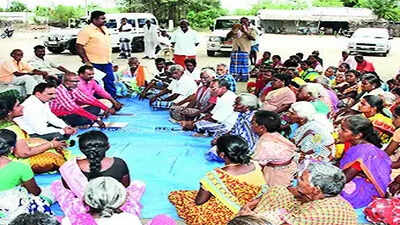
NEW DELHI: A new study to ascertain the reasons for poor participation in “gram sabhas” that covered 400 gram panchayats and 7,800 respondents in 26 states and Union territories (UTs) has brought into focus an emerging phenomenon called “Gram Sabha Participation Fatigue”, which sees repeated meetings without visible outcomes, unresolved grievances and limited follow-up on decisions gradually reducing public enthusiasm for participation.The study also shows that livelihood and time-related constraints are the single largest barrier to participation (55%), followed by awareness and communication issues, highlighting the need for both livelihood-sensitive scheduling and stronger citizen outreach.The report prepared by National Institute of Rural Development and Panchayati Raj (NIRDPR), Hyderabad, for ministry of Panchayati Raj highlights that “busy work schedules (41.74%) and agricultural activities (30.26%) emerged as the most significant occupational constraints affecting participation in Gram Sabha meetings.”Migrant households (17.61%), youth (16.73%), elderly citizens (15.80%) and women (13.40%) were among the least represented groups in Gram Sabha proceedings.The Gram Sabha as a constitutional institution under the Panchayati Raj system provides citizens with a platform to participate directly in local planning, beneficiary identification, social accountability, the monitoring of public services and community decision-making.According to the ministry, the study represents one of the largest field-based assessments undertaken on citizen participation in Gram Sabhas and seeks to generate evidence-based insights for strengthening grassroots democracy and improving effectiveness of Gram Sabhas.Findings indicate that ‘participation fatigue’ is primarily driven by transparency concerns (45.46%), lack of relevance of discussions (42.0%), repetitive discussions (33.4%), trust deficit (32.7%), political interference (27.9%) and weak grievance resolution (16.2%). Together, these factors gradually reduce public confidence and willingness to participate in Gram Sabha meetings.Panchayati Raj secretary Vivek Bharadwaj said that the ministry will work closely with states and UTs to implement the recommendations of the report, making Gram Sabhas more inclusive, participatory and outcome-oriented.The report recommends launching a national Gram Sabha awareness, procedural literacy and mobilisation mission to strengthen citizen awareness, procedural understanding and democratic participation.It also recommends promoting livelihood-sensitive scheduling of Gram Sabha meetings by considering agricultural cycles, local work patterns, migration realities and community preferences. “Strengthen mahila sabhas, ward sabhas, youth sabhas and other inclusive participation platforms to improve representation of women, SCs, STs, youth and other vulnerable groups,” report suggests while calling for institutionalising action taken reports (ATRs), grievance tracking systems and public review mechanisms to improve transparency, accountability and public trust.