






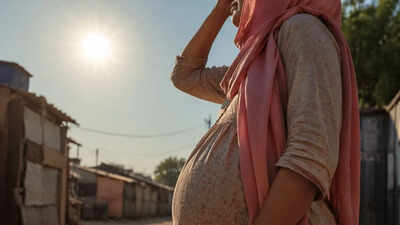
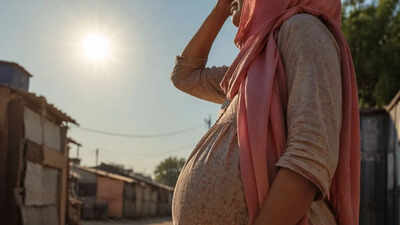
NEW DELHI: Dizziness, sleepless nights, hypertension — pregnant women in Delhi’s slums are already bearing the brunt of temperatures beginning to breach 40 degrees Celsius in the national capital.Speaking to PTI, Rekha, a 38-week pregnant woman from Sanjay Camp in Dakshinpuri, said she struggles to sleep at night, waking up repeatedly as the heat and humidity, combined with the discomfort of pregnancy, make it difficult for her to rest.“I often feel anxious and struggle to sleep. Heat and humidity make the discomfort worse, and often cause shortness of breath, but going to a doctor is not something we can easily do,” Rekha said.“In this extreme heat, there’s little I can do except sit under a fan for some relief,” she said.Rekha, who lives with her husband in a small, cramped tin-roofed room that traps heat, said that when she voices her concerns, people often advise her to change her living conditions — something the couple cannot afford.“There is a consistent feeling of restlessness and unease. I have been sleeping very little, especially since my second trimester,” said Shabnam, a 29-week pregnant woman living in Dakshinpuri’s Mini Subash camp.“The heat and humidity started surging all of a sudden last week. I started experiencing frequent headaches, anxiety and even shortness of breath,” she added.Mini Subash camp’s 28-year-old Ayesha, who is in her third trimester, highlighted similar concerns and noted that it is “impossible to sleep until 2 to 3 am until the heat settles.” Like Rekha and Shabnam, Ayesha too finds herself battling restlessness and anxiety due to heat and humidity.Speaking about the warning signs of extreme heat in pregnant women, Harshal Ramesh Salve, professor at the Centre for Community Medicine at the All India Institute of Medical Sciences (AIIMS), said dizziness, vomiting, and loss of consciousness are symptoms that should not be ignored.According to Salve, what makes the heat stress particularly concerning is the unpredictability of climate patterns nowadays.“Extreme temperatures are arriving earlier in the summer now, and what lies ahead in May or June remains uncertain. Pregnancy is already a vulnerable period, making extreme heat a serious risk — for the mother as well as the newborn. But what is important to understand is that illness and deaths associated with heat exposure are entirely preventable,” Salve said.Higher exposure to heat stress, particularly during the second trimester, can affect the baby’s development and increase the risk of congenital abnormalities (birth defects). In the later stages of pregnancy, it raises the likelihood of premature delivery — defined as birth before 37 weeks — or even stillbirth.Heat stress can also have long-term effects on a child’s development, with its impact building over time. The risk is further compounded by exposure to air pollution, as both heat and pollution together have a cumulative and integrated effect on pregnancy and its outcomes.Salve highlighted that pregnant women living in slums, working outdoors or in agricultural fields often continue to work through their pregnancy, making them more vulnerable to the effects of heat.On preventable measures, he said that awareness needs to be generated within communities, among pregnant women as well as young women approaching marriageable age, about the impact of heat on pregnancy and its outcomes.“IMD’s warnings, along with their health implications, need to reach communities — particularly vulnerable sections such as slum-dwellers and those working outdoors during peak summer days. Advocacy around preventive strategies, maintaining hydration and making cooling solutions available is especially needed for those exposed to heat through their work,” Salve said.Highlighting that interventions are available to address heat stress, he pointed to low-cost cooling solutions such as modifying roof materials and ensuring shade at workplaces to prevent indoor temperatures from rising during extreme heat.Emphasising the disproportionate impact on women, environmentalist Bharati Chaturvedi said data shows they are 14 times more likely to lose their lives to climate-related events, including extreme heat.“For a pregnant woman, the body is already under significant strain, and heat adds to it further by pushing up the heart rate. This can lead to pre-term births, stillbirths and abnormal blood pressure,” Chaturvedi told PTI.She added that breathing becomes harder, air pollution in the heat changes its form, increasing ozone levels, and all of it comes down on women together. (With agency inputs)