




(RNS) — Eight years ago, Abdul El-Sayed, an epidemiologist and public health official, announced his run for governor in Michigan following the rise of the Flint water crisis and months after President Donald J. Trump announced (in his first term) the first iteration of the “Muslim” travel ban.
He lost in the Democratic primary — amid racist attacks and conspiracy theories hurled at him — to Gretchen Whitmer, now Michigan’s governor.
At the time, El-Sayed spoke to the Detroit Free Press about being questioned by opponents and critics if a candidate who is a “little bit young, a little bit brown, a little bit Muslim” could win the gubernatorial primary.
But his run for U.S. Senator is a different story.
In the midst of one of the most anti-Muslim and volatile primary elections in recent history, during Trump’s second term and against the backdrop of continuing tensions over the reported genocide in Gaza and the U.S.’s ongoing funding of Israel’s various war campaigns, El-Sayed eked out a narrow Democratic primary victory this week in his senatorial campaign against Rep. Haley Stevens.
That victory speaks volumes about Michiganders’ discontent with — and anger over — the direction of their state, as well as the extraordinary community organizing that persisted despite immense pushback and millions of dollars spent on efforts to defeat El-Sayed. It also sends a clear message about how many American Muslim political candidates are choosing to campaign in Trump’s second term.
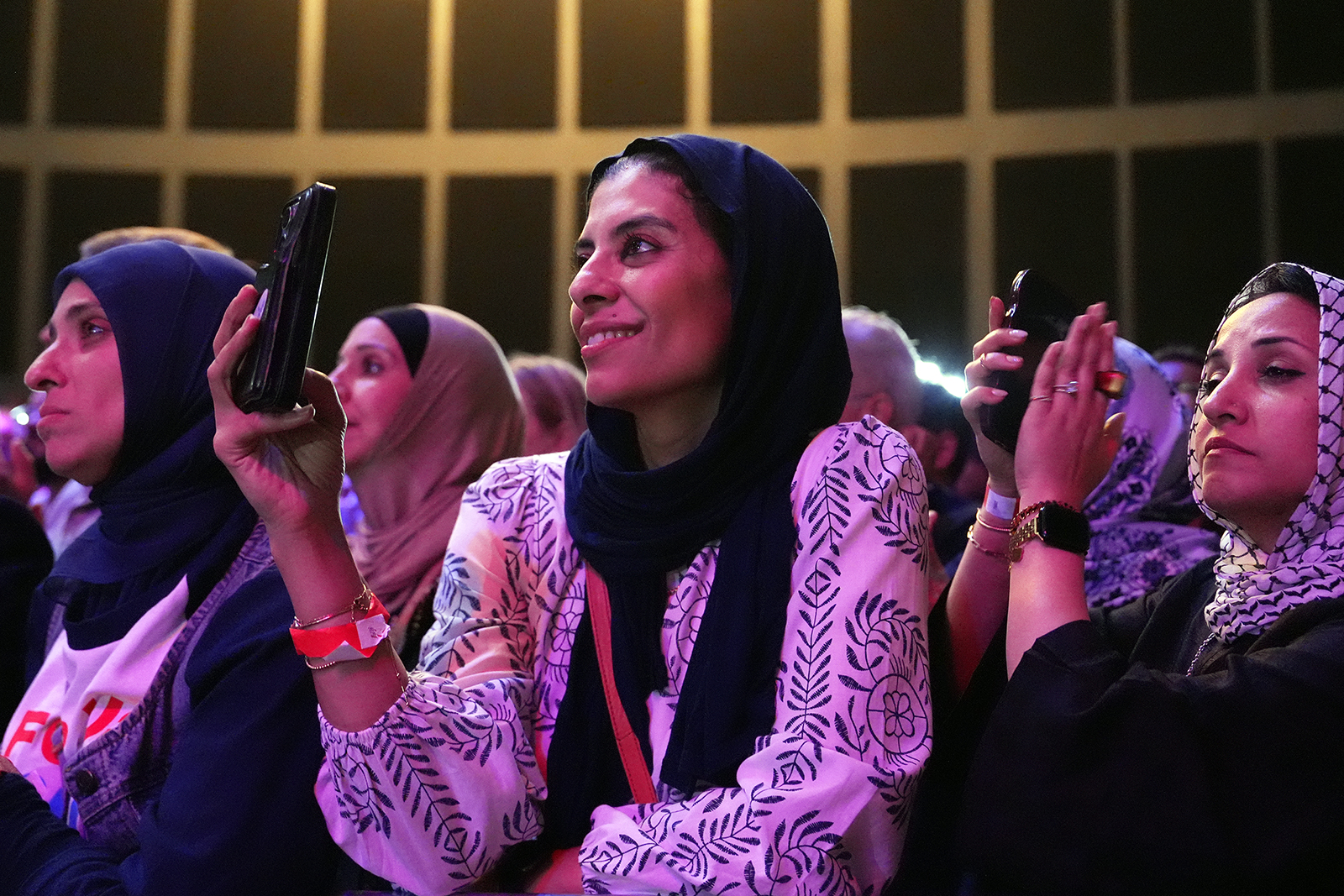
El-Sayed stood strong on a variety of progressive policy platforms (abolishing ICE, Medicare for all, opposing unconditional aid to foreign governments like Israel) and centered coalition building while leaning harder into his Muslim and Arab American identities. Unapologetic authenticity, coupled with strong policy positions focused on fighting injustice, is a key strategy for building American Muslim political power amid targeted hate and vitriol.
“With Abdullah it was very clear: ‘Money out of pockets, money out of politics, Medicare for all,’” said Mussab Ali, a consultant for El-Sayed’s campaign who ran for Congress in New Jersey’s 8th Congressional District and served on the Jersey City Board of Education from 2018 to 2022.
“This moment that we’re in is a very special moment for American politics. A big thing … is people rejecting Islamophobia. Just because people love differently or practice their faith differently doesn’t mean they are any less American.”
There has been a significant shift between Trump’s first and second term in how American Muslims have run for office, Ali said. According to a report from the Council on American-Islamic Relations and Jetpac, more than 300 Muslims ran for office during the president’s first term.
In his second term, what has become clear is that when a Muslim runs for office, the stakes are even higher, the Islamophobic attacks more vicious and the threats and acts of violence much worse.
Ali, who first ran for office in New Jersey in 2017 when he was 19 years old as a response to Trump accusing Muslims of cheering on 9/11 in Jersey City, said the moment is very different now and is a fight for the future of this nation.
“What it means to be Muslim in this time is to speak up against injustice. The Quran teaches us that if injustice is happening, do something with your hand, your speech, your heart. Our home country is not the home country of our forefathers. It’s not Egypt for Abdullah, it’s not Pakistan for me. It’s America,” he said.
El-Sayed, New York City Mayor Zohran Mamdani, Virginia Lieutenant Governor Ghazala Hashmi and others are spurring the movement of Muslim candidates who are running for office and often winning. Their success is juxtaposed against ever-increasing anti-Islamic rhetoric from the president and an alarming number of Congress members and senators, as well as political advocacy groups and political action committees.
And more often than not, those victories (and campaigns like Salaam Bhatti’s Democratic primary run for Congress in Virginia’s first district that don’t cross the finish line but make an impact) are indicative of a shift in focus from progress and victory not coming in spite of hate and rhetoric, but rather building off of it.
“People are seeing the truth,” said Haris Tarin, the vice president of policy and programming for the Muslim Public Affairs Council.
“I think finally there is an unveiling that has happened on the Israel-Gaza issue. That dam has broken, and people see through what AIPAC (American Israel Public Affairs Committee) and what some corporations are trying to do. And I also think it’s because of the economy — struggling to pay rent, buy groceries, gas prices.”
Indeed, with AIPAC spending $30 million and upwards of $70 million combined with affiliated PACs and corporate PACs in trying to defeat El-Sayed in the primary, Tarin said what became extremely clear was that people are seeing through the money.
“It does not buy authenticity; it does not buy a strong candidate.”
And these victories are more than just moments in Muslim political power, he added.
“It’s a trajectory, and not just for American Muslims, (who are) seeing how government power has been used to go after them and are pushing back,” he said. People also are not listening to the same tired narratives about minority communities. “You’re seeing that with American Muslim and other candidates — they told their own stories.”
Political strategist and Michigan-based community organizer Machhadie Assi agreed, saying the values El-Sayed consistently uplifted in his campaign resonated with voters and ultimately broke through the intense anti-Muslim hate. “Justice, dignity and standing with the vulnerable — for Muslims these resonate with our religious values. But they are also universal,” she said. “You don’t need to follow a specific religion to know the value of standing against injustice and standing for dignity.”
Assi also said that, in Michigan, grassroots organizing “superseded the power of money … That’s where I see the victory coming across.”
The attacks against El-Sayed’s faith and Muslims in general will only continue to grow uglier in the days leading up to the general election. But his strength lies in building coalitions, leaning into grassroots support and staying true to his principles.
“We’re (succeeding) because of the love of being able to be a changemaker and believing that we are truly American and genuinely Muslim. Both can co-exist,” said Assi. “If we don’t believe we’re American enough, we won’t be able to truly shift policy. It helps us believe more in the intersectionality of this movement — like Abdul says, brick by brick.”
(Dilshad D. Ali is a freelance journalist. The views expressed in this commentary do not necessarily reflect those of Religion News Service.)