











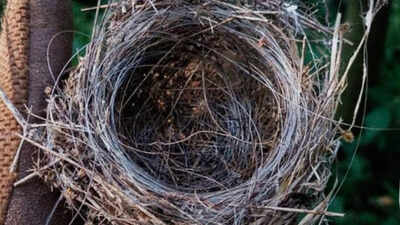
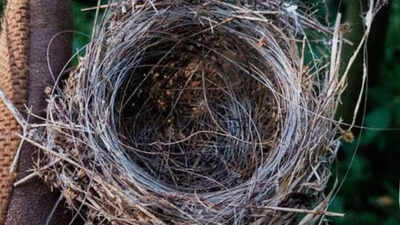
At first glance, this may look like an interesting idea for science fiction.Wait till you actually witness the reality.Ukraine’s birds are literally picking up leftovers of war to build their home!Yes — you read that right.In Ukraine, now deep into its fifth year of war, drones have become the new face of battle. They buzz overhead for miles, scouting and striking on both sides of the front. For soldiers, these flying machines are everywhere. But off the battlefield, something unexpected has happened — something no military planner could have dreamed up.Birds are weaving the war right into their nests, picking up scraps of leftover fiber-optic cables from drones to build homes for their chicks.It sounds strange, even a bit poetic in its sad, realistic way. But it’s real.Per Reuters, researchers stumbled upon this twist of adaptation and were surprised at how quickly wildlife is blending the tools of a high-tech war into daily survival. Nesting birds have turned battlefield waste into the backbone of their homes.Sure, nature finds a way, even if it means picking from a new kind of debris. But as much as this shows the resilience of wildlife, it’s also a sign that life in wartime leaves scars, even where you’d never think to look.
War rubble, now woven into the wild: What’s happening?
Drones, especially the fiber-optic-guided type, are everywhere in Ukraine’s war zones now. These are different from regular drones; instead of relying on radio signals, a super-thin cable tethers the drone to its operator. It helps dodge jamming, but every mission leaves bits of this cable strung across the countryside, sometimes as much as 20 kilometers from a single drone.Now, these cables are everywhere: stretching through trees, tangled over roofs, or just snaking through fields. In the sunlight, the lines look almost like giant, gleaming spiderwebs draped over the land.To soldiers, it’s just leftover tech.But for local birds, it’s building material.
Homes made from drone leftovers: A post-war reality
The first clues came when Ukrainian service members near the front lines found odd nests mixed with grass and shimmering white strands. They collected them, and someone eventually brought them to the War Museum in Kyiv. When researchers looked closer, they realized birds had used a ton of this fiber-optic cable, sometimes winding it tightly through the whole structure, turning the detritus of war into a sturdy new home.Yana Hrynko from Kyiv’s War Museum says these nests are a clear sign that war isn’t just something that happens to humans. It shakes up the world for every living thing nearby. “Objects such as bird nests with fragments of optic fibre demonstrate the change in the nature of war,” said Hrynko.The museum is keeping one nest as a kind of time capsule. Another went to scientists in the Netherlands who are trying to see which birds took the lead here by checking for DNA left in the nest.
How birds adapt when the world changes overnight
Birds, to be honest, have always been impressive when it comes to making do. They’ll stuff their nests with anything (think bits of string, plastic, even cigarette butts) in cities around the world. What makes Ukraine’s story different is that this isn’t old socks or bottle caps. It’s battlefield trash. These birds are wrapping the war right into their family life.Photos of these nests made the rounds online, and people everywhere reacted with a mix of awe and concern. On social media, some called the nests beautiful; others just found the whole thing unsettling. It’s nature going on, no matter what, but it’s also a stark picture of survival in ruins.And it’s not just about birds being tough. It’s a reminder: even in a country torn apart, where streets, forests, and fields are bombed and battered, life finds weird, surprising ways to cope. These birds aren’t thriving. They’re adapting, and there’s a huge difference.
Building a home in a war-torn world: Is it even good news?
As hopeful as the story sounds, ecologists warn not to romanticize it. Human trash in bird nests sometimes helps, but often hurts. Sure, fiber-optic cables might make a nest stronger, but stray synthetic fibers can also tangle around legs or wings and injure chicks. It’s not clear yet if the benefits outnumber the risks.Wider studies show war has forced wildlife in Ukraine into survival mode. Some birds are scraping by, adapting wherever possible. Others haven’t been so lucky. Habitat destruction, pollution, shifting migration paths — it’s pressure from every angle.
The record of enduring conflict: How nature is keeping a scorecard
These cable-filled nests are more than just a clever adaptation. They’re receipts, almost like physical evidence of war changing the land in ways many people miss. Historians may one day point to these nests to help explain what living through this conflict meant for Ukraine, not just its people but its animals.Researchers get a rare chance to watch wildlife change in real time, tracking how even the smallest creatures adapt. For the rest of us, there’s the image: a tiny bird’s nest, lined with the leftovers of a modern drone war.For the last five years, Ukraine’s war has reshaped cities and shattered millions of lives. Now it’s even changing the way birds build their homes. With each new stretch of cable left behind, the battlefield spills over into nests, into trees — and into all the hidden corners where life still is stubborn enough to carry on.