











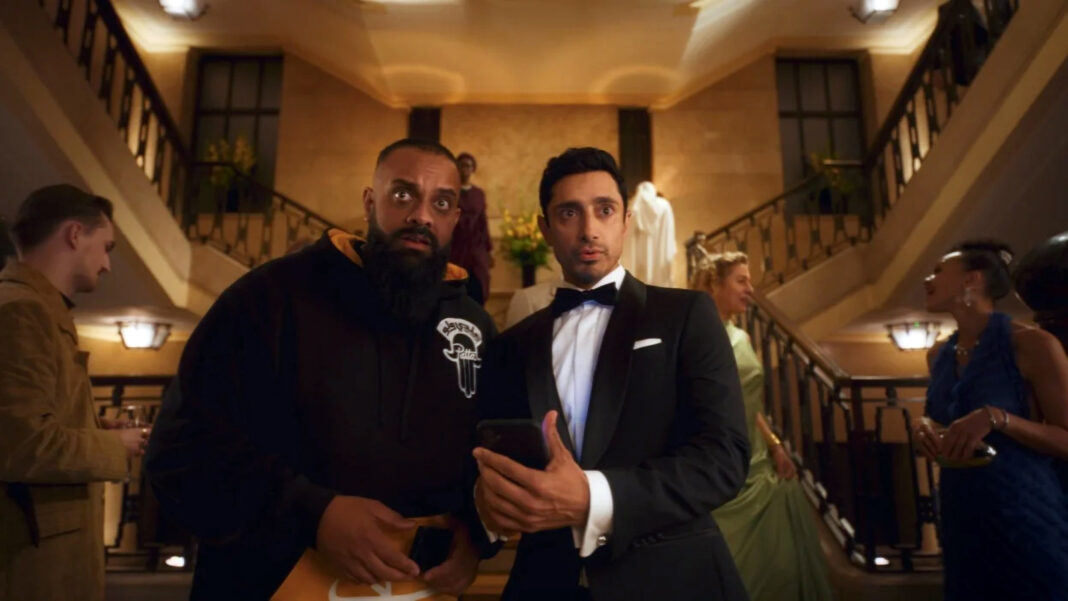
(RNS) — In a scene about midway through Riz Ahmed’s new Amazon Prime six-part dramedy, “Bait,” struggling actor Shahjahan Latif (played by Ahmed) runs into a security agent in a London underground station whom he had been looking to hire for his family.
Latif is carrying a pig’s head in a canvas bag (more on that later) while having an existential breakdown, having run away from the police station where he went to report his house being broken into, the pig’s head thrown through the window and his family missing. But his paranoia gets the best of him, as he begins to worry that the police are racially profiling him and will consider him a prime suspect instead of seeing the crime itself as racially motivated.
And so, on the run, he panics as he irrationally thinks police on duty at the underground station are closing in on him. Seeing the security agent he was considering hiring becomes an unexpected solace and sense of relief. In pairing up with the white agent, he perceives the suspicious eyes are no longer on him.
“Must be nice to be tall and white,” he says to the security agent.
“Membership has its privileges,” the man replies back to him.
It is this kind of membership, this kind of unattainable belonging that could possibly erase childhood memories of being violently bullied, that Latif is chasing. Something familiar to more of us who are Muslim and/or South Asian (or any non-white combination of the sort) than we may care to admit.

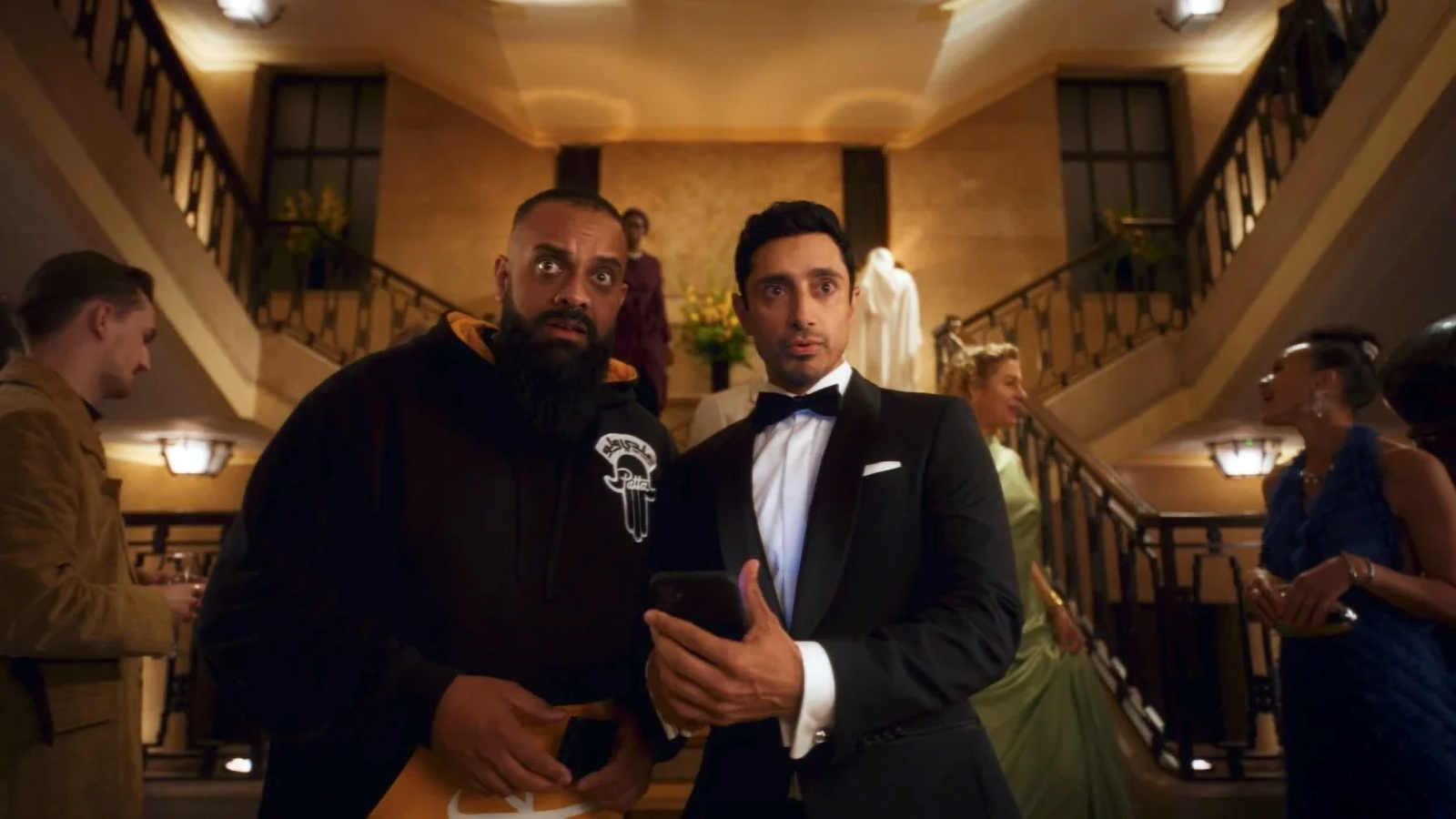
Guz Khan and Riz Ahmed in “Bait.” (Photo courtesy of Prime)
“Bait” is the story of Pakistani-British-Muslim actor Latif on the verge of breaking boundaries by auditioning for one of the biggest and most coveted roles in cinema — James Bond — and the lengths he goes to in order to remain relevant (in the acting community and within his family). But what it examines is chasing that sense of belonging and what it means to be fully oneself and fully Muslim — even with storylines of ending up in a club on Eid al Fitr and running around with a pig’s head in a canvas bag. (I promise, more on that later.)
For Muslims and particularly South Asians, Ahmed has become a trailblazer, helping make these communities a recognizable force in film and television. From early roles in HBO’s “The Night Of” (for which he won an Emmy) and “The Sound of Metal,” Ahmed has done much to hold Hollywood and British television and cinema to better standards in the portrayal of Muslim characters. Ever heard of “The Riz Test”? That comes from his 2017 speech to the House of Commons about authentic diversity representation on screen.
“Bait,” Ahmed said, was inspired by his personal experiences, which aren’t the experiences of all South Asian Muslims. But that’s kind of the point.
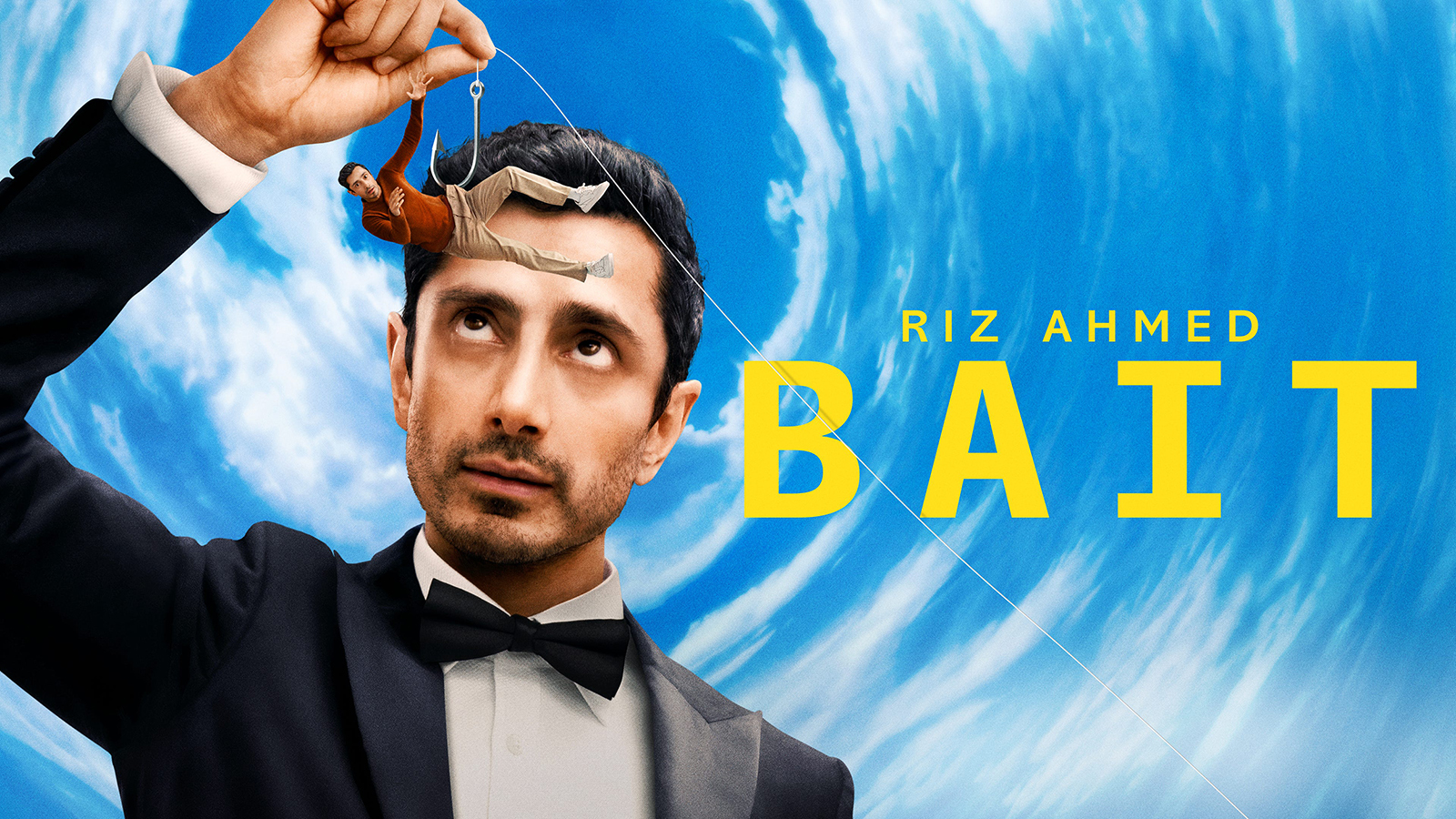
“Bait” promotional poster. (Image courtesy of Prime)
As he said in this Los Angeles Times interview, “Shah Latif … is having an identity crisis. He’s trying to work out who he is. So it stands to reason the show should also be trying to work out what it is. The show needs to be having an identity crisis.”
Founder and editor-in-chief of the British Muslim media site Amaliah, Nafisa Bakkar, wrote in her Substack reflection on “Bait”: “Can you include something that would normally be considered haram, offensive or culturally off-limits, and still have it feel truthful rather than superficially subversive to a white gaze?” The line between offense and authenticity, Bakkar wrote, is dictated by who is telling it.
Even though my Muslim experience is certainly not Latif’s (or Ahmed’s, for that matter), they are all lived Muslim experiences, no matter the halal-to-haram ratio.
“Bait” benefits from the wide reach of streaming platforms, which affords a show the ability to be more hyper-specific in its story telling and target audience. This has opened up a growing bank of opportunities for Muslim-oriented shows, said Zaki Hasan, an arts critic with the San Francisco Chronicle and a professor of communication and media at San Jose State University.
“Streaming plays to narrow casting and sort of slicing the demographics very thin,” he said. But can shows like “Bait” that play to a seemingly narrow South Asian and Muslim audience reach beyond those demographics?
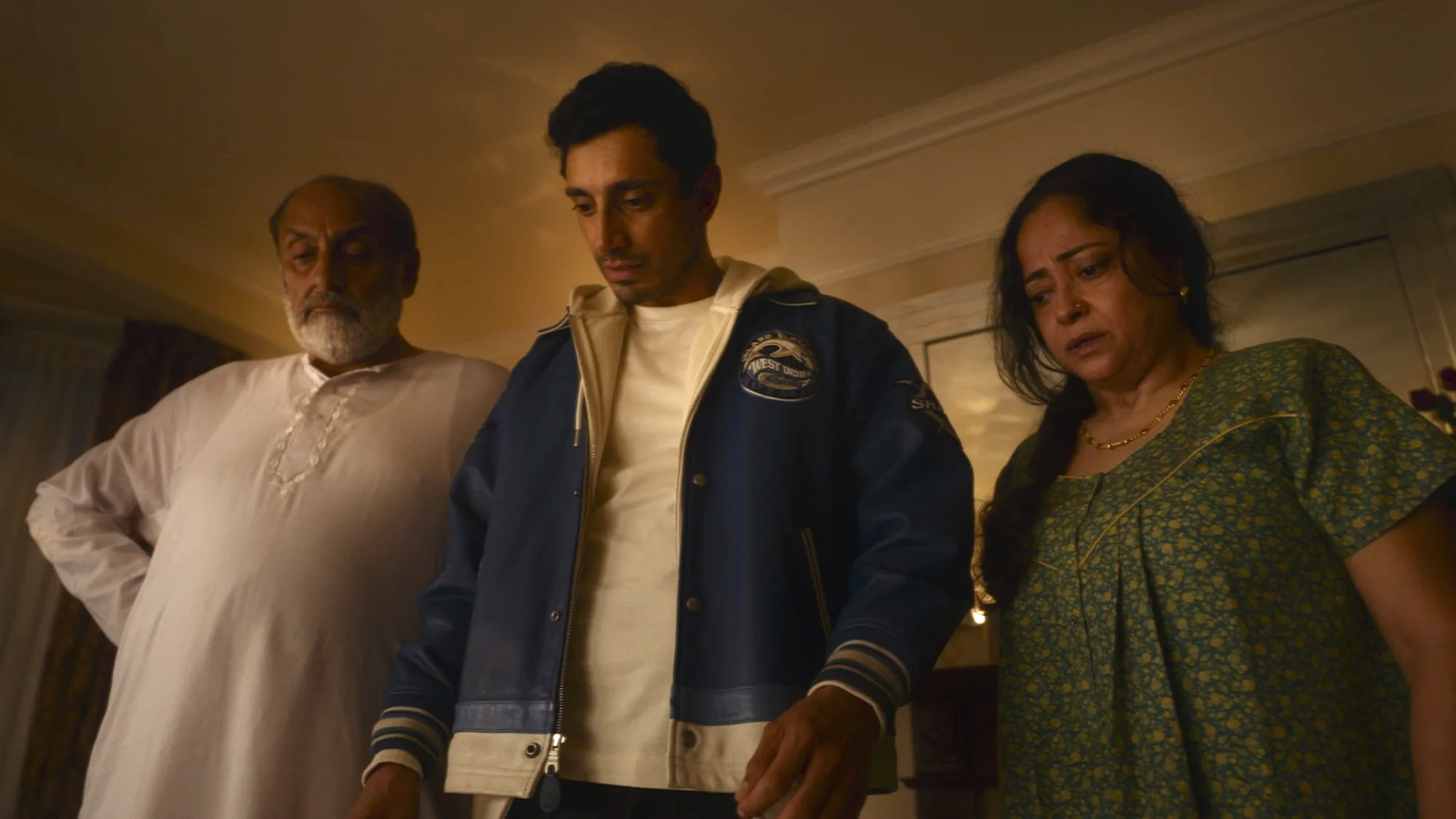
Actors Sajid Hasan, from left, Riz Ahmed and Sheeba Chaddha in “Bait.” (Photo courtesy of Prime)
“I think that when it comes to the Muslim community, this is uncharted waters,” Hasan said. “I’m reminded of a favorite quote by writer/director Nicholas Meyer, who once said, ‘I find that in specificity you will find universality.’”
“Bait” isn’t the first show to center Muslim stories as it intersects with South Asian and Middle Eastern-North African (MENA) cultures. “Ramy” featured Egyptian-American comedian and actor Ramy Youssef, “Mo” is based on the life of Palestinian-American comedian Mo Amer, and “We Are Lady Parts” was created, written and directed by Nida Manzoor and followed an all-female Muslim punk band. All the shows were inspired in part by their creators’ lives straddling faith and culture.
“Bait” draws viewers into extreme specificities in the familial relationships, inside jokes, cultural and faith rituals and even geography of South Asian Muslim life in and around London and surrounding neighborhoods. As Bakkar noted, it’s not “sort of” brown or Muslim in its storytelling, but rather it goes all in. Latif starts off wanting to become the next James Bond and prove to Britishers (and his extended Pakistani family) that brown Pakistani Muslims can be fully British (something that is fueled by childhood experiences of being bullied).
But who has placed that mantle upon him? His family? His agent? Himself? Is it even something that needs proving, and will becoming the next Bond really make the sort of impact he is hoping for? “Bait” finds its heart in exploring these questions, even as it gets kind of bizarre by Muslim South Asian standards in the latter half of the series.
In discussing the show with a family member who enjoys Ahmed’s work as much as I do, she admitted to dropping the show after episode three when the plot had Latif leaving a family Eid celebration (rife with aunty gossip and cousin oneupmanship) to help an ex-girlfriend find her missing purse in a club. While scenes like these may alienate some Muslims who take issue with going from Eid prayers and family celebrations to dancing in a club (I mean, that’s not how many Muslims I know spend their Eid), others will relate to how Latif juggles all parts of his life.

Actors Riz Ahmed and Ritu Arya in “Bait.” (Photo courtesy of Prime)
And then there’s the pig head that Latif totes around. He begins conversing with the pig head about the weight he is carrying in trying to shed his bullied past and become a strong actor who will force white Britishers to reckon with his faith, culture and skin color. It’s a sort of twisted homage to Shakespeare’s Hamlet talking to the skull of Yorick.
It becomes a clever clapback on anti-Muslim types who think waving a piece of bacon is Muslim kryptonite. (Yes we don’t eat pork or pork products, but we won’t wither and die in the presence of pigs or bacon.)
Yes. It’s weird, but stick with it. In reporting on Muslims for more than two decades, one of the oldest adages I’ve repeatedly fallen back on is that Muslims are not a monolith. We don’t all worship the same way or follow the teachings of our faith the same way. Whether I like it or not, “Bait” isn’t ‘My South Asian Muslim Life.’ It’s not meant to be, and that’s why it is fun to watch. It’s the kind of narrow casting that can draw in South Asian Muslims but also appeal to wider audiences because of its specificities and attention to detail.
(Dilshad D. Ali is a freelance journalist. The views expressed in this commentary do not necessarily reflect those of RNS.)