












WASHINGTON (RNS) — Before 2025, the yearly meeting of the Progressive National Baptist Convention occurred in August, making it harder for some students to make it to the gathering.
But now teens and young adults meet in July for their annual session along with older members of the historically Black denomination.
The move comes as younger Black Americans have in recent years become less likely than their elders to attend predominantly Black churches, according to Pew Research Center. PNBC leaders want to demonstrate that young people are welcome.
At its recent meeting in the nation’s capital, young members from high schoolers to 20-somethings joined adults in a visit to Capitol Hill, attended a live episode of the denomination’s youth-led “The Pew and The Porch” podcast and later discussed their thoughts on the current and future state of the church.
Kaisa Jones, 14, a member of an Augusta, Georgia, church attended all three and was particularly impressed by the podcast, which launched last year.
RELATED: African Americans attend church, Bible study more than others, but Black ‘nones’ increasing
“For it to be dedicated to us and for us, I think it’s really amazing,” she said, “and allowing us to express our opinions without feeling ashamed about it.”
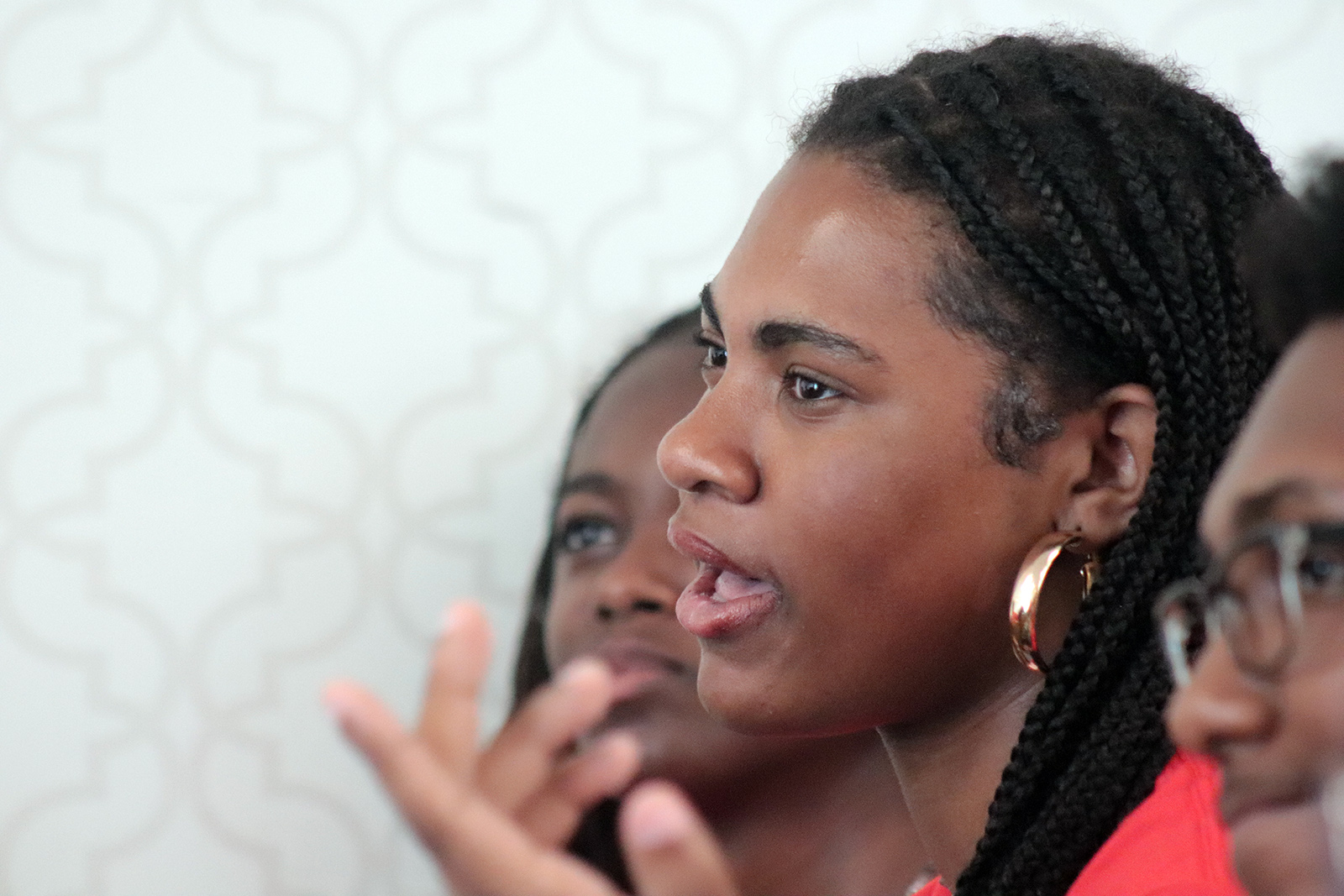

Earlier episodes of the podcast featured high school, college and young adult perspectives on dating and having healthy relationships and on ways younger church members can take on or be prepared for leadership roles. The most recent podcast considered social justice challenges and generational gaps.
Asked if she senses receptivity to changes people her age may want to make in Black churches, she said: “Somewhat.”
Incoming PNBC President Keith Byrd, a Washington, D.C., pastor, said he wants to build on the administration of the Rev. David Peoples, whom he has succeeded, and continue to make sure young people’s voices are heard.
“The best way you value a voice beyond hearing it is to address it and allow it to be resounded elsewhere,” he said, noting that occurred for the last two years when the Youth and Young Adult Night was held on the main stage of the annual session. “We want to build and expand on that.”
Pew Research Center experts have found that a lower percentage — 26% — of Black non-Hispanic Americans under 30 say they attend worship services at least once or twice a month compared to their older counterparts, with 35% of those 30-49, 44% of those 50-64 and 58% of those 65 and older reporting similar attendance patterns.

Some of the young PNBC members said people their age may have second thoughts about attending church because they’re concerned they won’t be accepted as they are.
“Especially in some churches, church is such a judgmental space,” said William McAlpine, 26, of Washington, at the discussion among high schoolers and young adults about the future of the church.
“And when we have young people that want to come to church, they feel like they can’t because people are going to judge them when we’re supposed to come as we are, with all of our flaws, with all of our sins, with all of our insecurities, because the church is a hospital for the sick and broken.”
Ameria Turner, 18, a member of a St. Louis, Missouri, church talked about young visitors who might be shunned if they show up in clothing deemed inappropriate, such as a tight dress.
“I feel like also seasoned adults complain about what we’re wearing,” she said, perhaps not recognizing that a visitor may not own what is deemed church attire.
As the discussion continued, she and others began to formulate ideas to promote hospitality instead of possible hostility. Turner suggested that churches could have some shawls or sweaters available to offer visitors.
PNBC General Secretary Thomas Bowen, who sat in on part of the youth discussion, responded later to some of the concerns he heard. He noted that evangelizing young people and others means focusing on getting them in the door of the church and not on what they’re wearing.
“We just want people to come truly as they are, be comfortable,” he said, acknowledging that nevertheless, “you’ll get lots of opinions within the church.”
Some of the young people’s discussions turned to how they present themselves outside of church walls when they engage with peers who may not share their beliefs.
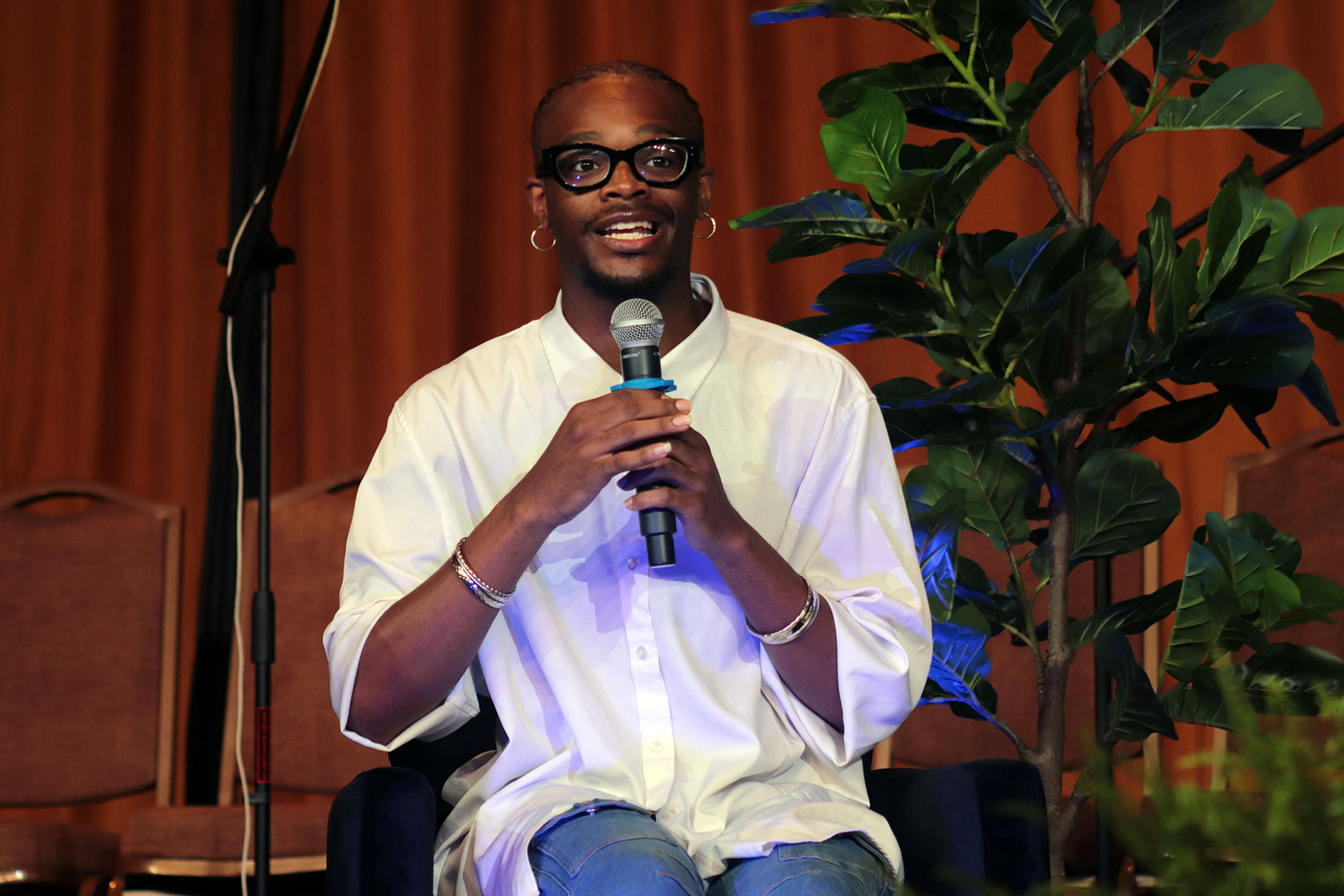
Darrius Turner, 20, a panelist in the live podcast episode, answered a question from host Moniece Johnson about how to comfort friends who may not be familiar with the Bible.
“Even if you are not referencing specific Scriptures — like oh, in this chapter, in this verse, this really relates to what you’re talking about — you can use the understanding God is giving you from those Scriptures, and just as a human, connect from human to human, because God made both y’all anyway,” said Turner, a college student and parliamentarian of the PNBC youth department.
Older adults who serve as church youth leaders welcomed the annual session’s opportunities to find out what was on the minds of young people in the denomination.
One asked if youth are trying to deal with conflict resolution, would they prefer hearing advice from a leader inside their church or have an outside speaker address them instead. The consensus among the few dozen gathered for the future-church discussion was that someone from outside the church leadership would be preferred.
“I think the church has some room sometimes for humility, and that we have to recognize that we’re not experts in everything,” said discussion moderator Megan Rivers, Baltimore television news anchor and Howard University School of Divinity student.
Before they headed to a bus to tour a museum centered on Black history, Rivers also urged young PNBC members to not repeat the mistakes made by the generations before them and “keep an open mind, an open heart, an open spirit” as they welcome newcomers of any age, race or gender to their churches.
“I just want to encourage you guys to really cement this conversation that you’re having with your peers right now,” she told them. “So that when you are leaders within your church, that you make sure you don’t make another generation of people feel this way. This is how you break the cycle.”
In an interview, Jones, the Georgia church member, voiced confidence in the future of the Black church.
“I want everyone to just let go and stop being worried because we’re the future,” she said between bites of lunch before heading to the Capitol. “And everyone’s depending on us, and we have to stop depending on everyone to change what the narrative is because we are the only people that can change it.”
RELATED: ‘It’s a sin if you do not vote’: Progressive National Baptists urge midterm turnout


