








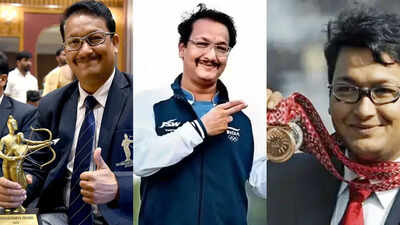
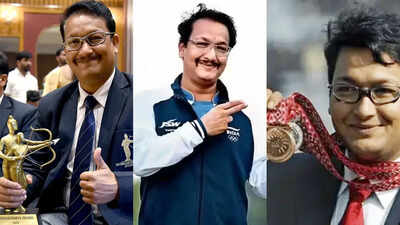
PUNE: Jaspal Rana never shied away from two things: Fearless shooting and straight talk. For more than three decades, he practiced both with remarkable consistency.At an age when any youngster would be thinking of playing safe in order to build a career, Jaspal not just risked it all by challenging the system that wasn’t athlete-friendly, but also won medals and broke records to make sure the noise wasn’t hollow and there was substance to it.Jaspal, a name that brought shooting into prominence, defined a generation and personified courage, died of a heart attack in the Capital on Friday, 16 days short of his 50th birthday.He will not just be remembered for his medals or coaching credentials, but also for the fact that he was the first to make everyone believe that Indian shooters could win international medals.

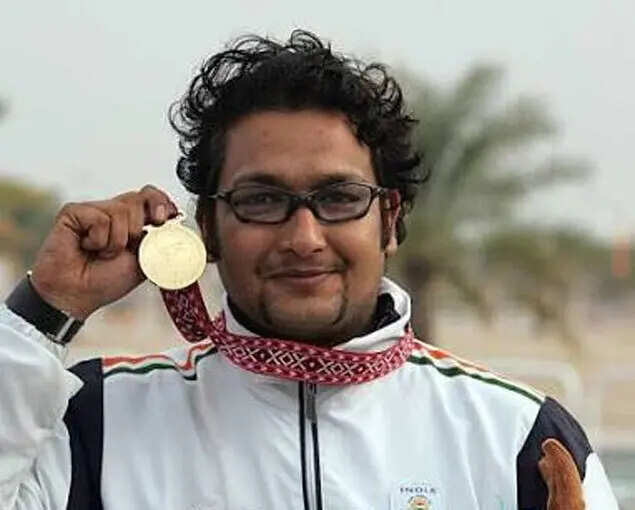
The trailblazer of Indian shooting, who was known to stand up for athletes’ rights even at a time when there were none, will be remembered for challenging the status quo, of never being afraid of questioning the authorities and being unapologetically direct.He could be abrasive, stubborn and controversial, yet even his strongest critics would feel that if Jaspal picked a fight, it was usually over something that mattered to the athletes. In an era when silence was safer, confrontation became his preferred language.In Jaspal’s case, it won’t be an overstatement that it was the sport that chose him and not otherwise.A prodigy who shone at the shooting ranges when kids of his age were busy learning to balance on their bicycles, Jaspal won silver at his first Nationals at the age of 12. The Uttarkashi-born shooter stood out by winning Asian Games gold at the age of 18 — at Hiroshima 1994 — nine Commonwealth Games gold and six others and then as the sport picked up in India, he experienced somewhat of a slump.Just as he was being written off, Jaspal stormed back into our consciousness with three gold and a silver, including a world record at the Asian Games gold in Doha in 2006. That late streak would also prove his closing statement as a shooter.As Gagan Narang wrote in his social media post, “some names you grow up chasing, this was one of them”, Jaspal made Indian shooters believe they can be like him, a winner, a rebel and a pioneer, who would carve his own niche at a time when shooters were perceived as mere travellers and not winners.Lately, one would spot him at the shooting ranges sitting behind his wards, just looking at the targets and occasionally at the shooters.He would rarely speak to the shooters during the process as he often said, “if you feel you could teach something new to the shooters at this stage, you would be a fool”.

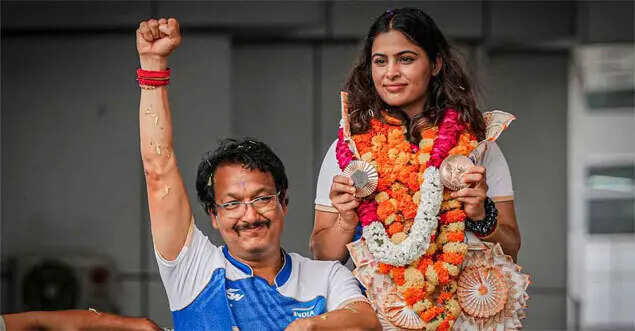
Since 2012, he was key in giving shape to the juniors development programme of the National Rifle Association of India and identified, trained, prepared shooters like Manu Bhaker, Anish Bhanwala, Saurabh Chaudhary and Chinki Yadav.Though he participated in the 1996 Olympics in 10m air pistol and 50m pistol, Olympics would elude him as his chief event, centre fire pistol was not an Olympic event. His dream would be realised in terrific fashion by his ward Manu at the Paris Games in 2024.His relationship with Manu was once famously tempestuous, had its shares of ups and downs, but when the duo decided to bury the hatchet and come back together, it became a mission that Jaspal wanted to succeed at with an almost ascetic zeal.Not many agreed with his coaching style or the personality that he was, but Jaspal didn’t care. He found a reflection of his own self in Manu and it wasn’t surprising when the duo came back together in 2023 after a rift around the Tokyo Games three years ago. If Jaspal asked Manu to punch the wall, Manu would slam two. The chemistry, the madness found a match and with it, the two bronze medals in Paris became a logical high to a dramatic journey.He was a Dronacharya, who would rather give his own thumb than ask his ward for one.