







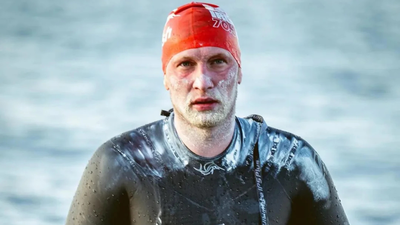
Polish ultra-swimmer Bartlomiej Kubkowski has accomplished what no one had before, becoming the first person to complete an unassisted, non-stop swim across the Baltic Sea from Kåseberga, Sweden, to Dziwnów, Poland. Covering approximately 160 kilometres (100 miles) in 55 hours and 10 minutes, Kubkowski remained in the water throughout the journey without sleeping, taking breaks or touching a support boat. The achievement came after four unsuccessful attempts over five years and has been hailed as one of the greatest feats in modern marathon swimming. Beyond setting a historic record, the endurance challenge also raised nearly $190,000 for children battling cancer through Poland’s Cancer Fighters Foundation.
How Bartlomiej Kubkowski swam 100 miles without sleep, breaks or boat assistance
Kubkowski began his swim from the Swedish coastal village of Kåseberga and finished in Dziwnów, Poland, after more than two days in the water. He completed the 160-kilometre crossing in 55 hours and 10 minutes, becoming the first swimmer to finish the route under internationally recognised unassisted marathon swimming rules.Although a support boat followed him throughout the crossing for safety, Kubkowski never touched it, climbed aboard or received any physical help. Instead, food and drinks were passed to him while he remained in the water, allowing him to continue swimming without violating the rules.
What made the Baltic Sea crossing so challenging?
The Baltic Sea is one of Europe’s most demanding open-water environments. Even during summer, the water can remain cold, while shifting winds create powerful waves and unpredictable currents that constantly push swimmers off course.Kubkowski also had to cope with complete sleep deprivation. Swimming continuously for more than 55 hours placed enormous physical and mental stress on his body. Reports said he experienced hallucinations during the latter part of the journey, a known effect of prolonged exhaustion and lack of sleep.
A fifth attempt finally brought success
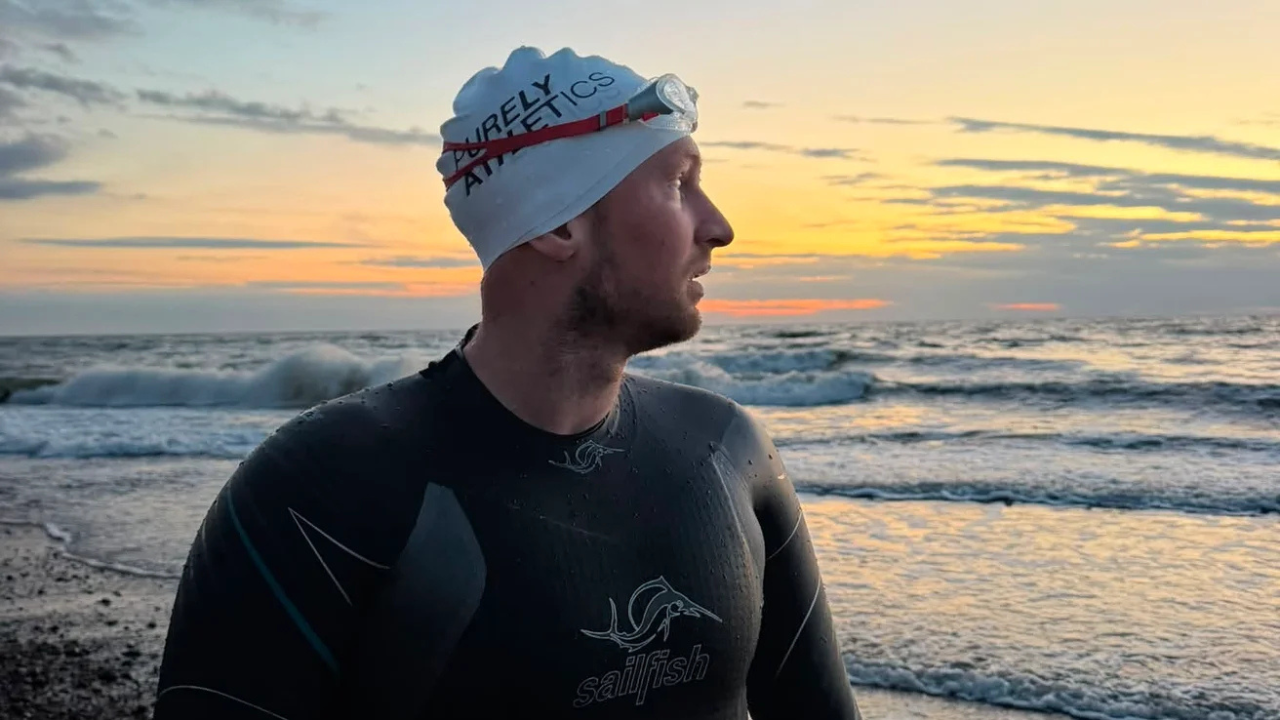
The record-breaking swim was the result of years of determination rather than a single attempt.Kubkowski first tried the crossing in 2021, before returning in 2022, 2023 and 2025. Each effort ended in disappointment, with the 2025 attempt proving especially heartbreaking after he came within roughly 11 kilometres of the finish before being forced to abandon the swim.Rather than giving up, he spent another year preparing physically and mentally before returning to complete the crossing in 2026.
Raising nearly $190,000 for children with cancer
The swim was not only about making history. Kubkowski used the challenge to raise funds for the Cancer Fighters Foundation, a Polish charity that supports children receiving cancer treatment.His campaign raised around 700,000 Polish złoty, equivalent to nearly $190,000, with donations continuing even after he reached the Polish coast. The achievement therefore became both a sporting milestone and a major charitable success.
Who is Bartlomiej Kubkowski?
Kubkowski is one of Poland’s best-known ultra-endurance swimmers and has spent years taking on extreme open-water challenges.Earlier in 2025, he set a 24-hour pool swimming world record by covering 103.58 kilometres in a single day. He has also competed in ice-swimming events and founded the Ultra Baltic Swim project, which eventually culminated in his successful Baltic Sea crossing.
Why this swim is significant in marathon swimming
Unassisted marathon swimming follows strict international rules. Swimmers cannot leave the water, sleep, rest on a boat or receive any physical assistance during the attempt. They may only take food or fluids while remaining in the water.Meeting these conditions over a distance of 160 kilometres makes Kubkowski’s achievement one of the most demanding endurance swims ever completed. His success is expected to become a landmark moment in the history of open-water swimming.
A record built on resilience
Kubkowski’s Baltic Sea crossing is as much a story of perseverance as athletic excellence. After failing four times, including one attempt that ended only a few kilometres from the finish, he refused to abandon his goal. His successful 55-hour swim from Sweden to Poland has now secured his place in endurance sports history while raising vital funds to help children with cancer, proving that determination can be just as powerful as physical strength.


