













ITR filing FY 2025-26 (AY 2026-27): The income tax return filing season has started. One of the first things a taxpayer should do before logging into the income tax portal (incometax.gov.in/iec/foportal/) to file their tax return is to keep all necessary documents required for ITR handy. Ideally, you should also cross check information across all your major documents such as Form 16, Form 26AS, Annual Information Statement (AIS), interest statements etc. to see if there are any discrepancies.For salaried taxpayers, Form 16 is one of the most important documents for ITR filing. Form 16 is useful for income tax return filing because it is a certificate that confirms the salary paid to you, tax deducted and the tax deposited by the employer with the government on the employee’s behalf.Also Read | ITR filing FY 2025-26: Can you switch between new and old income tax regime every year?
Is Form 16 mandatory for ITR filing?
According to Siddharth Deb, Tax Partner at EY India, it is generally preferable to wait for Form 16, since it makes ITR filing quicker, simpler and less prone to mismatch or rework.“While the employer is required to issue Form 16 where salary TDS has been deducted, a taxpayer may still file the return without it, provided the salary and tax details are carefully reconciled using alternate records such as Form 26AS, AIS and salary documents,” Siddharth Deb tells TOI.

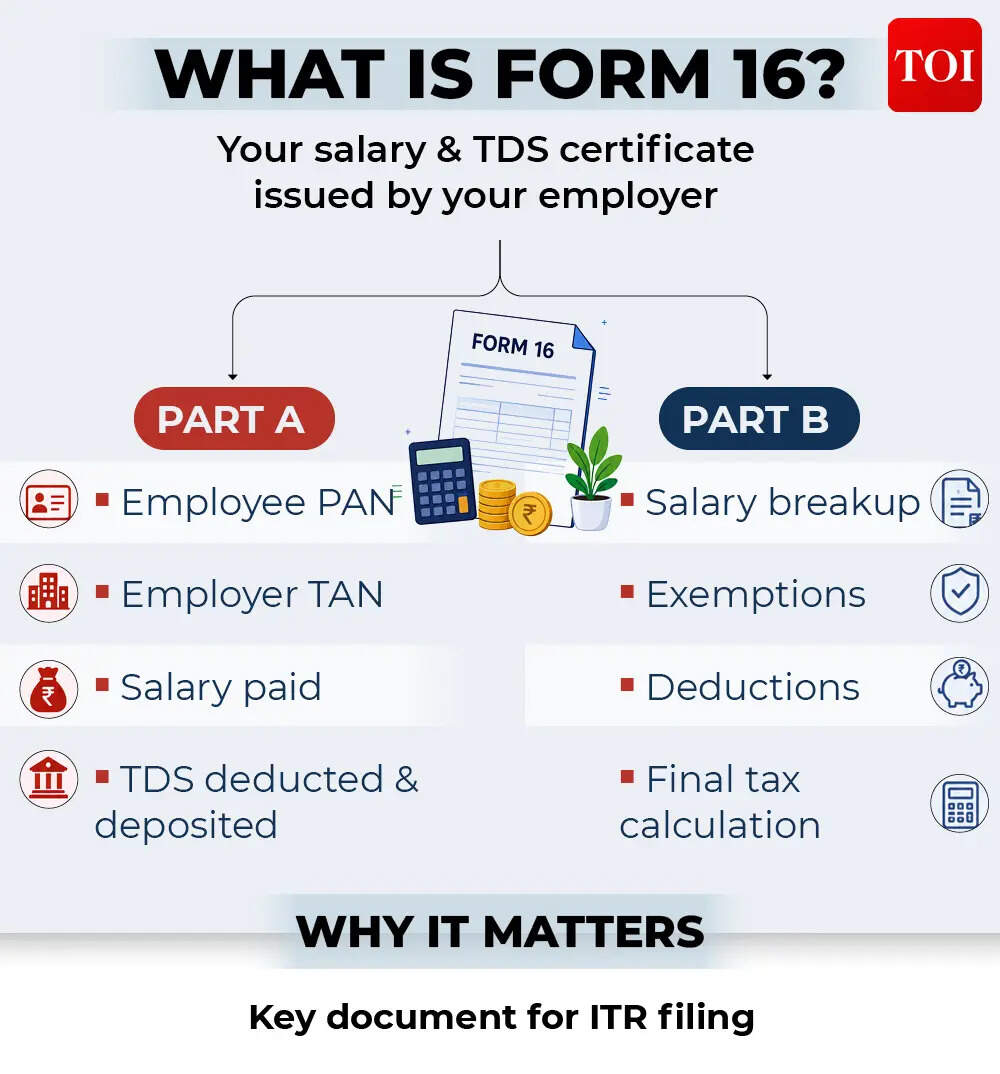
Form 16 has two parts: Part A contains identification and TDS details such as PAN, TAN and the summary of tax deducted and deposited. Part B provides the salary break-up, exemptions, deductions and final tax computation.Where applicable, details of perquisites may also be reported separately in Form 12BA.Also Read | ITR filing FY 2025-26: What documents are required to file your income tax return? Quick checklist
What to do if the employer has not issued Form 16?
Where tax has been deducted from salary, the employer is required to issue Form 16 within the prescribed due date (on or before 15 June 2026 for the Financial Year 2025-26). Delay in issuing Form 16 to the employee may attract a penalty of Rs 500 per day of default for the employer, the EY tax expert says.If the Form 16 is not received from the employer, the taxpayer may still prepare the ITR using salary slips, bank statements showing salary credits, Form 26AS and the Annual Information Statement. These records are generally sufficient to compute salary income and verify tax credits before ITR filing.“One area that needs attention is where the tax deducted by the employer is not reflected in Form 26AS or AIS. In such cases, the taxpayer should promptly follow up with HR or payroll for correction. Also, if the taxpayer changed jobs during the year, salary from all employers must be considered together to avoid any tax shortfall at the time of ITR filing,” says Siddharth Deb.