










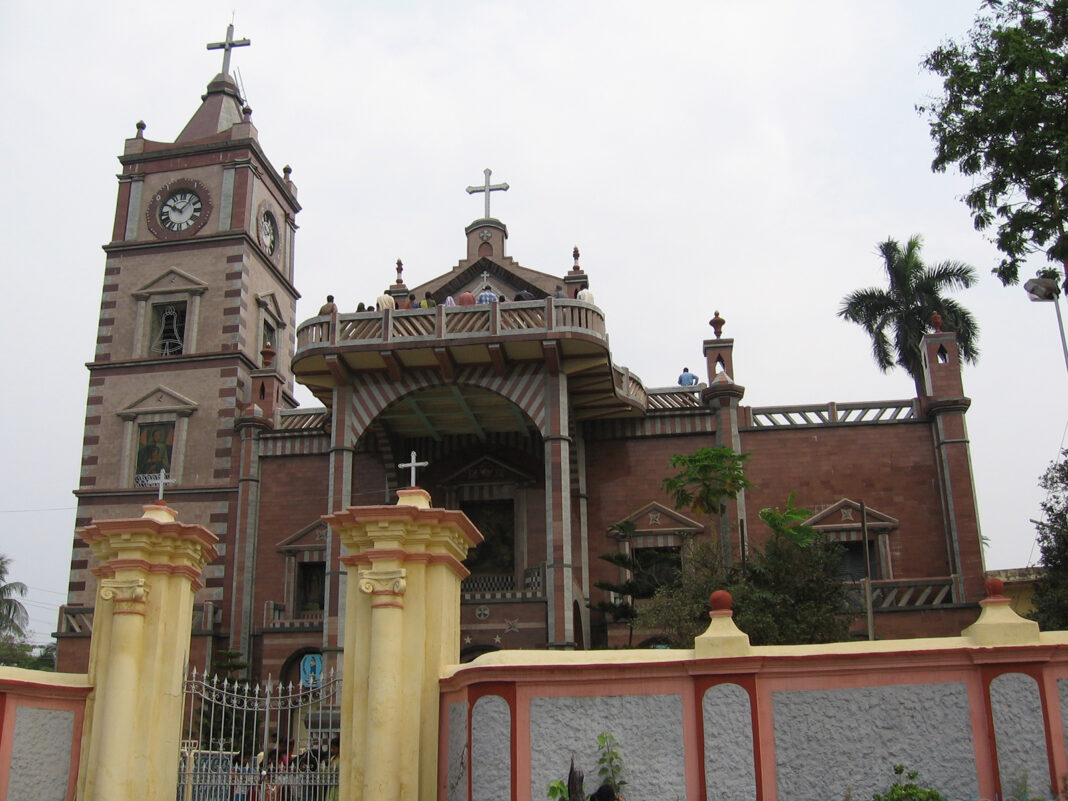
BANDEL, India (RNS) — Each week for the last 13 years, 28-year-old Rimpa Chowdhury, who describes herself as a devout Hindu, has visited the Basilica of the Holy Rosary — a historic 16th-century Catholic church on the banks of the Hooghly River in eastern India with a shrine to the Virgin Mary.
For Chowdhury, the Bandel Church, as it is known locally, is more than a place where her prayers have been answered. Its vast riverside grounds, 50 miles north of Kolkata, the capital of West Bengal, are where she has found community and peace.
“There’s something about this place,” said Chowdhury, wearing a loose green tunic. “A shrine becomes something else when a woman has power over it.”
Over decades, thousands of pilgrims — the majority of them Muslims and Hindus — have been visiting the basilica for feast days every year, led by what they call the “power of the divine feminine” — their belief in the power of Mary, the mother of Jesus.
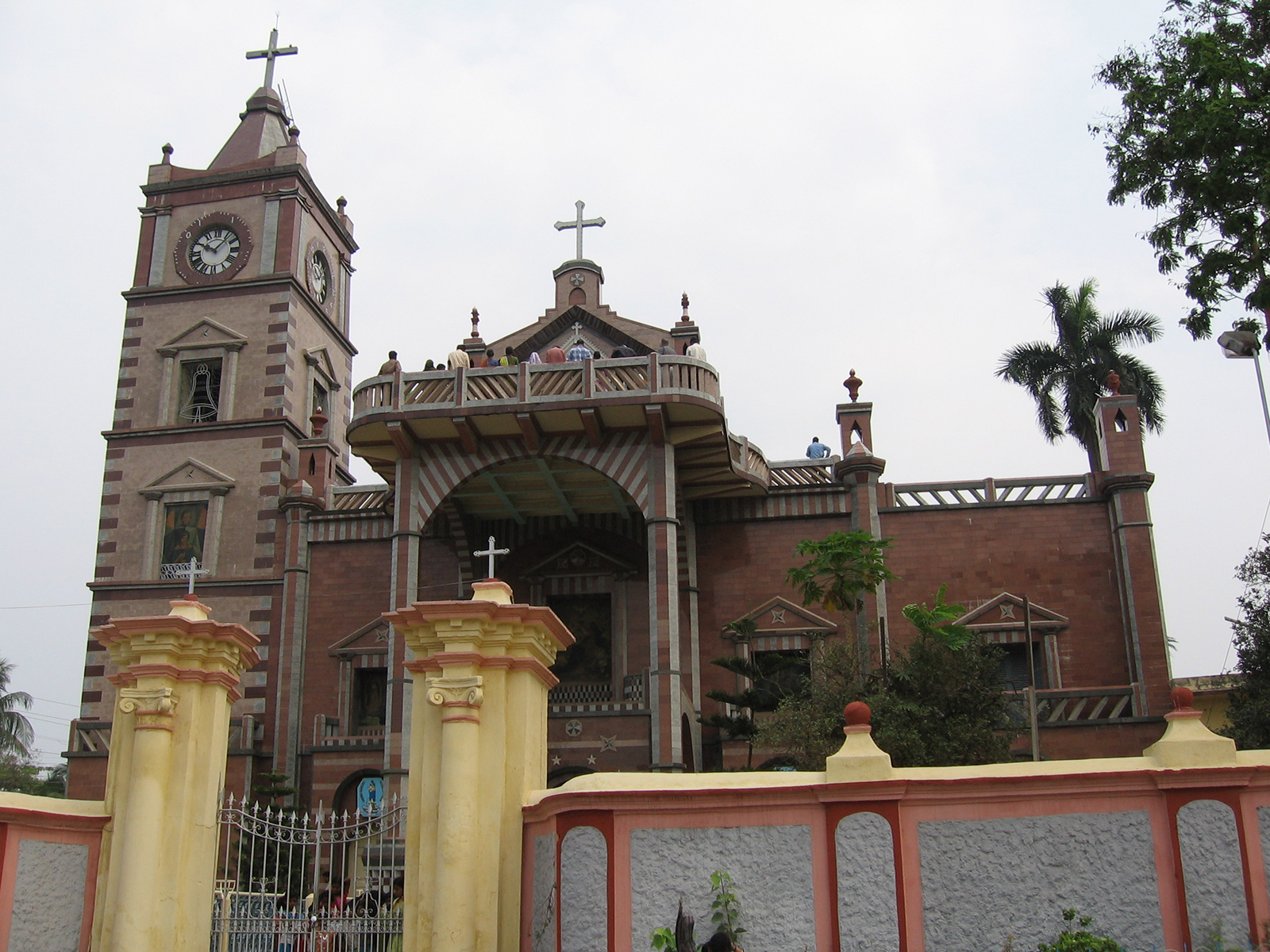

Against its grand façade, featuring soaring arches and a vaulted-ceiling nave of ancient murals, a statue of Mary, “Our Lady of Happy Voyage,” stands out as the main attraction. Sailors and travelers visit her shrine frequently, praying for protection from danger. In 1988, Pope John Paul II declared the historic sanctuary a minor basilica, recognizing the church’s spiritual significance.
According to historical records, Catholic Augustinian friars and Portuguese traders settled in this region of Bengal in the late 16th century. Portugal’s monarchy tied Marian devotion to their colonial conquests, placing their outposts under the protection of the Virgin Mary.
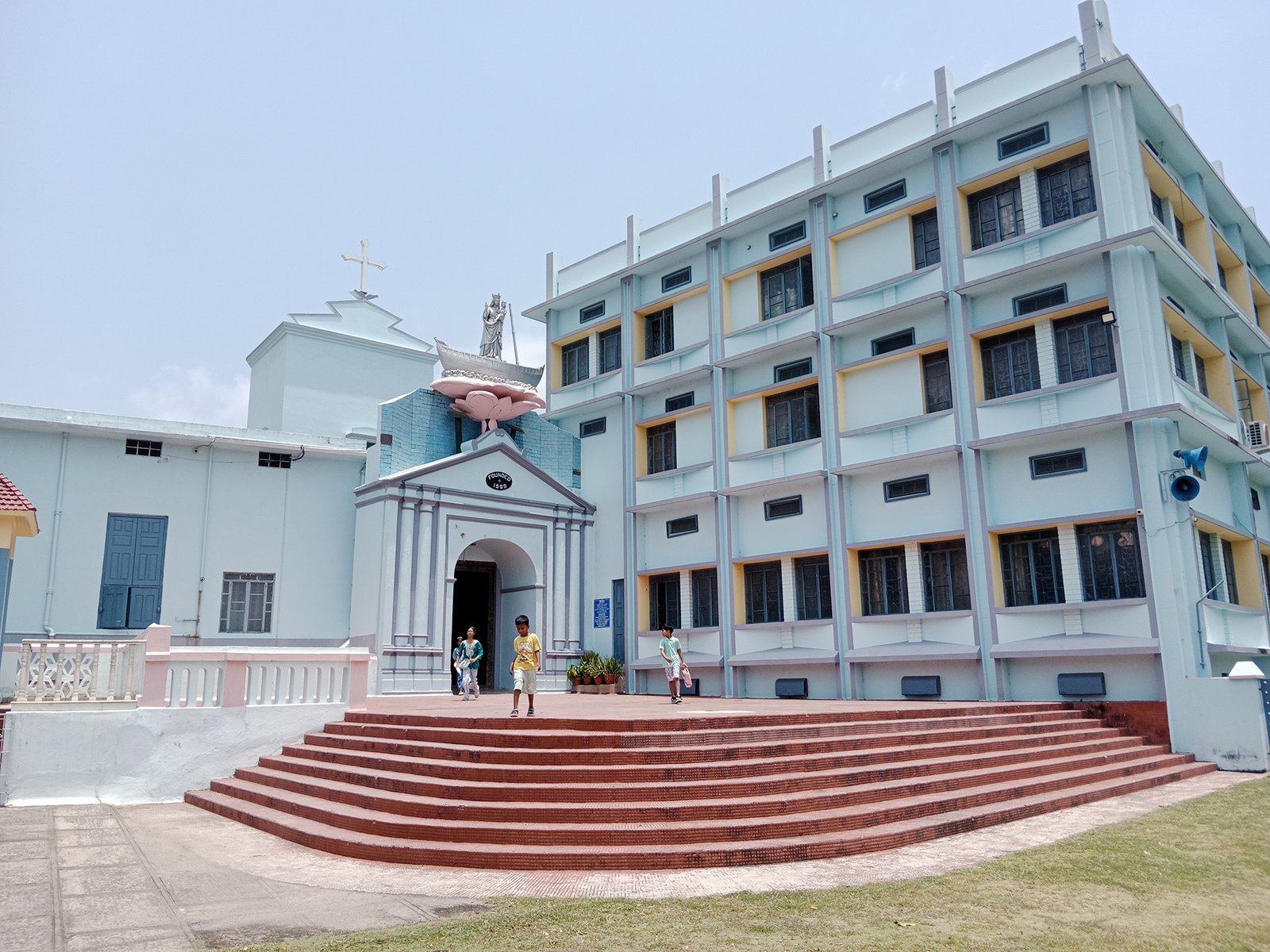
Although the original church, built in 1599, was destroyed during an invasion by Muslim rulers of the Portuguese outpost in 1632 and again by an earthquake, legends say the rescue of Mary’s statue from the depths of the Hooghly River cemented her place as a divine protector.
“In Bengal, the goddess is revered as the ultimate primordial force in the universe,” said Father John Chalil, lead priest of the Bandel Church. “Devotees from all over India come here seeking sanctuary, and the nuns cater to their various needs.”
Since the 1950s, Chalil says, nuns from five congregations have been serving at the shrine and building social harmony in an area dotted with terracotta temples, mosques and churches. Local communities lean on each other, often transcending religious differences.
RELATED: India’s Christian leaders work to convince Modi government to curb attacks
The shrine community around the church stretches across several villages — each village informally named after Marian apparitions, including Our Lady of Fatima and Our Lady of Vailankanni (Good Health).
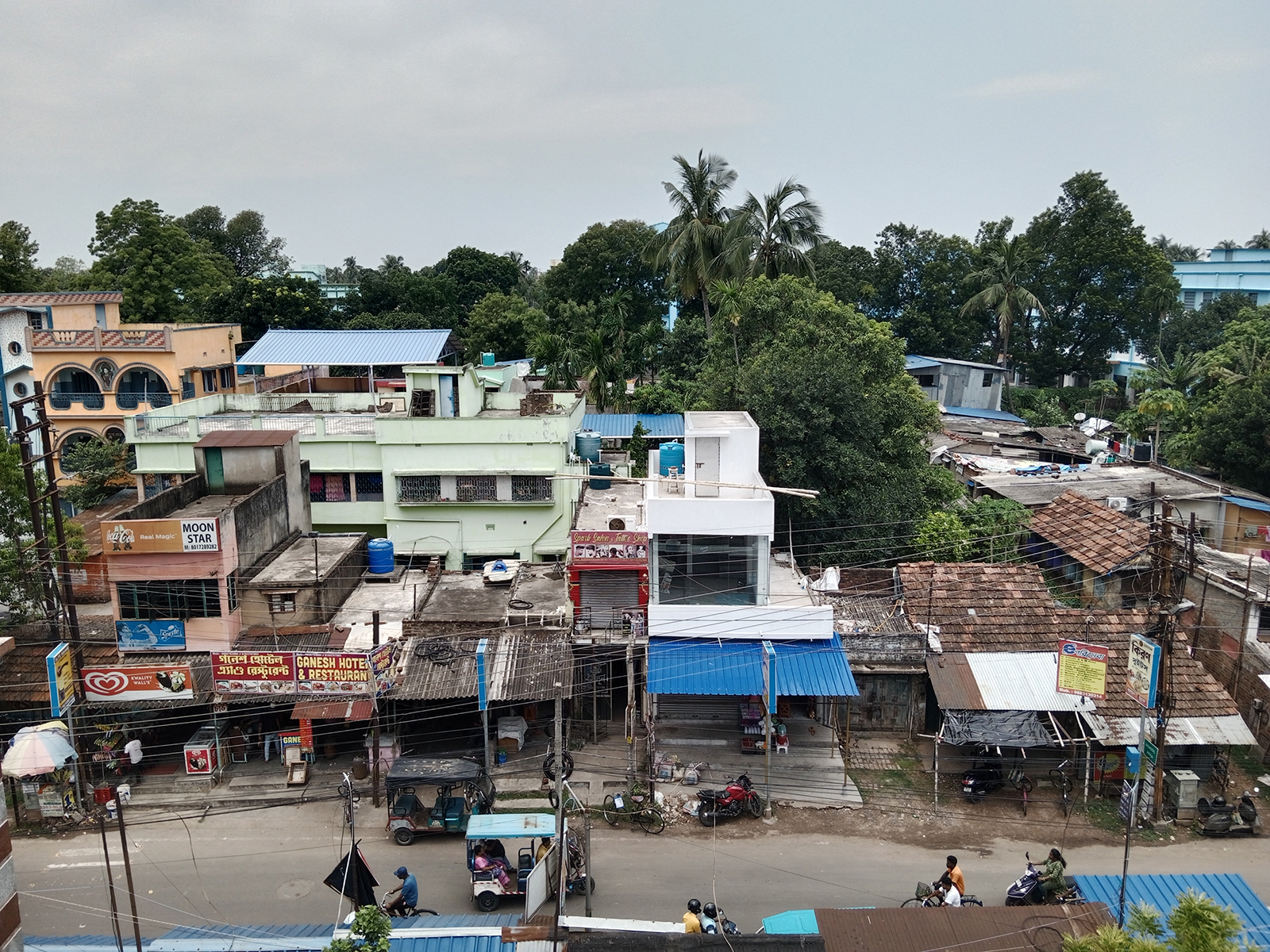
The harmony is historically rooted. Though once a vital Portuguese outpost on the Hooghly River, the town of Bandel has evolved into a shared space where people of all faiths venerate local shrines. The church’s community programs reach non-Christian populations.
“We go to the surrounding villages to educate the masses about women’s rights and tribal welfare,” said Sister Nirmala, a nun involved with spiritual work at Bandel for more than 15 years. “Religious differences have not interfered with people’s faith in Mary.”
The nuns have been offering spiritual nourishment to the devotees and smoothing sectarian differences despite the growing religious polarization in India.
Those with Mother Teresa’s Missionaries of Charity provide vital care and health services in the nearby areas. The Missionary Sisters of Mary Immaculate offer retreats and counseling to pilgrims, and the Auxilium Convent Sisters run a boarding home for young, underprivileged girls, providing them an education and assistance to live independently after graduation.
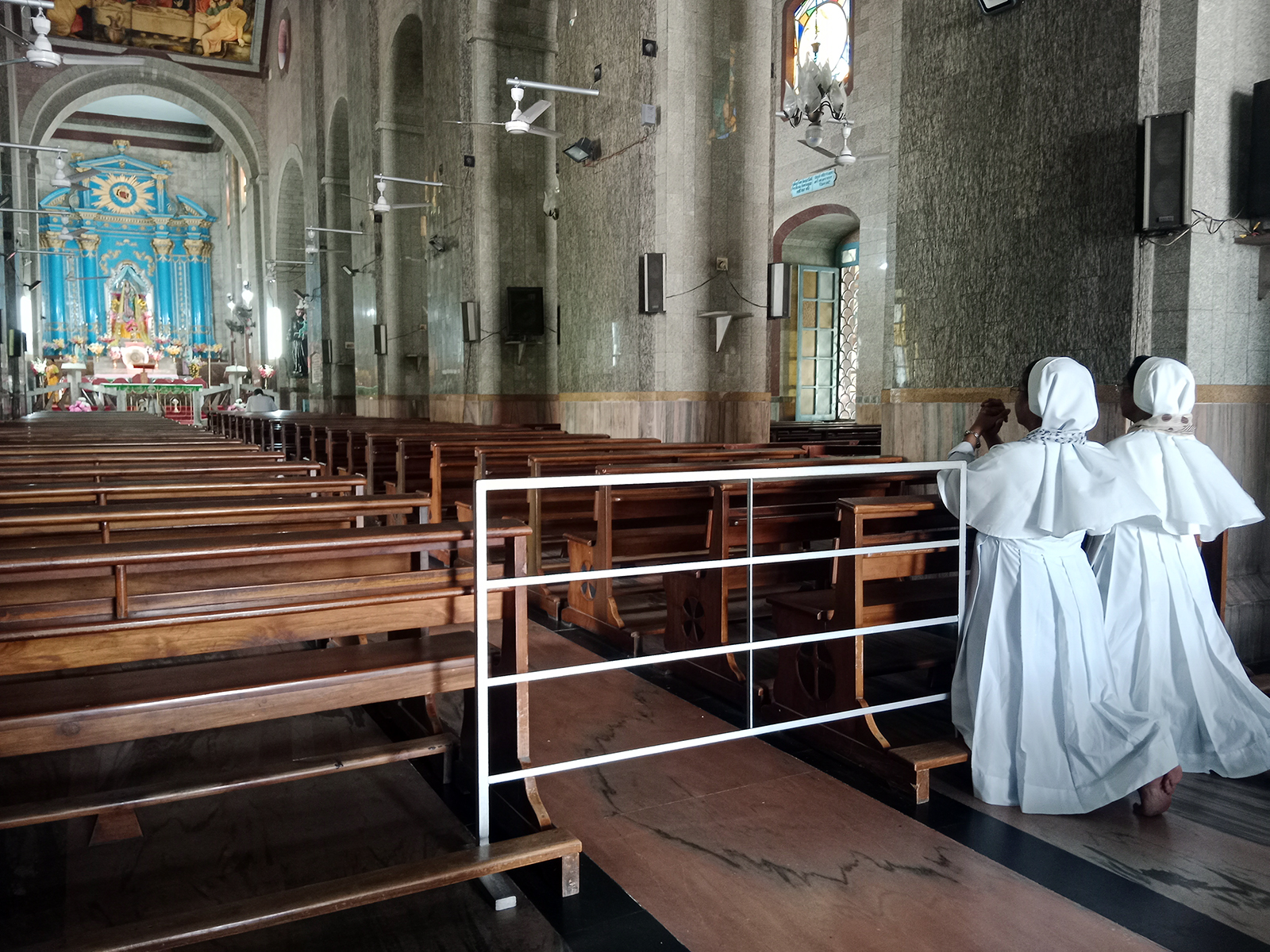
Sister Philomena Mathew, a nun with the Missionary Sisters of Mary Help of Christians, another Catholic order in the local community, is concerned about the growing attacks on Christians across the country.
“We’re willing to confront anyone who obstructs the peace and harmony in this region,” she said.
Anti-Christian violence spearheaded by Hindu nationalist mobs has escalated across India since Prime Minister Narendra Modi’s Bharatiya Janata Party (BJP) came to power in 2014. Vigilante groups have disrupted prayer gatherings, vandalized church properties and assaulted pastors and nuns, accusing them without evidence of forcibly converting Hindus to Christianity.
“Last year there were 831 attacks against Christians in India,” said AC Michael, the national coordinator for United Christian Forum, a New Delhi-based human rights coalition that advocates for the rights of religious minorities. “From isolated localized incidents, the violence has become systemic, operating through a network of persecutions.”
Even though West Bengal has in the past been a safer state for religious minorities compared to the rest of the country, the recent election of a BJP state government has sparked apprehension, with attacks against Christians rising in the region.
RELATED: Why anti-Christian persecution demands our collective action
Mother Teresa’s Missionaries of Charity, a global Catholic order founded in Kolkata, has been coming under severe scrutiny from Hindu nationalist organizations, which claim its charitable work is aimed at converting vulnerable Hindus to Christianity. In December 2021, India’s Ministry of Home Affairs revoked the organization’s license, but reversed its decision after weeks of pushback.


“If nuns from the Missionaries of Charity were able to fend off attacks from religious extremists, I’m sure nuns at Bandel will also keep the community safe,” Michael said.
Mother Teresa visited Bandel Church in 1995, two years before her death. Her work in the region was centered on maintaining a mutually supportive relationship with the local Salesian order.
The town of Bandel has not been a focal point of targeted minority violence, but the broader region has occasionally witnessed political and festival-related communal clashes. On July 5, a mob barged into a newly constructed church south of Kolkata, threatening the congregants and vandalizing crosses.
“It’s the vision of the great saints that we are carrying forward,” said Sister Jesline Rose, a nun with the Missionary Sisters of Mary Immaculate who serves at the church. “No doubt the political landscape in Bengal is changing, but we’ll keep our pluralistic spirit alive.”
Rose and her fellow nuns regularly visit Hindu and Muslim families in the neighborhood to offer spiritual support and solace to individuals facing personal and medical hardships.
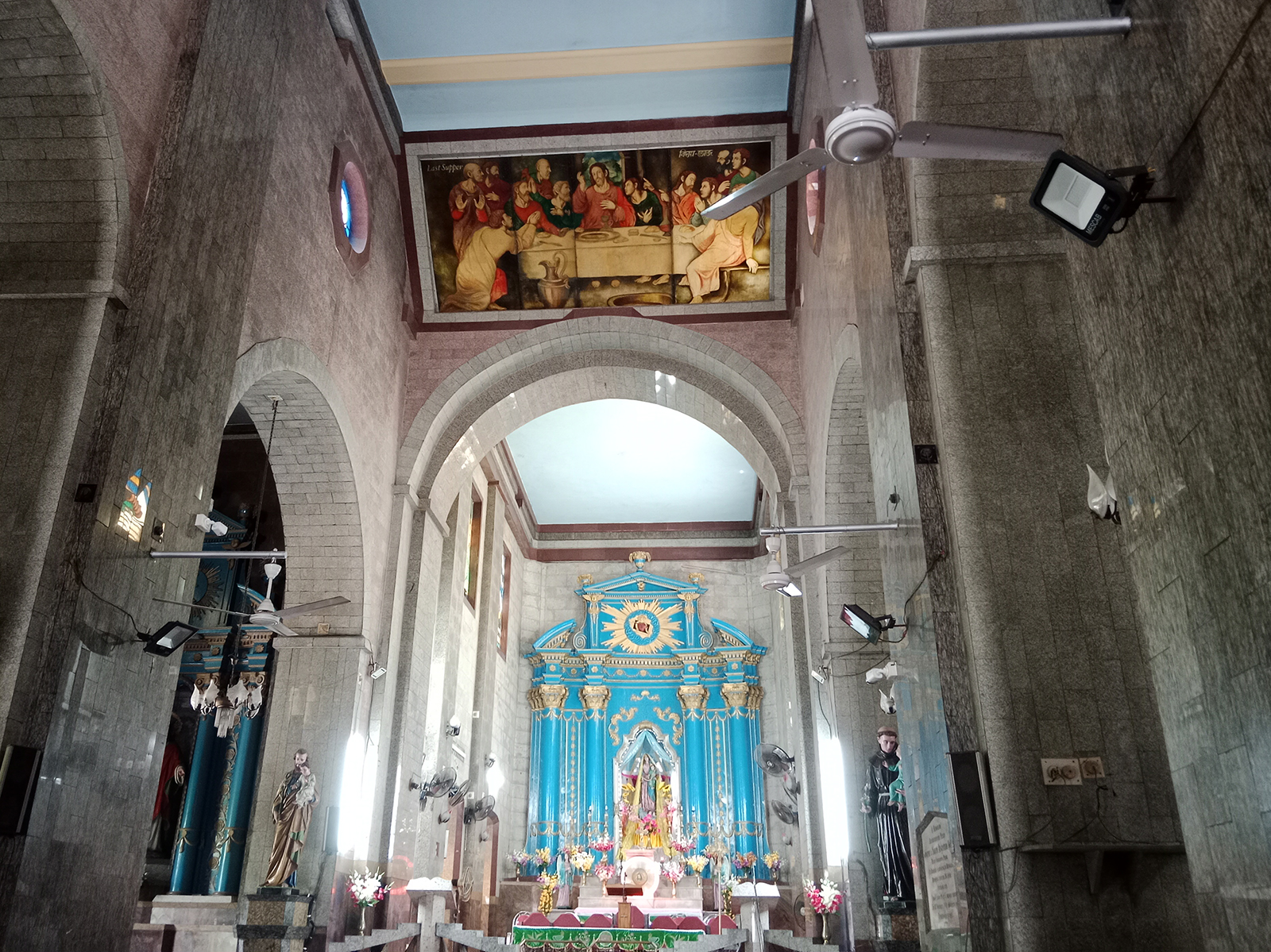

The pilgrims, aided by the nuns, write down their prayer intentions on small slips of paper that are dropped into the wish box located near the statue of the Virgin Mary.
During festivals and winter walk pilgrimages, the nuns manage thousands of devotees — mostly Muslims and Christians — who congregate on the grounds to unite in thanksgiving.
The church is the unifying cultural monument for the devotees, and the nuns, its custodians.
They believe the power of the divine feminine in Bengal — from the Virgin Mary to Hindu goddesses Kali and Durga — will help them fight off threats from religious extremists.
“We look to the nuns for hope,” said Chowdhury, who lives in the narrow alleyways behind Bandel Church, a neighborhood of mostly Hindu and Muslim families. She’s anxious about the rising religious intolerance in the country, which she believes could trickle down to Bengal. The nuns “embody the power of Mother Mary, who is the protector of all devotees at our church,” she said.