











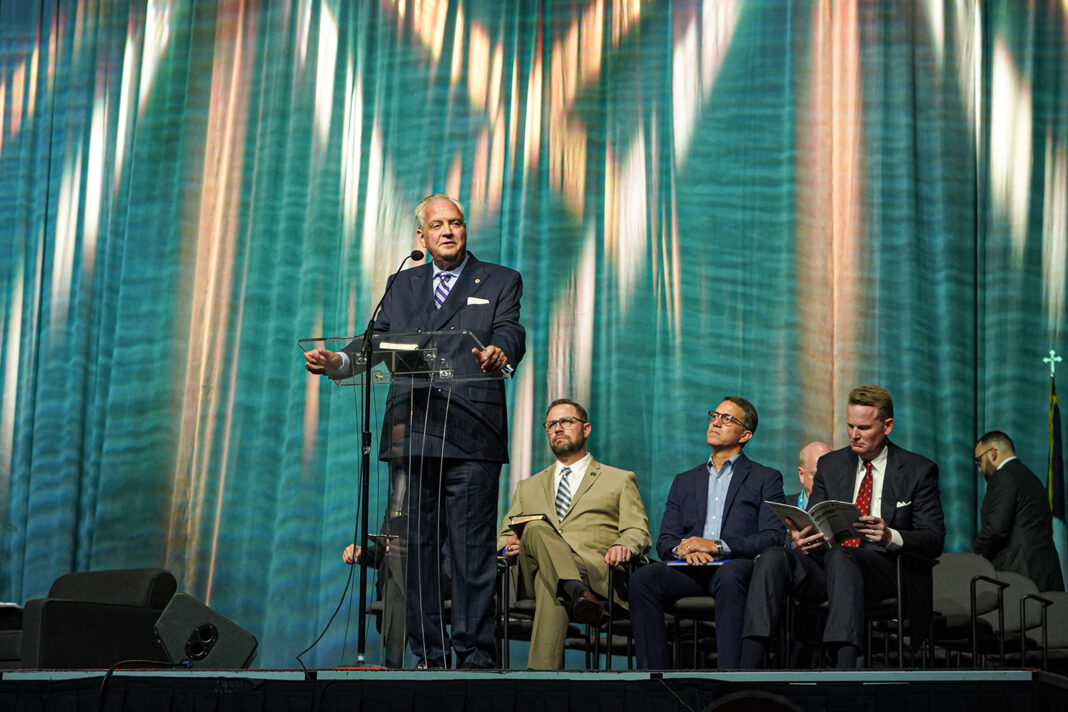
ORLANDO, Fla. (RNS) — In the first summer of this century, more than 11,000 Southern Baptists gathered in Florida to update their convention’s statement of faith by limiting the office of pastor to men only.
But that 2000 limit was not binding on local churches. Instead, it applied only to the denomination’s seminaries and mission boards.
“We don’t have the right, the authority or the power to limit anybody,” the Rev. Adrian Rogers, a famed Baptist preacher who chaired the committee that revamped the Baptist Faith and Message, told reporters at the time.
“We would resist that.”
Al Mohler, head of Southern Baptist Theological Seminary, agreed.
“We would never presume to tell another church whom they may call as a pastor or tell another person whether or not they may serve as pastor,” Mohler, who also had served on the committee, told Baptist Press, an official SBC publication, in 2000. “We’re not trying to force our beliefs on someone else.”
Some churches left the SBC and joined groups such as the Cooperative Baptist Fellowship, which allows women to serve as pastors. A few churches were expelled by their local association — including Glendale Baptist Church in Nashville, Tennessee, which was kicked out not because its pastor was a woman, but because she was gay.
But there was no national action to expel churches with women pastors.

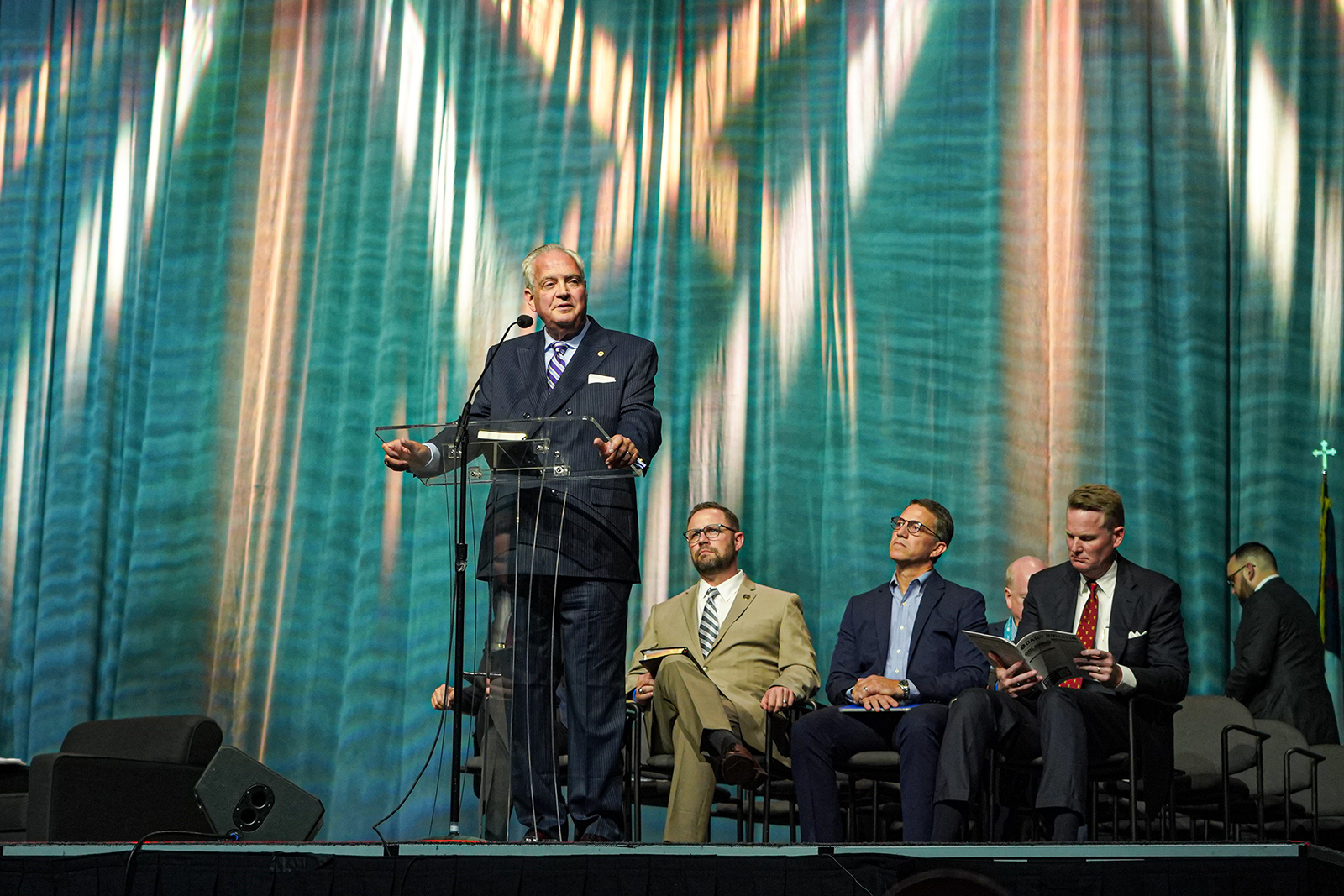
Al Mohler addresses the Southern Baptist Convention annual meeting, June 9, 2026, in Orlando. (RNS photo/Marty Jean-Louis)
For more than two decades, Mohler’s view was the status quo. While his seminary and other Baptist institutions taught that only men should be pastors, some churches believed the rule on male-only clergy applied just to the senior pastor. So they gave women in staff roles the title of pastor.
Then Mohler changed his mind and decided all women pastors had to go.
How and why that happened reveals a larger trend among conservative evangelicals and MAGA advocates, in which women are seen as threats to both the church and the country. It also reflects the way social media has transformed every local debate into a national controversy — and the way well-intentioned reforms can have unintended consequences.
During the recent SBC meeting in Orlando, Mohler claimed the Bible demanded that Southern Baptists make it clear women pastors were no longer welcome.
“There’s a great line that divides liberal and biblical evangelicalism, and you can see it on this very issue,” Mohler told thousands of local church representatives, known as messengers, gathered in a cavernous meeting hall at the Orange County Convention Center.
“The trajectory of liberal denominations is clear.”
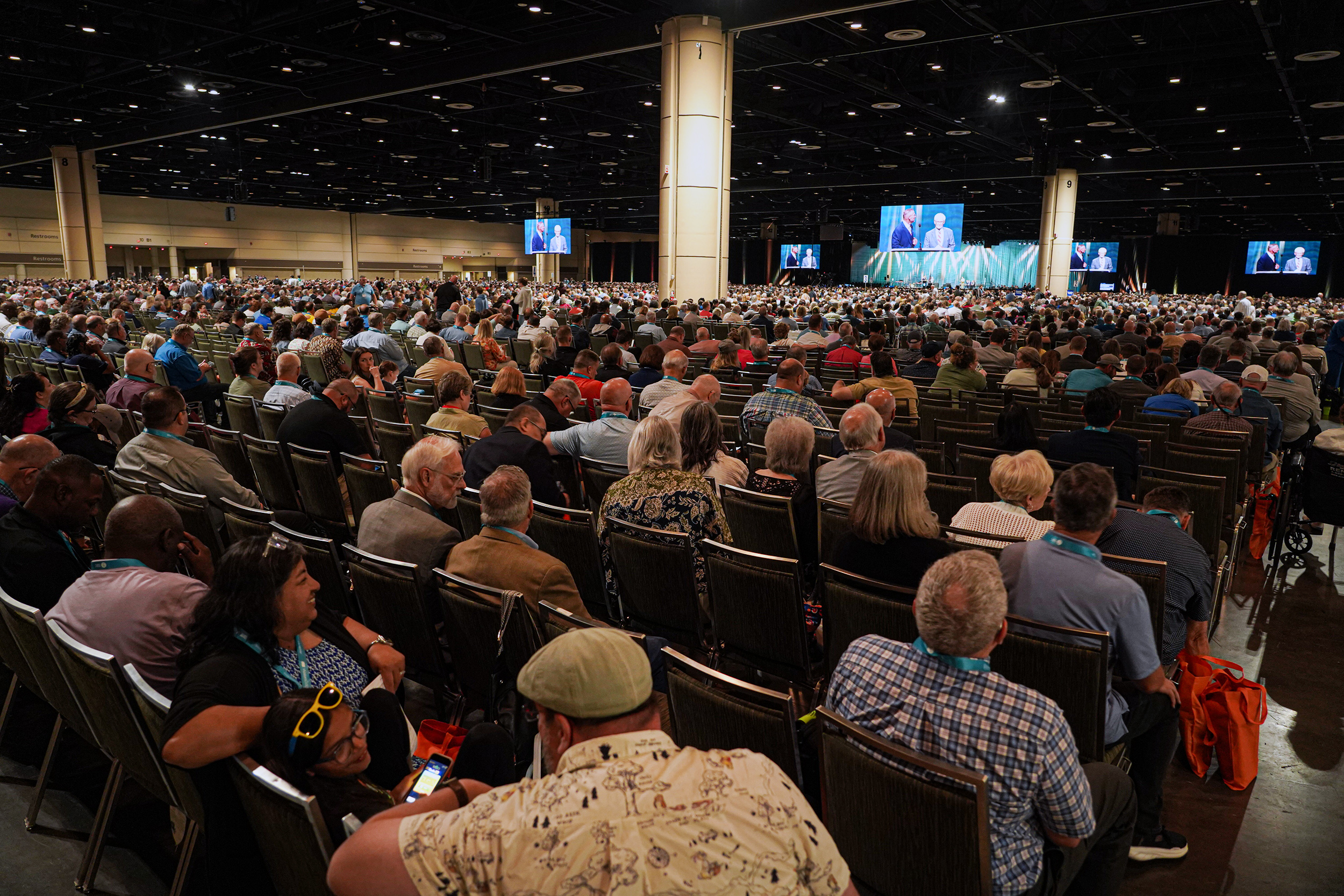
Thousands of messengers attend the Southern Baptist Convention annual meeting, June 9, 2026, in Orlando. (RNS photo/Marty Jean-Louis)
Mohler’s “Truth and Unity Amendment,” which would bar churches with women pastors — or churches that allow women to preach — was approved by three-quarters of the messengers at the SBC’s annual meeting in mid-June. If approved again next year at the SBC’s 2027 meeting in Indianapolis, the amendment would become part of the SBC’s constitution.
In an interview with reporters after the vote on the amendment, Mohler said he was unaware until a few years ago that there were still churches in the SBC that had women pastors. He’d assumed most had left during the SBC’s long-running civil war, known as the conservative resurgence.
Then, a social media post from Saddleback, a prominent megachurch, about ordaining some women staffers as pastors sparked an online controversy over the issue.
Those posts led to repeated attempts to expel churches like Saddleback, which was deemed not in “friendly cooperation” with the SBC in 2023.
“Social media and the digital revolution, where all of a sudden someone in one part of the SBC can find out what’s going on, or be presented with a social media feed, of something on the other side of the country, that’s a game changer,” Mohler told reporters.
Mohler is partly right.
Heidi Campbell, a professor of communication at Texas A&M University, said social media has made the internal workings of churches everybody’s business — not just the members of that church. And more people can weigh in on what should be done about it, said Campbell, who studies how digital media affects religious groups. That explains some of what happened in the SBC.
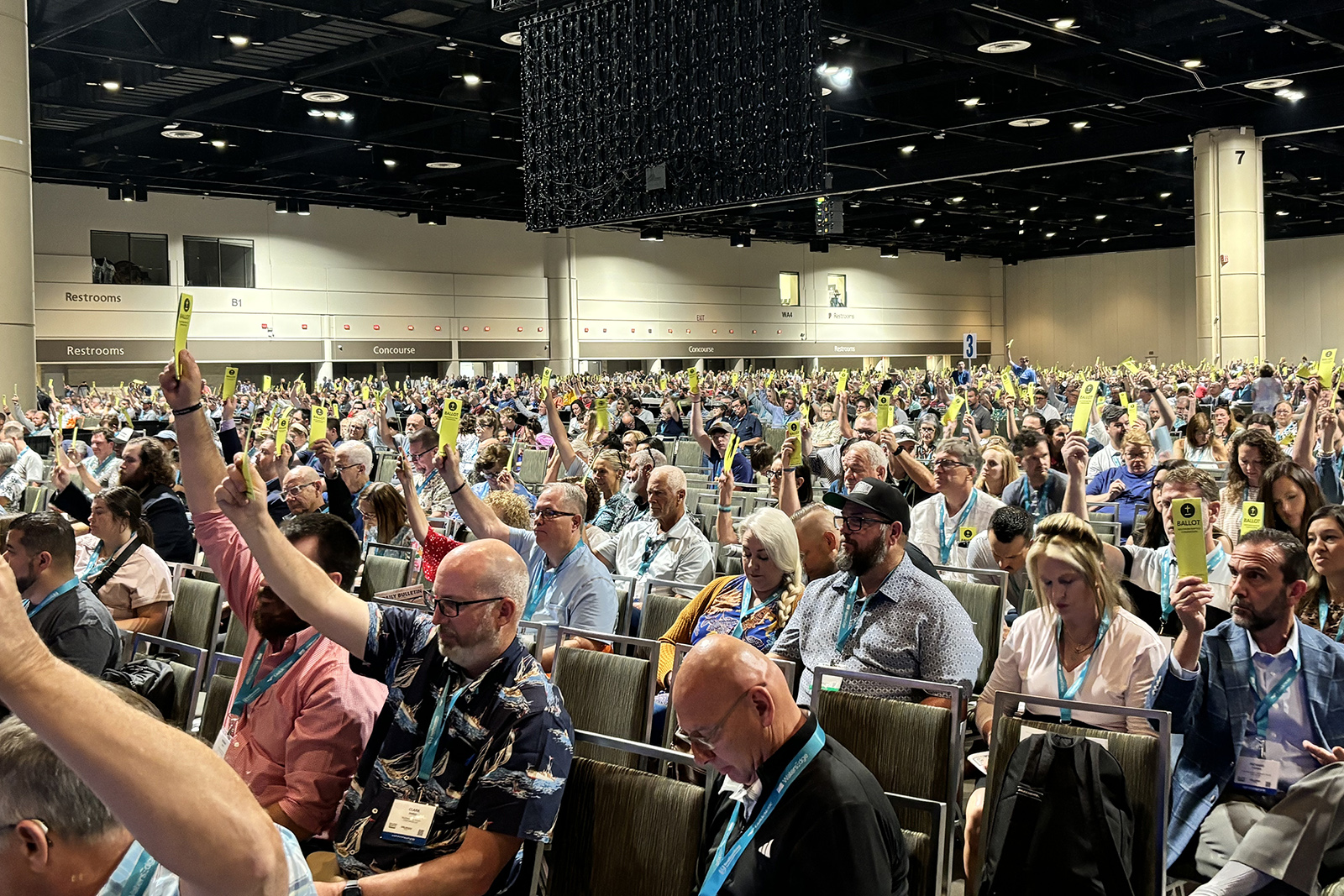
Messengers, or delegates, vote during the Southern Baptist Convention annual meeting, June 10, 2026, at the Orange County Convention Center in Orlando. (RNS photo/Bob Smietana)
“It makes something that would have been just behind closed doors into a huge media event,” Campbell said.
Still, it’s unclear exactly how many SBC churches have women pastors. In 2000, when the male-only limit was added to the SBC statement of faith, less than “one-tenth of one percent” of the denomination’s then 41,000 churches had a woman serving as senior pastor, according to a report in SBC Life, an official denominational publication.
Even in the Baptist denominations that allow female pastors, relatively few women serve as senior or co-pastors, ranging from about 10% of churches in the Cooperative Baptist Fellowship to about 1% of Texas Baptist congregations and 4% of churches in the Baptist General Conference of Virginia.
Mike Law, a Virginia pastor who has advocated for a ban on churches with women pastors, claimed in 2023 to have found 170 SBC churches where women hold the title of pastor. The SBC has more than 40,000 congregations.
But there’s more to the story.
The debate over whether any woman could hold the title of pastor, no matter what her responsibilities, came at a time when the SBC was trying to gain more control over local congregations.
In 2019, the SBC set up a permanent credentials committee to help determine if churches were in “friendly cooperation” with the denomination. That change made it easier for the SBC to vote out churches for issues like racism or sexual abuse.
But soon, Southern Baptists who disapprove of women pastors began to report churches like Saddleback to the committee. In 2023, Saddleback, whose pastor, Rick Warren, had been an evangelical celebrity for decades, was one of several churches expelled for having women pastors on staff.
The controversy over Saddleback also started during a time when Southern Baptists were reeling over a sex abuse scandal. The scandal threatened the power of male SBC leaders, said Meredith Stone, executive director of Baptist Women in Ministry.
“They became the face of the enemy to many people,” she said. “So, to get that off themselves, they needed to create a new enemy.”
Many of the advocates for reforms to prevent sexual abuse were women. Those women and women pastors became a convenient target, said Stone. And a tool meant to deal with racism and abuse was used to paint women pastors as a threat to the denomination.

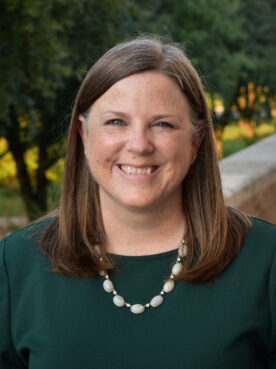
Meredith Stone. (Photo courtesy of Baptist Women in Ministry)
“It is unfathomable to think that women who are simply sharing the love and grace of Jesus Christ are an equal kind of threat to the ministry of the Southern Baptist Convention as racism and the perpetuation of sexual abuse,” said Stone.
Stone also worries that social media is being used to harass women who serve as pastors, rather than just as a tool for debate. Critics of women pastors have posted videos and photos of women preaching, calling for the pastors and their churches to be removed from the SBC, or in some cases contacting the pastor and their churches.
“It’s not just calling attention to things,” she said. “It has enabled harassment, which is harmful.”
The controversy over women pastors is coming at a time when the SBC is rethinking how to engage the outside world post-COVID and during the age of President Donald Trump.
Calvin University professor Kristin Kobes Du Mez, author of “Live, Laugh, Love,” a forthcoming book about Christian women, said that during the Obama era, Southern Baptists had tried showing a friendlier face to the outside world, more concerned about loving their neighbor than winning at politics.
Southern Baptist leaders also championed diversity and lifted up women as important to the church, even if they could not be pastors.
That more winsome approach is now out of style. Churches or leaders who are less than enthusiastic MAGA supporters are now viewed with suspicion. Diversity is seen as a liberal plot. Outspoken women are accused of being more feminist than Christian.


Kristin Du Mez. (Photo © Deborah K. Hoag)
Critics of sex abuse reforms, including Willy Rice, who was recently elected SBC president, began to claim that concerns about abuse in the SBC have been overblown and that feminists and activists had a political agenda to harm the SBC and its Nashville-based Executive Committee.
Rice has ties to a faction of MAGA activists and pastors who believe the SBC has become too “woke” or liberal in recent years and wants the denomination to become more aggressive in fighting the culture wars.
That faction, which also opposes women pastors, is part of a larger conservative Christian movement that views women with suspicion, said Du Mez. Some in the movement say women should have no authority in the church. Others say women should not be allowed to vote.
“What you’ll hear in these circles, not just in the SBC, but in the Christian right generally, and in the right more broadly, is that women are the problem here,” she said. “There’s a sense that if women had less power, then our country and our church would be more on track and more faithful.”
Ironically, the push to expel churches with women pastors comes at a time when women, who have long served as the backbone of congregations of all kinds, are losing faith in religion. That’s especially true of young women, according to national polling.
Baylor historian Beth Allison Barr, author of “The Making of Biblical Womanhood,” said she suspects that leaders in the SBC like Mohler fear their hold on power is slipping away, and so are doubling down on their theology to preserve their legacy.
“The whole Southern Baptist world has staked its entire identity on this issue of male-only leadership with the conservative resurgence,” she said. “For that to be questioned would undo everything that the conservative resurgence has been trying to accomplish.”