






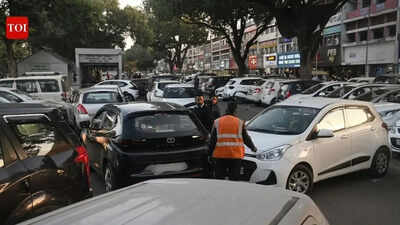
Parking disputes in cities like Delhi and Bengaluru are no longer just minor neighbourhood issues. In many cases now, they are ending in violence.Over the past two years, there have been several incidents where arguments over parking have led to assaults, firing and even deaths.Most of these begin in a fairly routine way. A vehicle is parked in the wrong place, or someone is asked to move it. A few words are exchanged. But the situation does not always remain under control.
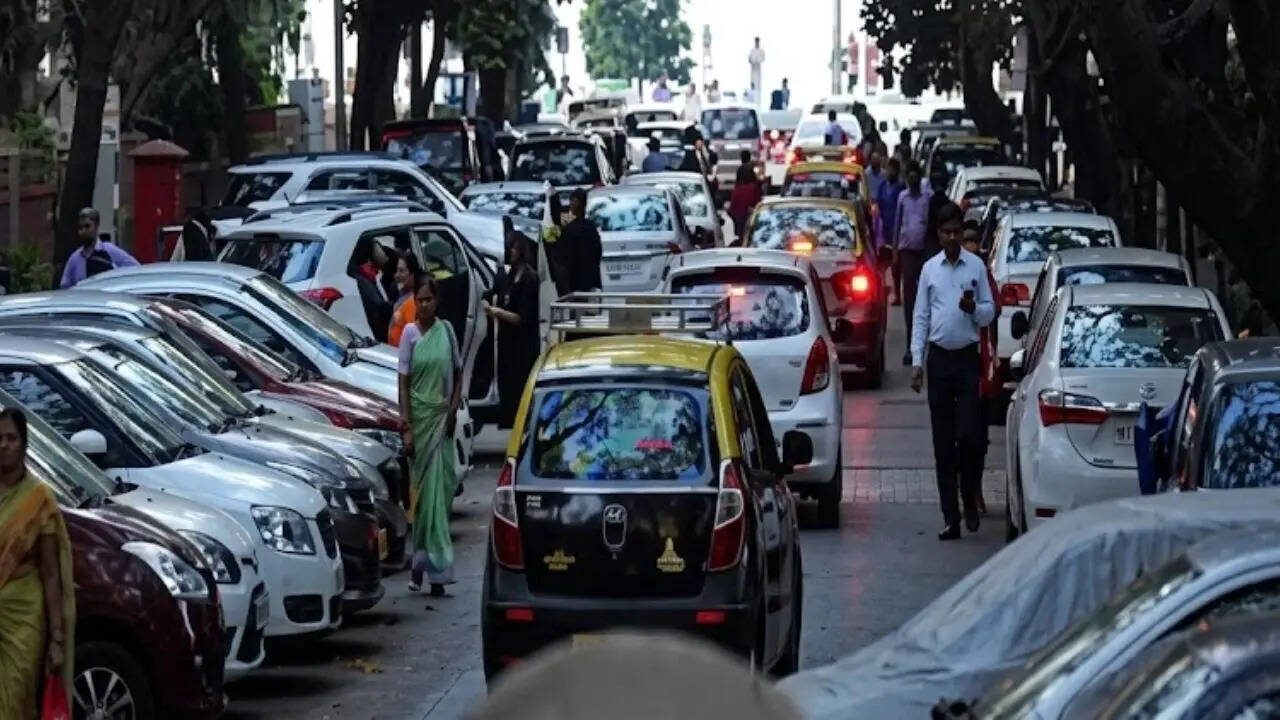
Rush hour with parked cars traffic and bustling streetscape
It reflects both the shortage of space in cities and the way such everyday disagreements are increasingly turning confrontational.In many neighbourhoods, such arguments are not unusual. Residents say disputes over parking have become more frequent, especially in congested areas. Sometimes it is just a brief exchange. Sometimes it goes further.There have been cases where these arguments turned violent. In a few instances, vehicles were damaged or even set on fire.Police data gives an idea of how common this has become. Delhi Police received more than 7,000 calls related to parking disputes last year. Officials say this may not be the full picture. Many such disputes are handled locally or not reported at all.
A series of incidents shows how quickly parking disputes can turn violent in urban neighbourhoods.
- Delhi 2026:
Nihal Vihar dispute turns fatalOn April 16, a 50-year-old auto-rickshaw driver collapsed and died during an altercation with a group of men over parking in west Delhi’s Nihal Vihar. Police said the argument had escalated within minutes.
- Delhi 2025: Jangpura stabbing linked to parking argument
In August 2025, a parking dispute in Jangpura turned deadly when 42-year-oldAsif Qureshi was stabbed to death, allegedly by two brothers after an argument over a parked vehicle.
In January 2026, a disagreement over parking a newly bought car near a temple in Vidyaranyapura escalated into a larger clash, leading to the arrest of 12 people. What started as an argument over a blocked entrance soon turned into a physical confrontation involving several people.
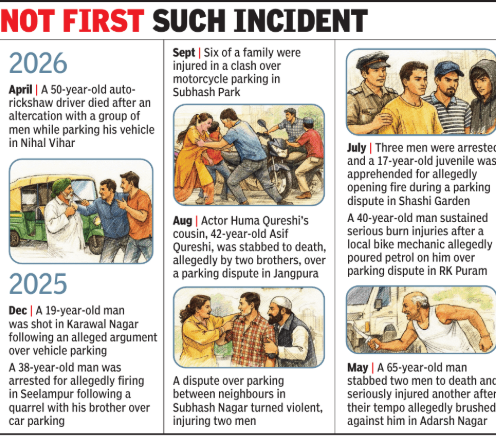
Parking disputes in Delhi turning violent, with deaths and assaults reported
In most of these cases, the trigger itself is almost trivial. A car left slightly out of place, a gate blocked for a short while, or someone asking another person to move their vehicle. But what follows is often less predictable. Residents describe how quickly these situations escalate. Voices get raised, tempers flare, and neither side wants to back down. In crowded neighbourhoods, it rarely stays between just two people. Others step in—sometimes to calm things down, but just as often the opposite happens, with more people taking sides. Within minutes, a small parking issue can turn into a much bigger confrontation than anyone expected.
Across cities, a familiar pattern
The details differ, but the pattern is easy to recognise. It usually begins with a small issue over space — sometimes just a few feet. A few words are exchanged. Someone refuses to move. Someone else reacts. From there, things can escalate faster than expected. An argument turns physical. In some cases, it goes further. Many of these incidents involve neighbours or people living nearby, which makes the situation more tense. It is not just about parking at that point. Over time, repeated friction between the same people also creates resentment, which makes even small incidents more explosive than they should be.
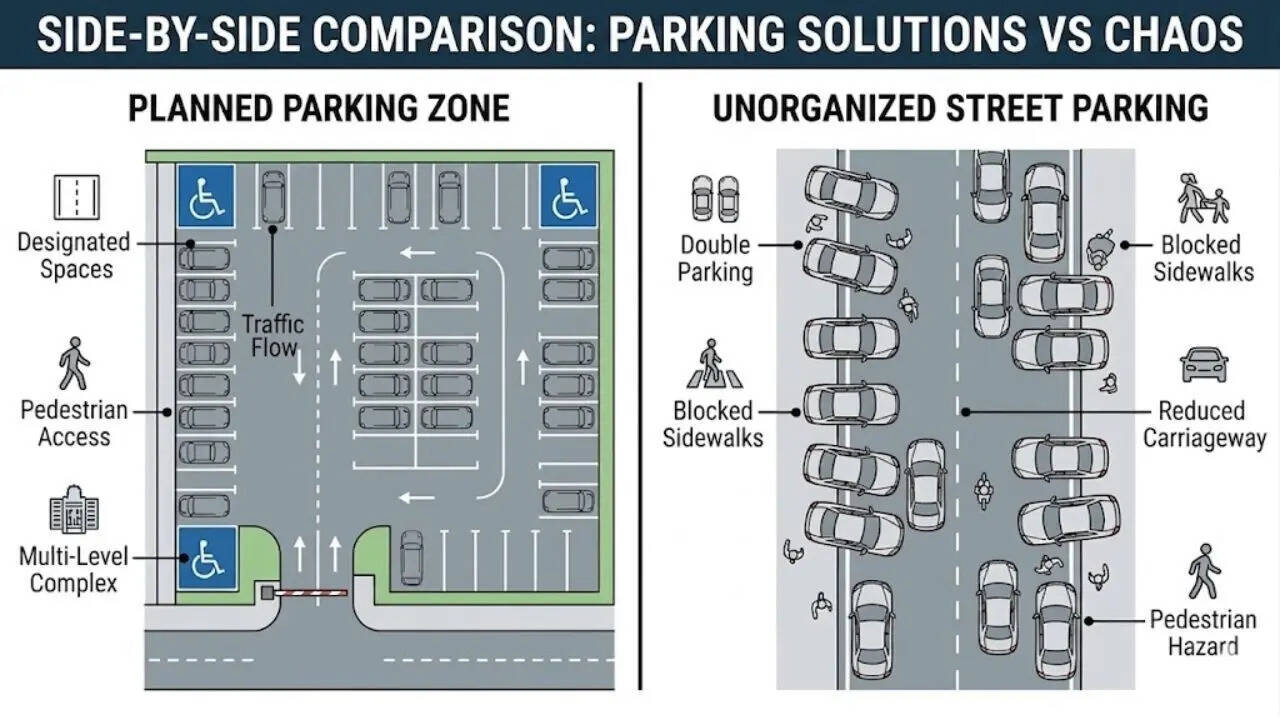
Planned parking system vs unorganized street chaos highlighting urban space misuse and pedestrian risk.
Experts point to changing behaviour
Experts say these incidents are not just about space, but also about how people respond. Dr Rajiv Mehta, senior consultant psychiatrist at Sir Ganga Ram Hospital, said there has been a decline in tolerance levels. “Many develop a rigid mindset, believing they are always right. Coupled with a strong sense of personal authority, this leads them to assume that their actions are justified,” he said. He added that even a simple request — like asking someone to move a vehicle — is often seen as a challenge. Dr Rajat Mitra, professor of forensic psychology, said people increasingly treat parking spots as their own. “When someone else uses what they see as ‘their’ spot, it can feel like an intrusion. The reaction is less about parking and more about a perceived loss of control,” he said.
A space crunch is making everyday conflicts worse
Cities like Delhi and Bengaluru have added more vehicles over the years, but the space available for parking has not kept pace.In many residential areas, there is no clear system. Roads and open spaces are used as parking spots, often without any defined rules. This leads to confusion — and frequent arguments. In some colonies, even basic visitor parking becomes a point of conflict because there is no clarity on who gets priority.
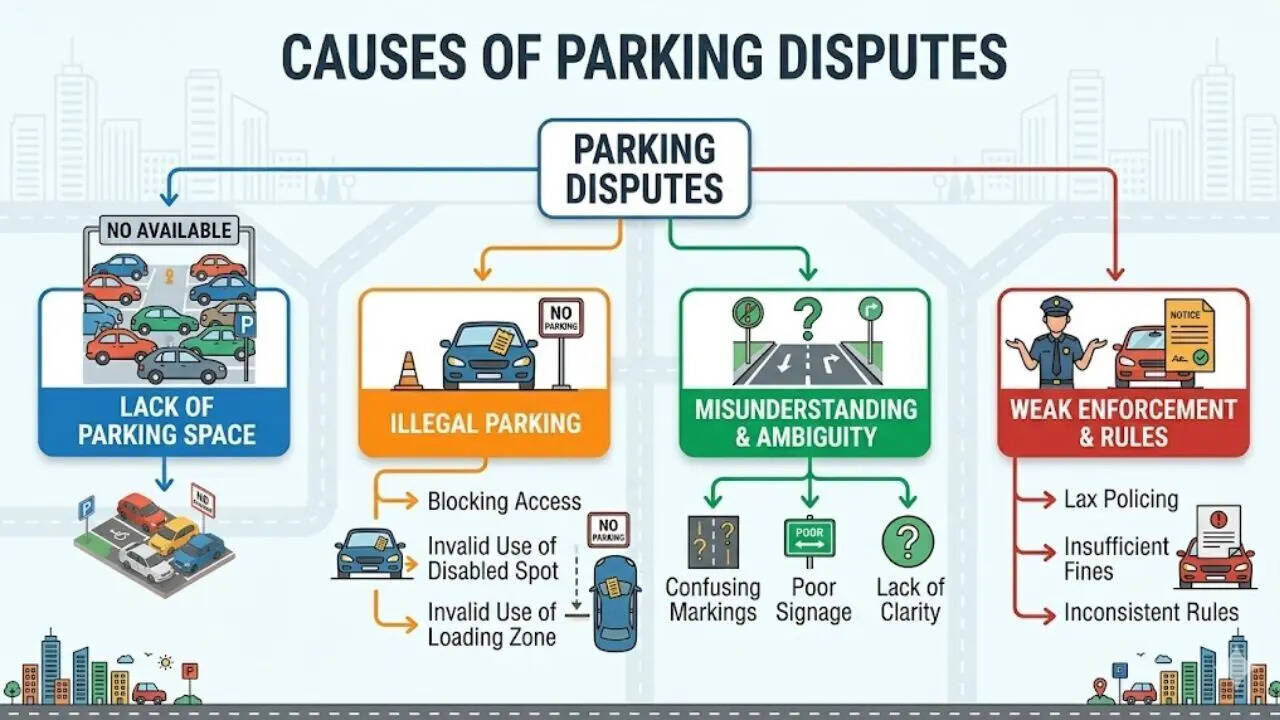
Parking disputes stem from space crunch weak rules and confusion
Close proximity, limited space add to tensions
In most cases, the people involved already live in the same area. They see each other regularly. The same issue can come up more than once. Over time, small disagreements add up. And when another argument begins, it is rarely just about that one moment. Familiarity between neighbours also means tempers rise faster, because past disputes are never too far from memory.
How everyday situations escalate
Most of the time, it starts with something small. A car is in the way, or someone asks for it to be moved.At times, that’s where it ends. But not always. A few words are exchanged. Then it turns into an argument. One person reacts, the other doesn’t back down. After that, things tend to move quickly. People nearby get involved. Voices go up. Within a short time, the situation is no longer under control. Often, what could have been resolved in a minute turns into something that takes hours, or even police intervention, to settle.
Challenges in controlling such disputes
- Police officials say there isn’t much time to step in when such arguments break out. By the time information reaches them, things have usually already escalated.
- In most residential areas, there is no fixed system for parking. People manage it on their own. Over time, this leads to confusion.
- The same issues come up again and again. Disagreements follow.
- Action is taken after a complaint is made, but stopping these situations at the start is not always possible.
What can help reduce such disputes
Are things improving? In some ways, yes.There is more awareness now. In some areas, residents have tried to sort out parking among themselves. In a few places, basic arrangements have been made. But the situation is far from resolved. There are more vehicles now, but not enough space. In many neighbourhoods, there is still no clear system. Better planning could help.Clear markings might reduce confusion. In busy areas, stricter enforcement may also make a difference. At the same time, how people react matters. In many cases, the issue is small at the beginning. It could end with a short conversation.But it often doesn’t. It turns into an argument instead. Unless both — better arrangements and a calmer response — come together, these disputes are unlikely to go away.