











This story was originally published in the Forward. Click here to get the Forward’s free email newsletters delivered to your inbox.
This article is based on extensive interviews and on-site reporting for the latest installment in our Holy Ground series featuring stories of Jewish resilience and reinvention across America.
NEW ORLEANS — By the time a trumpet player rose from the pews, candy was already flying through the sanctuary.
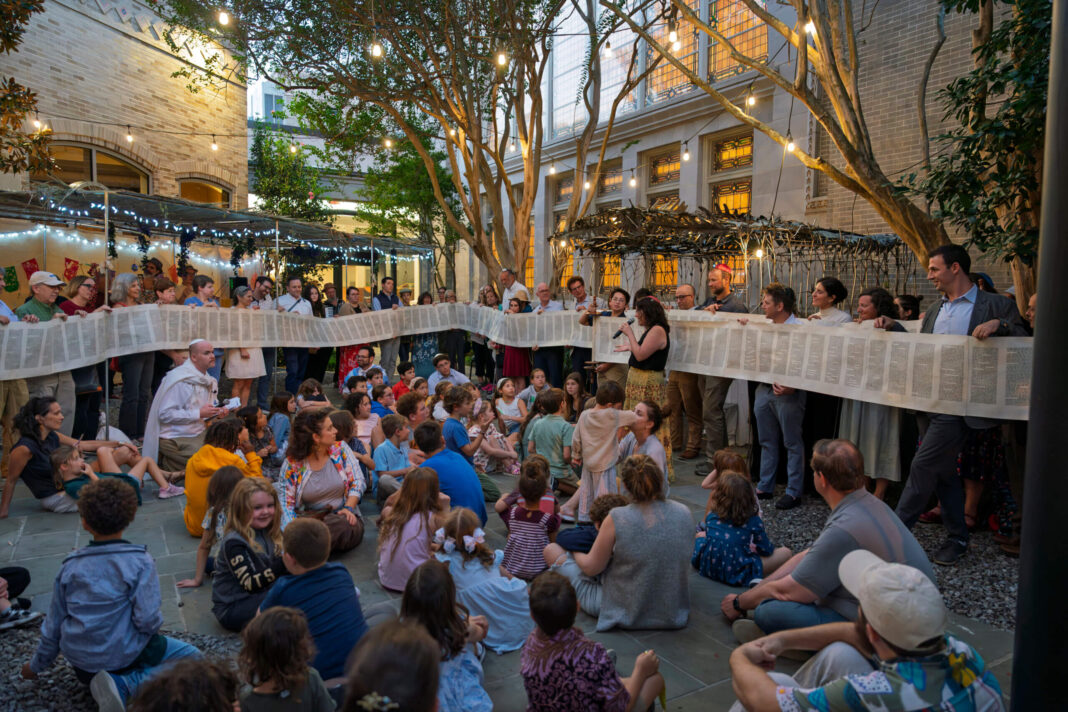
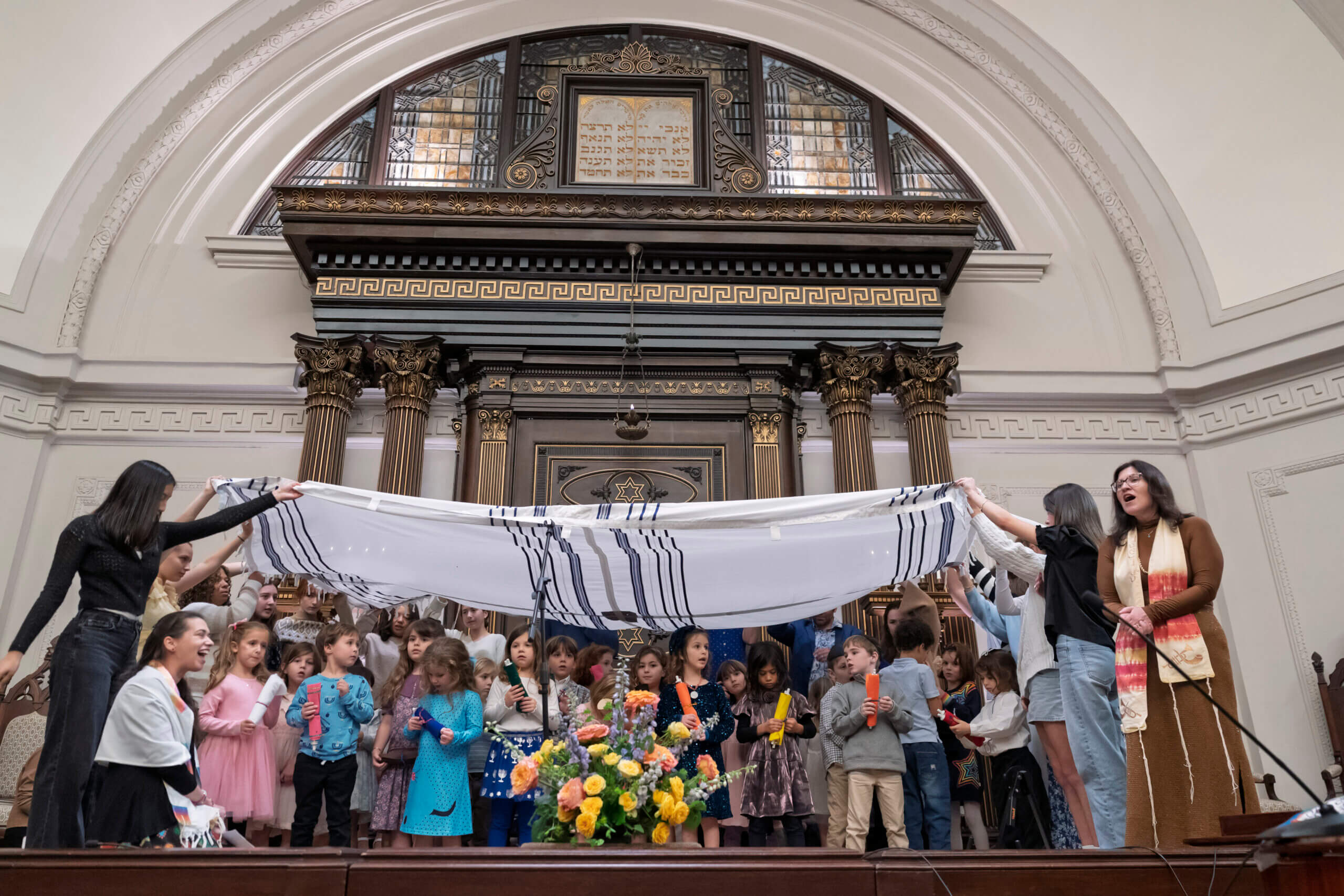
Children scrambled across the bimah beneath Touro Synagogue’s green-and-gold dome while the crowd clapped to the music and a 13-year-old boy in orange Nike sneakers stood beside his mom before two open Torah scrolls — one for the bar mitzvah boy, the other for his mother, who was 47, a recent convert celebrating her adult bat mitzvah.
By the end of services, congregants carrying guitars, flutes, and tambourines had transformed the sanctuary into something resembling a Mardi Gras second line.
In most American synagogues, this would have felt unusual. At Touro, located along the famous parade route, it felt nearly routine.
Across the country, congregations are shrinking, aging and consolidating. Denominational loyalty is weakening. Younger Jews are less likely to join synagogues at all. But here in New Orleans, Jewish communal life has experienced an unlikely revival.
New Orleans still carries Katrina in its census numbers. The city still has roughly 25% fewer residents than before the storm. Its Black population, while still the majority, has dropped most significantly. Jewish New Orleans, overwhelmingly white, tells a different story. Community leaders say the Jewish population has rebounded to — and perhaps surpassed — pre-Katrina levels.
The revival was driven partly by generational turnover. After the 2005 hurricane, many older New Orleans Jews decided not to return, choosing instead to spend retirement near children and family in cities like Houston and Atlanta. In their place came a younger generation of post-Katrina newcomers — volunteers, nonprofit workers, Tulane University transplants and young families drawn by the chance to help rebuild the city.
But the resurgence cannot be explained by demographics alone. Across the city, Jews describe a deeply interconnected communal ecosystem shaped by catastrophe, collaboration and a distinctly New Orleans instinct for improvisation.

The city’s Jewish institutions increasingly learned to share resources, blur lines between denominations and accommodate the realities of modern Jewish families. Interfaith couples found a warmer welcome. Synagogues that once occupied separate lanes began collaborating more closely. “Denominational boundaries here are very porous,” said Ilana Horwitz, a Tulane University Jewish Studies professor who is writing a book about how the Jewish community survived and rebuilt after Katrina.
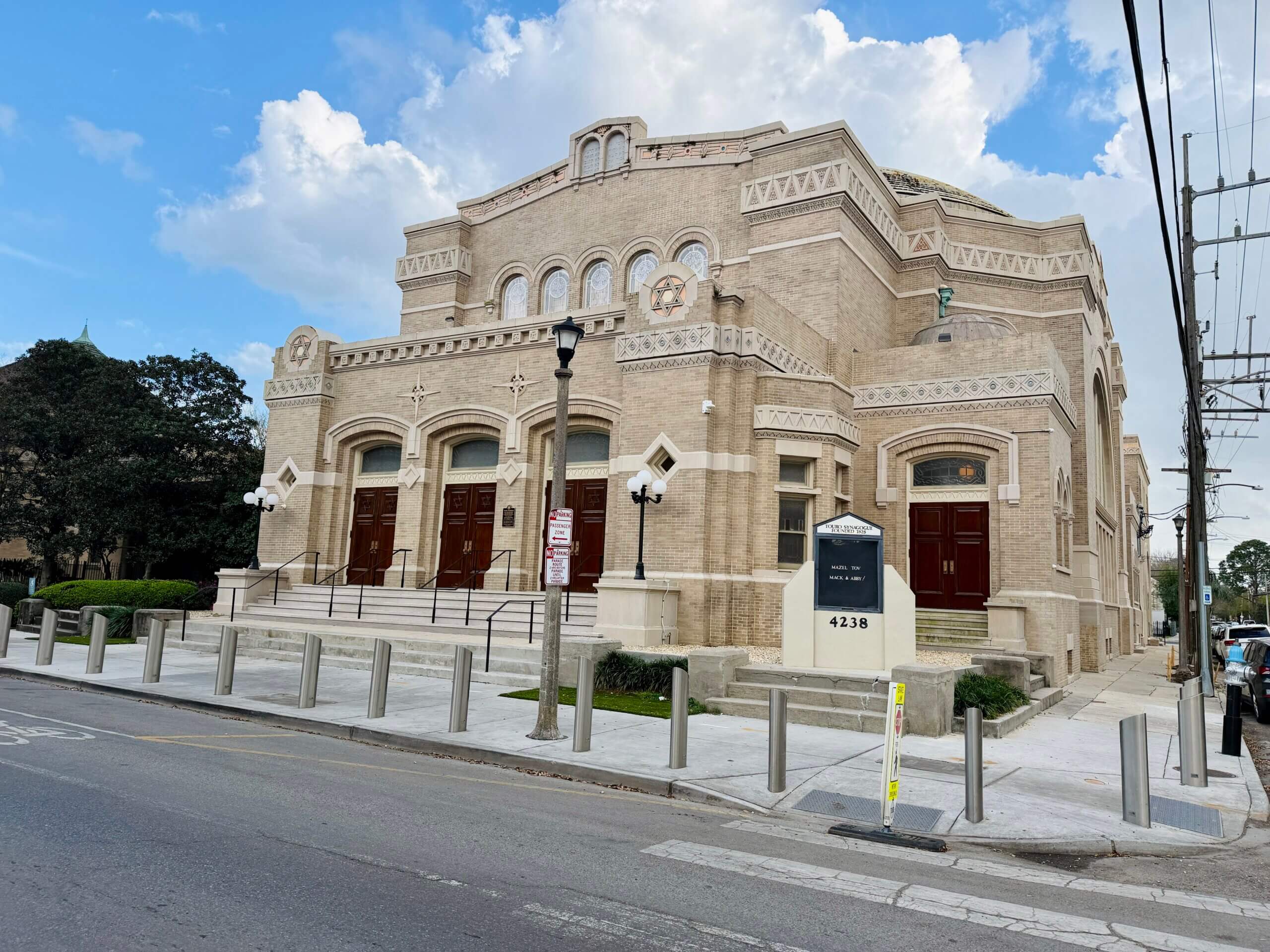
At the center of that revival sits Touro Synagogue, a nearly 200-year-old Reform congregation that is defying institutional decline.
In 2019, Touro hired as its spiritual leader Rabbi Katie Bauman, a New Orleans native. She arrived just months before the pandemic would force synagogues across America to reinvent themselves.
At the time, the shul counted roughly 570 families. Today, it is approaching 750. Its religious school has grown from 131 students to 243 in six years. In 2019, the synagogue hosted eight b’nei mitzvah. Nearly 30 b’nai mitzvahs are already scheduled for the 2027-28 school year — so many that synagogue leaders have begun quietly confronting an unfamiliar problem: Are we growing too much?
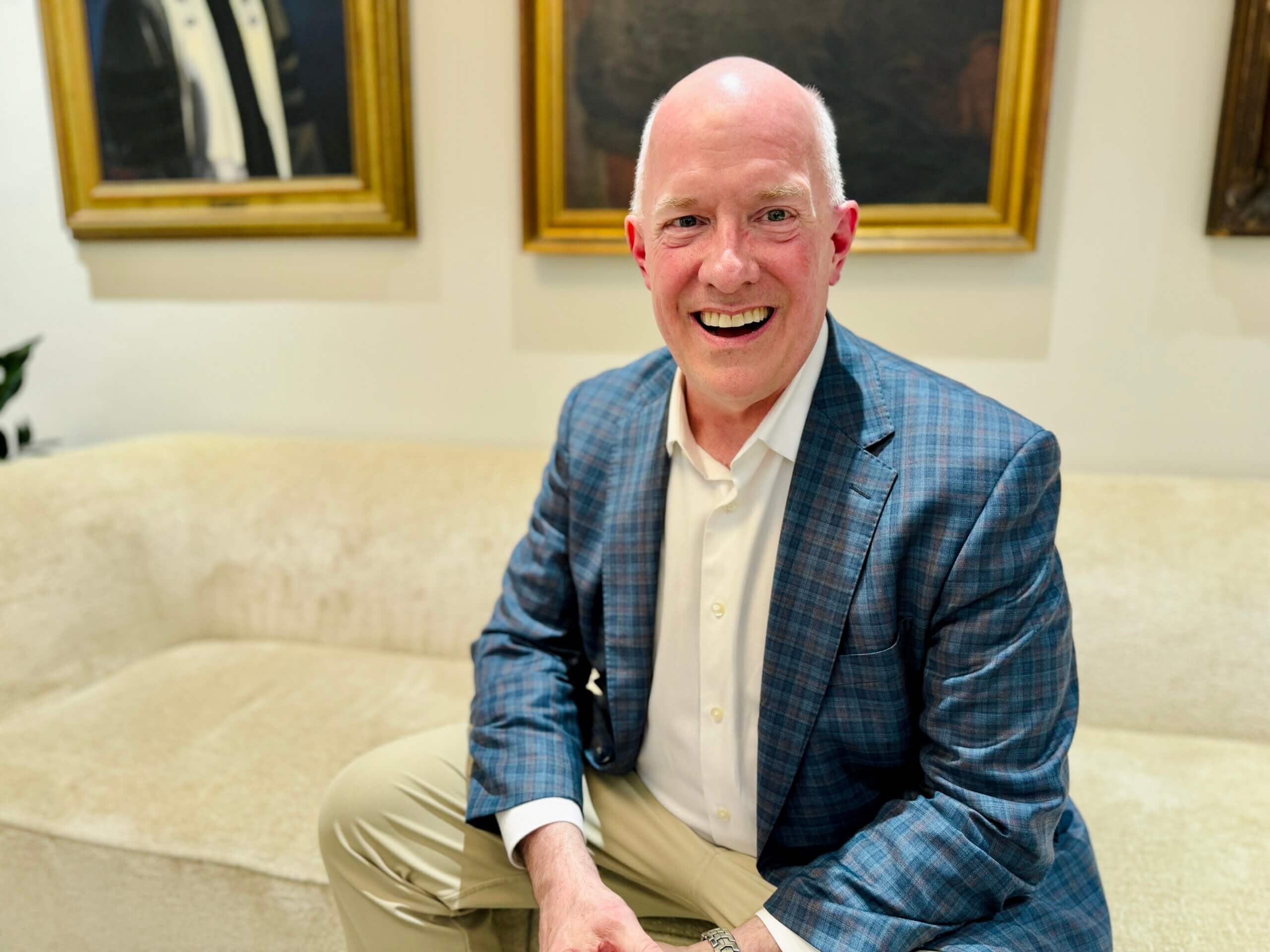

“We’re not going to turn people away,” said Kevin Wilkins, the synagogue’s president and the first convert ever to hold the role. “We’re not going to have a waitlist.”
Two decades after Katrina nearly drowned New Orleans, Touro has become a kind of laboratory for what Jewish communal life can look like after disaster reshapes it.
The people who came after the storm
A Detroit native, Joshua Lichtman came to New Orleans in 2007 after spending time at a Jewish farming and environmental program in Connecticut. Like many people drawn south after Katrina, he was looking for purpose and a chance to help rebuild.
“It was volunteering and adventure,” Lichtman, 51, recalled one Saturday morning after services at Touro.
Entire neighborhoods remained scarred by floodwaters. Lichtman spent those early months gutting homes, working in community gardens and helping with legal aid projects. Then he met Davida Finger, who ran the Katrina Clinic at Loyola University, which provided free legal assistance to residents displaced by the hurricane. They got married.
He came to help rebuild the city. Somewhere along the way, the city rebuilt him, too.
Lichtman stayed, helped launch Avodah New Orleans, a Jewish service corps program, and now works in financial planning. Today, he and his wife are raising two children in the city.
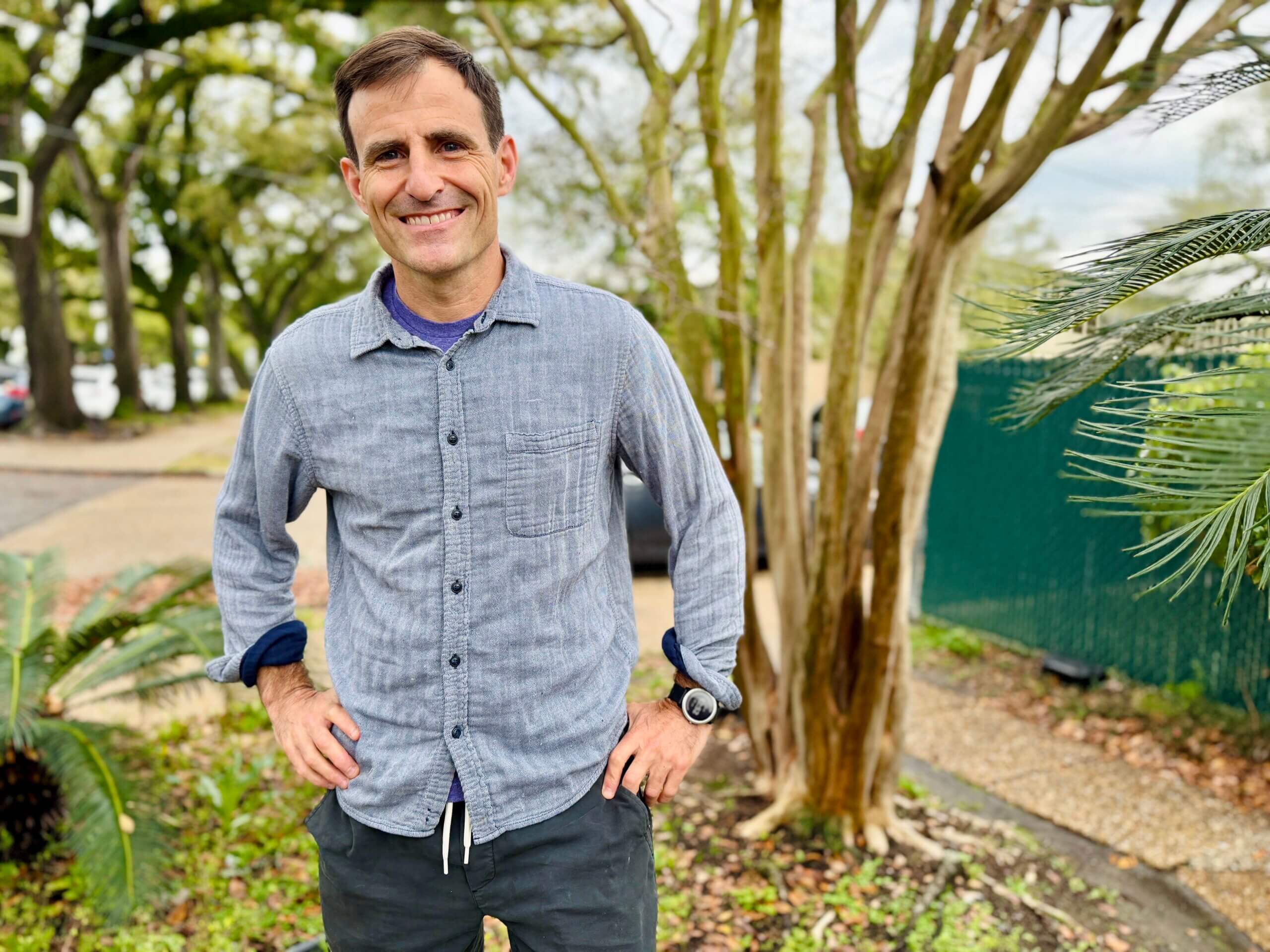
His story reflects a broader demographic shift that transformed Jewish New Orleans after Katrina. The Jewish community dropped from about 10,000 people to around 6,500 following the floods. “The Jewish population has been replenished,” said Horwitz, who moved to New Orleans from the Bay Area in 2021, making her both a scholar of the city’s Jewish revival and a participant in it. “But it’s a different configuration of people than there was before.”
Before Katrina, much of Jewish New Orleans was defined by continuity. Many families traced their roots in the city back four or five generations to German-Jewish immigrants who arrived in the 19th century. They attended the same schools, joined the same congregations and often stayed for life.
Reform Judaism, long the dominant expression of Jewish life here, reflected a distinctly Southern tradition — highly assimilated, deeply rooted in local civic affairs and often more connected to New Orleans than to the broader currents of American Judaism.
The community was tightly knit and deeply rooted. Institutional loyalty ran deep. Many worked in law, medicine or family-owned businesses built over generations. As the city’s economy shifted and younger residents left for bigger cities, the Jewish population had already begun slowly shrinking.
The people who arrived after Katrina brought different backgrounds and different reasons for coming. They were volunteers, nonprofit workers, academics, and entrepreneurs drawn not by inheritance but by opportunity — and by the chance to help rebuild.
The transformation was not entirely accidental. In the years after Katrina, the Jewish Federation of Greater New Orleans launched an incentive program for newcomers, offering a stipend for moving expenses, discounted tuition at the Jewish day school, and a year of free membership at a synagogue. According to the federation, hundreds of people participated in the program, which ran through 2012, and one in four have stayed.
One of the engines of that growth has been Tulane University, where 25% to 30% of undergraduate students are Jewish, according to local estimates, placing it higher than the University of Pennsylvania (17%), Columbia (16%) and Harvard (10%).
Today, some Jewish families view Tulane as an appealing alternative to more politically polarized campuses. Nicholas Lemann, the New Orleans-born author of Returning: A Search for Home Across Three Centuries, said the university benefits from both New Orleans’ cultural appeal and a campus climate many parents perceive as less contentious than schools on the coasts.
“Kids won’t be exposed to anti-Zionism as at bigger Ivies,” said Lemann, a longtime professor and former dean at Columbia Journalism School. “That’s meaningful to many Jewish parents.”
Tulane functions as a pipeline bringing Jewish students, faculty and young professionals into the city, some of whom ultimately decide to stay.
Yet population alone does not explain the revival. What emerged after Katrina was a different way of organizing Jewish life in New Orleans. The city’s six synagogues and two Chabads routinely promote one another’s programs. Rabbis collaborate across denominational lines. Congregants often belong to more than one synagogue at a time.
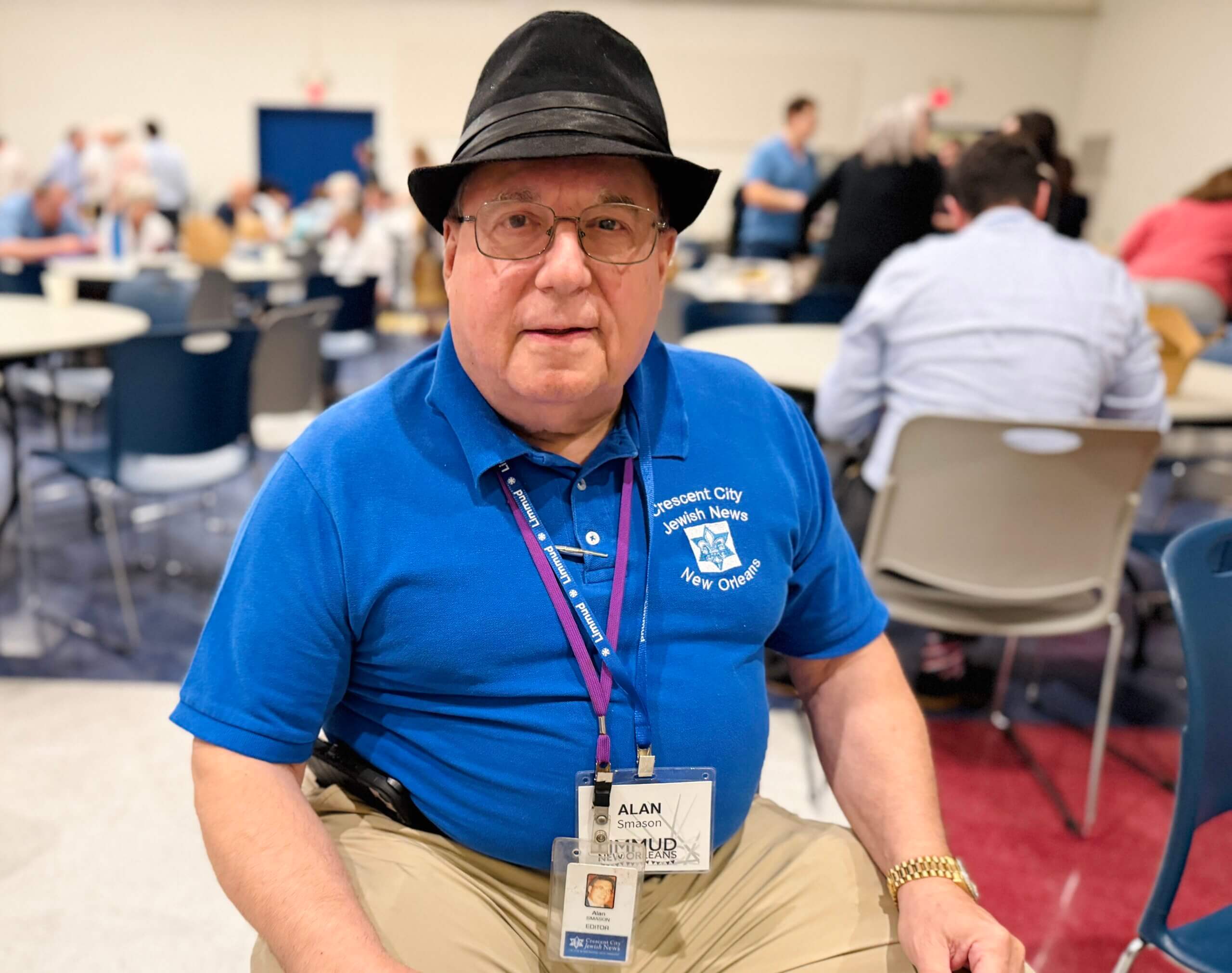

Alan Smason, editor of the Crescent City Jewish News — which he founded after the hurricane — said much of that cooperation grew directly out of the storm. “We’ve got a Reform temple that actually lives next door to and partners with an Orthodox synagogue,” he said. “A lot of those traditions came about because of Katrina.”
Smason, a New Orleans native, has spent decades chronicling the city’s Jewish life. The cooperation he sees today would have been harder to imagine before the storm. “Out of the darkness,” he said, “came light.”
A different city
The community that emerged after Katrina was different. The result was a community that became more fluid and, in some ways, more open to experimentation than the one that preceded it. New Orleans has always been a city comfortable with reinvention.
On a humid afternoon, tour guide Roni Bossin led me through the French Quarter, pointing out traces of Jewish history hidden in plain sight.
There was the former factory where Joseph Haspel is credited with inventing the seersucker suit. There was Sam Zemurray — the Jewish immigrant known as “Sam the Banana Man” — who built a fruit empire from New Orleans. There was the Holocaust memorial overlooking the Mississippi River and the legacy of Judah Touro, the philanthropist whose name still adorns a hospital as well as the synagogue.
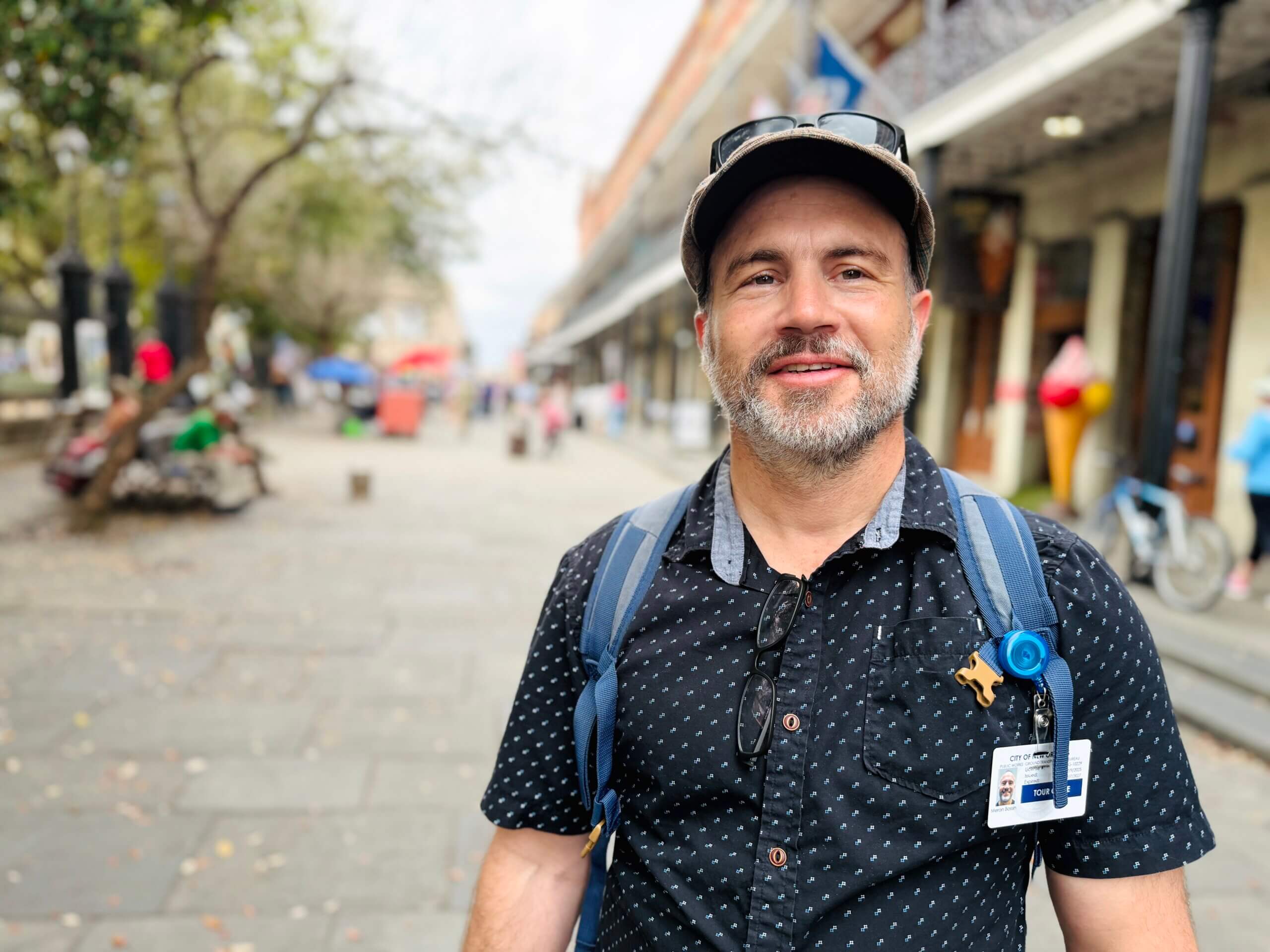
Jewish history here is less a chapter than a thread — stitched through the city’s commerce, politics, philanthropy and folklore. “Jews were woven into the story of New Orleans from the beginning,” said Bossin, a transplant from Israel.
Isaac Monsanto, the first Jewish settler in New Orleans for whom historical records exist, arrived in 1757. By 1828, local Jews had established a congregation that would eventually become Touro Synagogue.
But if Jewish New Orleans has deep roots, it has also changed dramatically. Lemann said the city he visits today feels markedly different from the one where he grew up. When he was young, many Jewish families had lived in New Orleans for generations. His father was born in the city. His grandfather was born in Donaldsonville, Louisiana. Local identity was often inherited.
Today, he said, the community includes far more newcomers. “The various elements of Jewish New Orleans have come together more,” Lemann said.
That history helps explain why Touro feels distinctly New Orleans. Unlike many American synagogues built on sprawling suburban campuses, the city presses right up against the sanctuary walls. The building sits along St. Charles Avenue with no parking lot separating it from the sidewalk. Streetcars rumble past. Mardi Gras floats pass the front doors. During carnival season, members gather there to watch parades together. The congregation builds viewing stands for children with disabilities. Families tailgate on synagogue grounds.
For Rabbi Lily Kowalski, an associate rabbi who joined the shul last year, one of her first Mardi Gras experiences at Touro came during Shabbat services. The congregation was praying when the parade began rolling past outside.
“There was something both ironic and beautiful,” she recalled.
Eventually, the clergy made a practical decision: They would skip a few songs from the end of the service. “The parade has started,” Kowalski remembered thinking. “We need to go outside and see the parade.”
On JazzFest weekend, Touro hosts a special musical Shabbat service that has become one of the congregation’s signature events for the past three decades. “We do love to party,” said Rabbi Bauman. “But it’s a symbol of how proud we are to be here.”
For generations, New Orleans has thrived by blending traditions rather than policing boundaries. Jazz emerged from that cultural mixing. So did much of the city’s cuisine, language and civic culture. Many congregants see Touro as a Jewish expression of the same instinct — a congregation more interested in bringing people together than sorting them into categories.
The open tent
The weekly pamphlet handed out to worshippers carries a simple message across the top: Touro synagogue welcomes all.
For Abby Gaunt, those words proved more than a slogan.
Raised Catholic in New York City, Gaunt had long felt drawn to Judaism. She married a Jewish man, sent her two children to Jewish schools and immersed herself in Jewish communal life. But she never felt the desire to convert.
Then came the 2018 Tree of Life shooting in Pittsburgh. As she read about the victims, one detail stopped her. Two of the people murdered that day — brothers Cecil and David Rosenthal — had Fragile X syndrome, the same genetic condition as her son, Mack.
The story felt personal. When schools struggled to accommodate Mack’s learning differences, Gaunt said New Orleans’ Jewish community had stepped forward to embrace him. The local Jewish day school accepted him when others would not. Congregants welcomed him. Families rallied around him.
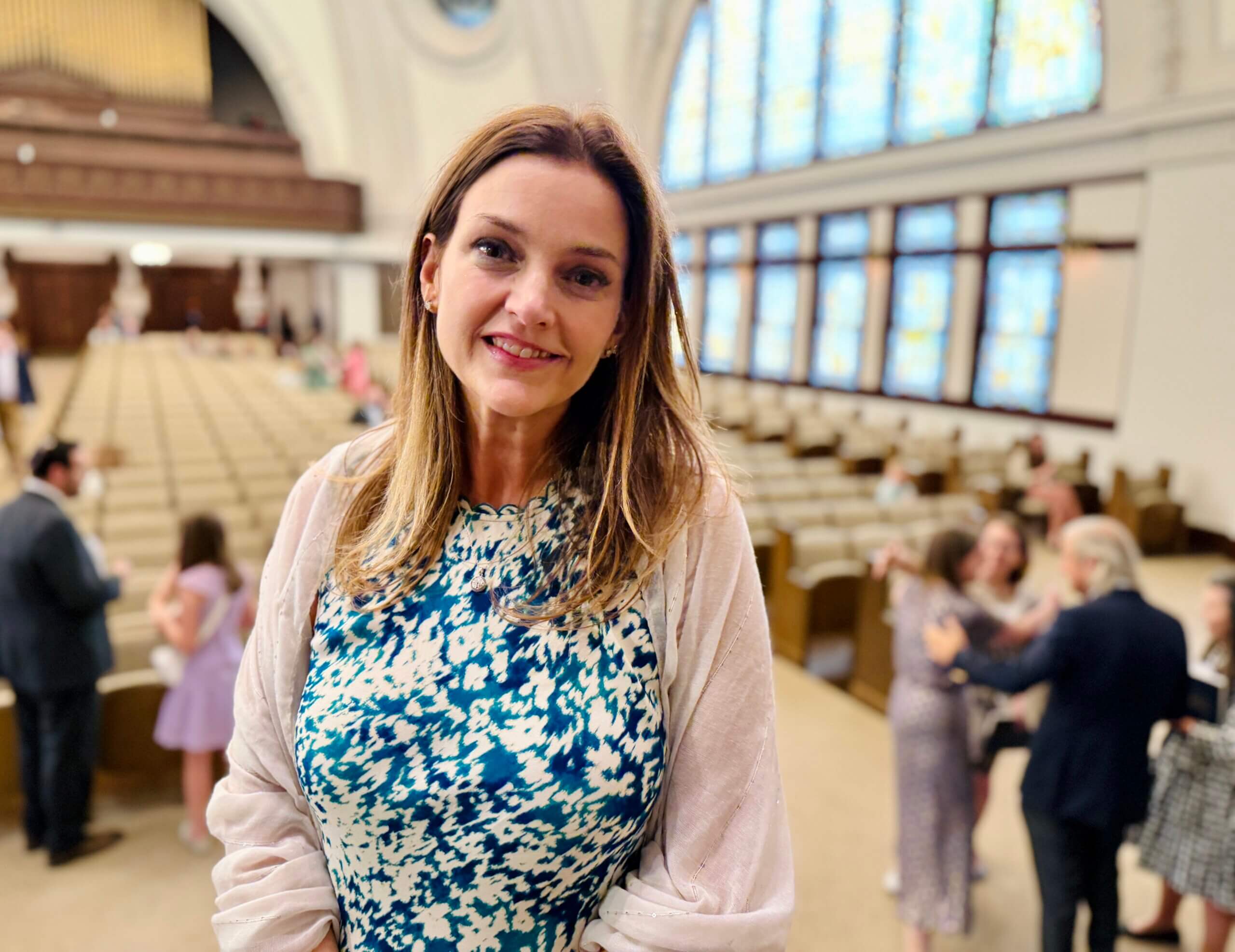

“It just felt like they took you as you are,” Gaunt said of Touro. “There’s no asterisk.”
The experience led her to begin studying for conversion. This spring, she celebrated the culmination of that journey standing beside Mack. Mother and son shared the bimah. They recited prayers together. Each read from a Torah scroll — his for a bar mitzvah, hers for an adult bat mitzvah.
For Touro, it was a fitting image. The congregation’s growth has been fueled by newcomers and young families, and by an expansive understanding of who belongs. Its membership includes interfaith families, former Orthodox Jews, lifelong Reform Jews, converts and a growing number of congregants who arrived from a local Conservative synagogue.
Rather than asking newcomers to conform to a single model of Jewish life, synagogue leaders have increasingly adapted the institution around the people walking through the doors. “We’re not just saying we’re an open tent,” said Beth Shapiro Lavin, Touro’s executive vice president, and the congregation’s next president beginning in 2027. “We mean it.”
In a city rebuilt by people who arrived from somewhere else, belonging has become one of Touro’s defining values.
When Lavin joined Touro’s board in 2022, the congregation was already growing. She now finds herself thinking less about survival than succession. Touro will celebrate its 200th anniversary in 2028, during her presidency. Around the same time, her own daughter will celebrate her bat mitzvah in the sanctuary where Lavin herself grew up.
“It’s a really exciting time,” said Lavin, who moved back home after Katrina.
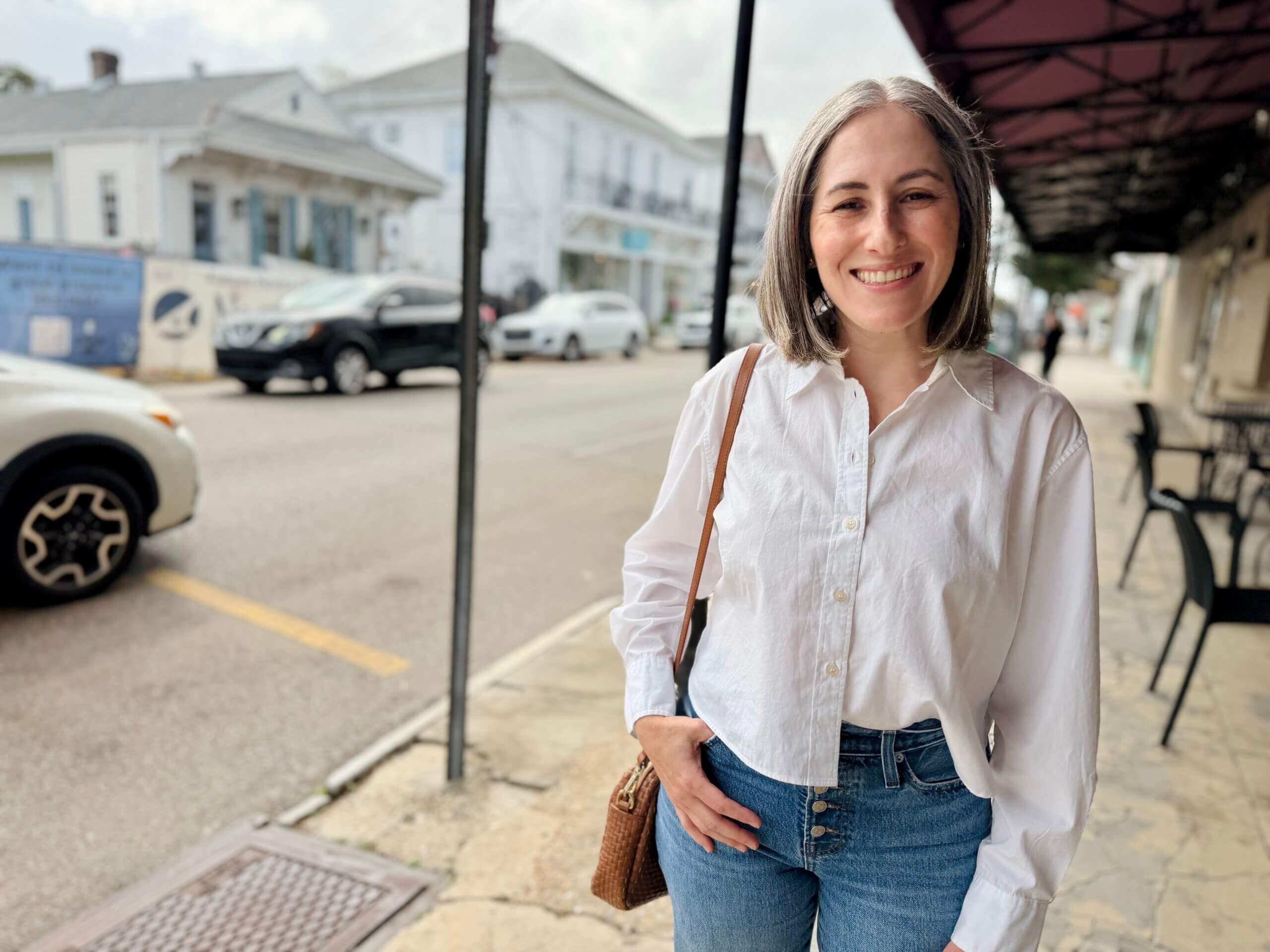
The questions facing Touro are different from those confronting many American synagogues. The congregation worships beneath a dome completed in 1909. Memorial plaques line the sanctuary walls, some honoring congregants who died in the 1800s. The names on the walls grow older every year. The children running beneath them do not.
Growth has created a new set of questions for synagogue leaders. “What is the right size?” Lavin asked.
Part of the answer, she believes, lies in making participation as easy as possible for young families. More than a decade ago, Touro eliminated mandatory membership dues, replacing them with a voluntary giving model.
The experiment worked. This year, two-thirds of donors increased their giving. Some quadrupled them. “The model only works when we all give what we can,” she said.
The payoff is visible throughout the building. Parents linger after services. Teenagers tutor younger students in Hebrew school. Congregants volunteer to coach b’nai mitzvah speeches. Children who once sat on the sanctuary floor receiving blessings from clergy eventually return as youth group leaders and religious school teachers.
Beyond denominations
A few years ago, a group of families from a New Orleans’ Conservative synagogue found themselves searching for a new spiritual home. Some were drawn by Rabbi Bauman’s charismatic leadership. Others were looking for a congregation in the city rather than the suburbs. Many already had friends at Touro.
What they weren’t looking for was a typical Reform service.
“We really appreciate Touro’s big tent approach,” said Ben Horwitz (no relation to Ilana), who helped found a lay-led group that now meets twice a month — once in a community member’s home and once in Touro’s library. “We should be able to serve this community writ large.”
Known as the Chavurat Or’Leans, it offers a more traditional style prayer experience while remaining fully part of the larger congregation. On some weekends, 30 to 50 people attend when it meets at Touro. The synagogue provides space, children’s programming and logistical support.
“It has been a win-win situation,” Horwitz said.
The arrangement reflects a broader philosophy taking hold at Touro. Rather than asking congregants to fit neatly into denominational categories, the synagogue increasingly tries to meet people where they are.
When Horwitz and his wife, Ellie Streiffer, began planning their son’s bar mitzvah, they wanted a traditional, egalitarian service. Touro not only accommodated the request, but provided rabbinic support to help their son prepare.
Other families have made similar choices. “We’re trying to push boundaries,” Bauman said. “People are looking for community more than a particular movement.”
The same flexibility that led Bauman to accommodate different religious traditions has also helped it navigate other forms of difference. Touro’s political diversity is unusual in an era when many religious communities have become more ideologically homogeneous. New Orleans itself remains a blue enclave in a deeply red state.
Bauman said she has watched congregants repeatedly choose community over agreement. “Especially in the last two years, which have been so challenging and so politically divisive,” she said, “people want to be together more than they want to be right.”
A problem most synagogues would envy
Part of the congregation’s growth coincided with Bauman’s arrival. She became senior rabbi in 2019, just months before the pandemic upended American religious life.
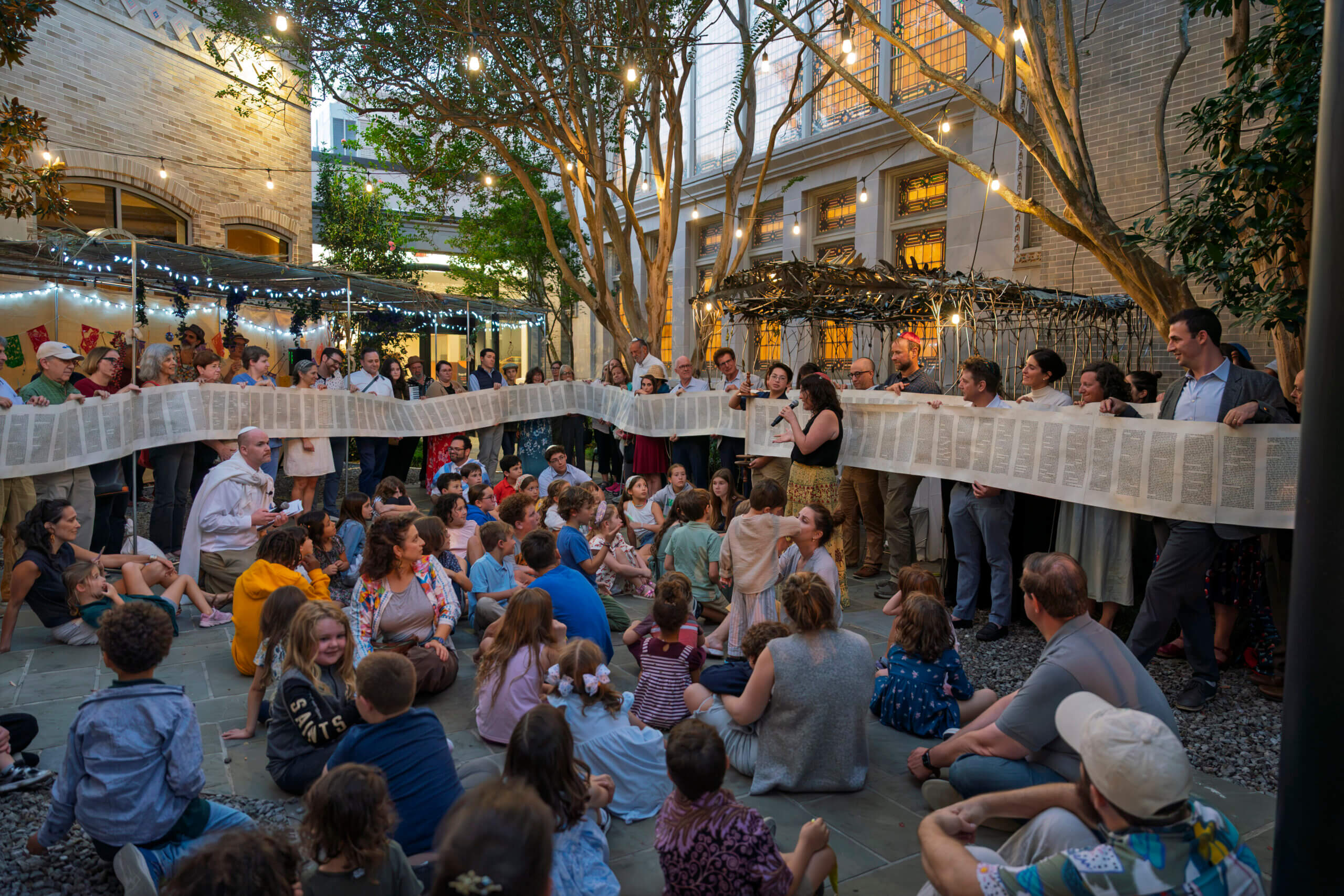
While congregations around the country migrated online, Bauman took much of Touro outdoors. Youth groups met camp-style in parks and courtyards. Families gathered under oak trees. Children who might have disappeared into screens continued seeing one another face-to-face.
“We just never did the Zoom thing,” for youth and teen education programs, Bauman said. Looking back, she believes that decision accelerated the congregation’s growth by strengthening relationships at a moment when many institutions were struggling to maintain them.
The growth has been so pronounced that last year Touro hired a third full-time rabbi for the first time in its history. Rabbi Kowalski arrived in the summer of 2025 from Montreal, to serve as associate rabbi and education director.
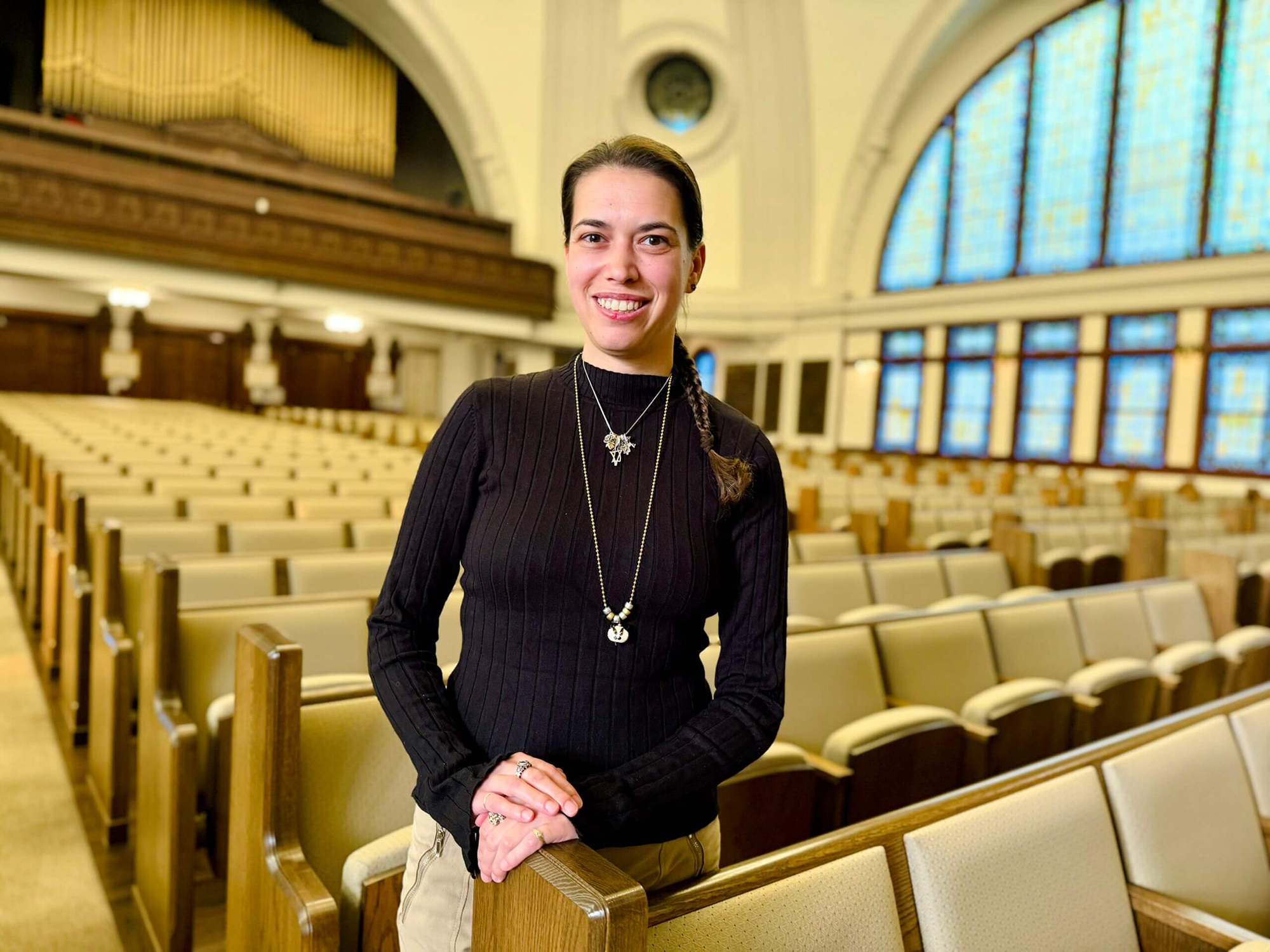

Sitting in her office one afternoon beneath a hand-painted sign reading “Welcome Rabbi Kowalski,” she described the job as both “inspiring and daunting.”
On Sunday mornings and Wednesday afternoons, the synagogue hums with activity. Religious school classes fill nearly every available room. Parents attend adult education programs while their children study Hebrew. Choir rehearsals meet at the same time.
The building was designed to hold memory. It is now straining to hold momentum. “We’re using every nook of the building,” Kowalski said.
For generations, the challenge facing American synagogues was how to attract young families. At Touro, the question has become something else entirely: How do you keep growing without losing the intimacy that made people want to join in the first place?
The second tablets
For Bauman, the synagogue’s revival begins much earlier than Touro’s recent growth.
At the joint mother-son b’nai mitzvah, Bauman’s sermon focused on one of Judaism’s oldest stories of rupture and repair. In that week’s Torah portion, Moses descends Mount Sinai carrying the Ten Commandments, only to smash the stone tablets after discovering the Israelites worshipping the Golden Calf below. Eventually, God commands him to climb the mountain again and carve a second set.
The first tablets, Bauman told the congregation, belonged to a world that was orderly and unbroken. The second set came afterward. “The first tablets are simple and clear,” she said. “But life is messier than that.”
In post-Katrina New Orleans, the metaphor hardly felt abstract. Rebuilding was never supposed to mean restoration.
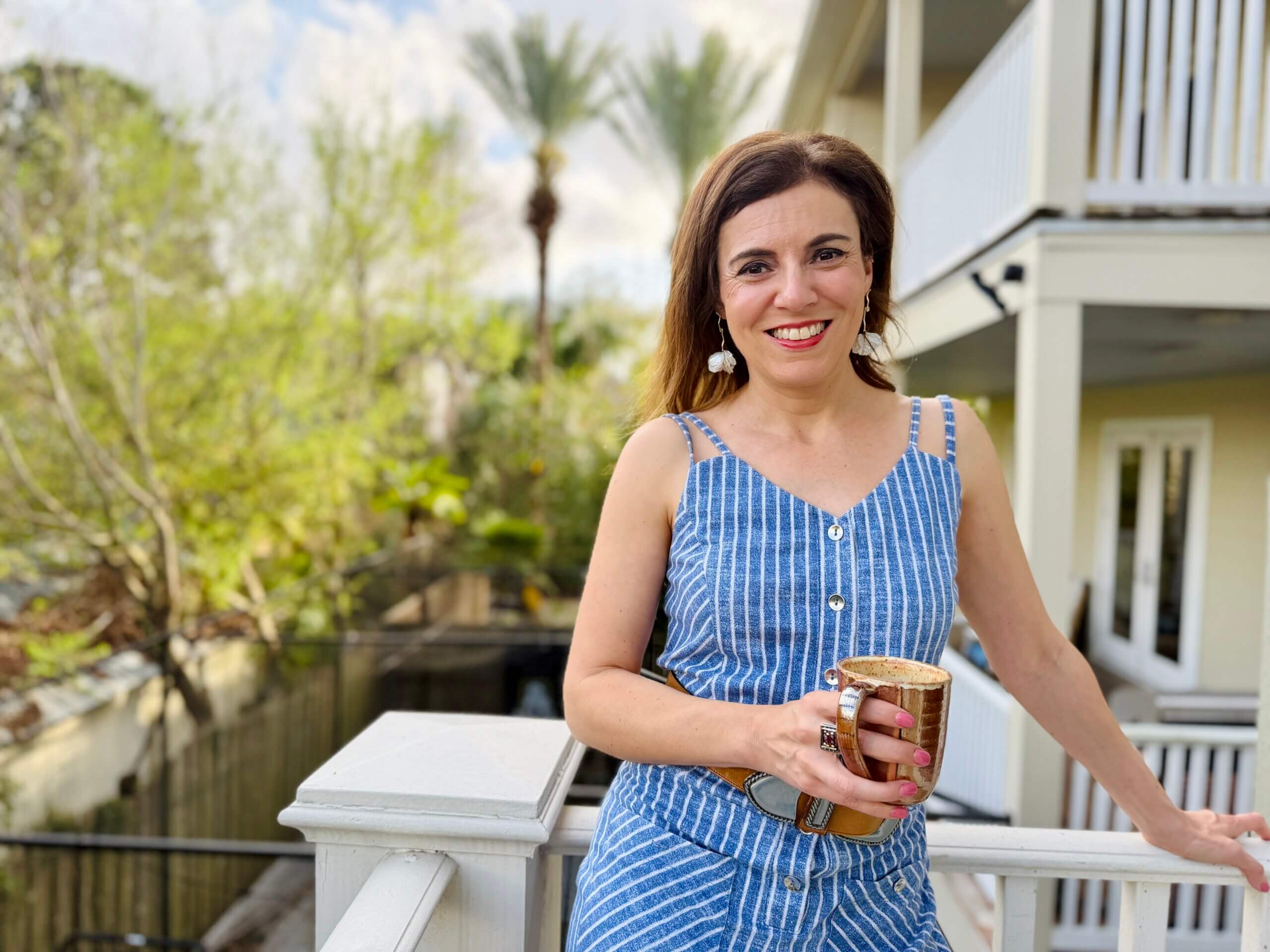
Horwitz, the Tulane professor, sees echoes of biblical stories throughout New Orleans’ experience after the hurricane. Her forthcoming book traces the community’s journey through themes of flood, exile, wilderness and return.
Horwitz, whose own family arrived in the United States as Soviet Jewish refugees in the late 1980s, argues that what endured after Katrina was the community itself — not as a collection of buildings, but as a web of relationships that helped people find one another again. “It’s fundamental,” Horwitz said. “Jewish communities are there for you in a moment of crisis.”
The Jewish New Orleans that emerged after Katrina is not identical to the one that existed before the storm. Many of the people are different. So are the ways they have learned to build community.
But perhaps that is what Bauman meant when she spoke about the second tablets. The first version was lost. The second pair, which carried the Jewish people through the wilderness, was the one that endured.
This story was originally published on the Forward.
window.dataLayer = window.dataLayer || [];function gtag(){dataLayer.push(arguments)}gtag(‘js’, new Date());gtag(‘config’, ‘G-M5T63K49VC’, { ‘page_location’: ‘https://forward.com/news/833489/new-orleans-jewish-katrina-touro-synagogue/’, ‘page_referrer’: window.location.href, ‘campaign_source’:’republication’, ‘campaign_medium’:’web’, ‘author_id’: 1516});