






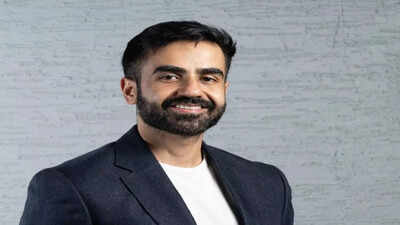
For many students, success seems to follow a familiar formula: do well in school, earn a college degree, get a high-paying job and climb the corporate ladder. Nikhil Kamath took a very different route. A school dropout who went on to co-found Zerodha, India’s largest retail brokerage firm, Kamath became one of the country’s youngest self-made billionaires without a conventional academic degree. Yet, despite building enormous wealth before the age of 40, he says one of his biggest life lessons didn’t come from business, investing or entrepreneurship. It came from reading a book.
The book that changed how he looked at life
Around the age of 34, Kamath read The Denial of Death, a Pulitzer Prize-winning work by Ernest Becker. The book explores an uncomfortable but universal idea: much of human ambition is shaped by our awareness that life is finite. After finishing it, Kamath did a simple calculation. Based on the average human lifespan, he estimated that he had roughly 36 years left to live. It wasn’t a financial exercise or an investment projection. It was a reminder that time—not money—is the most limited resource we possess. The thought fundamentally changed the way he evaluated success, decisions and priorities. For someone who had spent years analysing markets, it was a lesson in understanding life instead of numbers.
Five books that shaped his thinking
Kamath has often spoken about the books that influenced his outlook, arguing that reading helped him understand people better than balance sheets. Among his recommendations is The Psychology of Money by Morgan Housel, which explains that financial success depends less on intelligence and more on behaviour. Patience, discipline and emotional control, it argues, matter far more than trying to predict markets. Another recommendation is Stillness Is the Key, where Ryan Holiday explores how calm thinking often leads to better decisions, especially during uncertain times. He has also recommended The Selfish Gene, in which Richard Dawkins examines how evolution influences human behaviour and decision-making. On a completely different theme, Kamath suggested reading Caste by Isabel Wilkerson, a Pulitzer Prize-winning journalist whose work examines social hierarchies and inequality across societies. Together, these books cover psychology, philosophy, biology, history and human behaviour—subjects that extend far beyond finance.
Education doesn’t end with a degree
Kamath’s journey should not be read as an argument against formal education. Instead, it highlights a different truth. Learning does not stop after school or college. Whether someone earns a university degree or not, curiosity remains one of the most valuable assets they can develop. Reading widely exposes people to ideas that classrooms may never cover. It challenges assumptions, sharpens judgement and often changes the way people approach work, relationships and life itself. For students preparing for competitive examinations or planning their careers, that may be the most enduring lesson from Kamath’s story.
The biggest investment isn’t always financial
People often ask successful entrepreneurs about the stocks they bought, the businesses they built or the risks they took. Kamath’s reading list offers a different perspective. The books that influenced him are not manuals on getting rich quickly. Instead, they explore why people make decisions, how emotions shape financial behaviour, why societies function the way they do and how recognising life’s limits can help people focus on what truly matters. Perhaps that explains why, despite building a billion-dollar company, one of the lessons Kamath speaks about most isn’t related to wealth at all. It’s about time. Because while money can grow, time never does. Disclaimer: This article is based on publicly available interviews, recommendations and statements attributed to Nikhil Kamath. The books mentioned reflect his personal reading preferences and should not be interpreted as financial, investment or career advice.