



(RNS) — When Lamine Yamal, Spain’s teenage star, dropped to his knees after scoring at the 2026 FIFA World Cup, he wasn’t just celebrating a goal. He was performing sujood — an Islamic public expression of gratitude to God — in front of millions of viewers who may never have seen the Islamic prayer before.
While some have said over and over again that soccer (football) is the closest thing that the secular world has to a universal religion, different faith traditions have been showing up during the 2026 FIFA World Cup. Here are five recent examples.
1. The pope reminisced about football
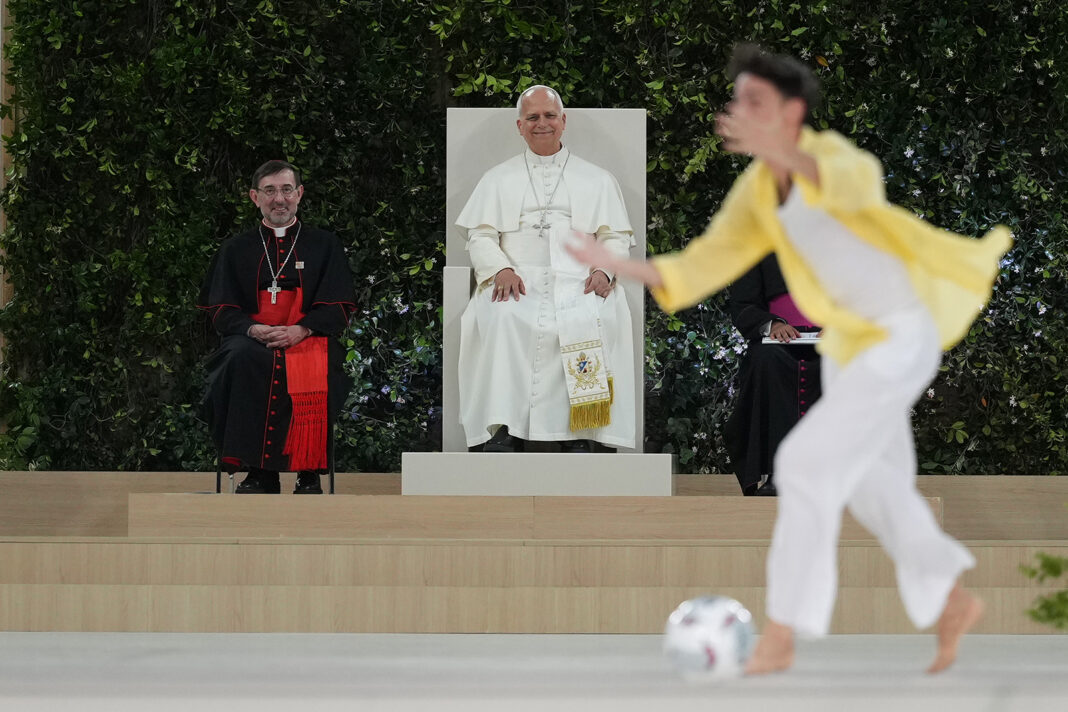
“I was not a great goal-scorer,” Pope Leo XIV said on June 10, one day before the FIFA World Cup opened, during a meeting with diocesan charity and welfare organizations at the Church of San Agustín in Barcelona. He recalled playing American football in his youth before later playing soccer with fellow seminarians in Trujillo, Peru, “as a defender, if you are curious.”
The pope also said he later followed local football teams closely while serving there.
Using football as a broader lesson, he said: “Soccer also helps us remember something very important: life is not a race to live in isolation; it is a team sport, and we have to learn to work together.”
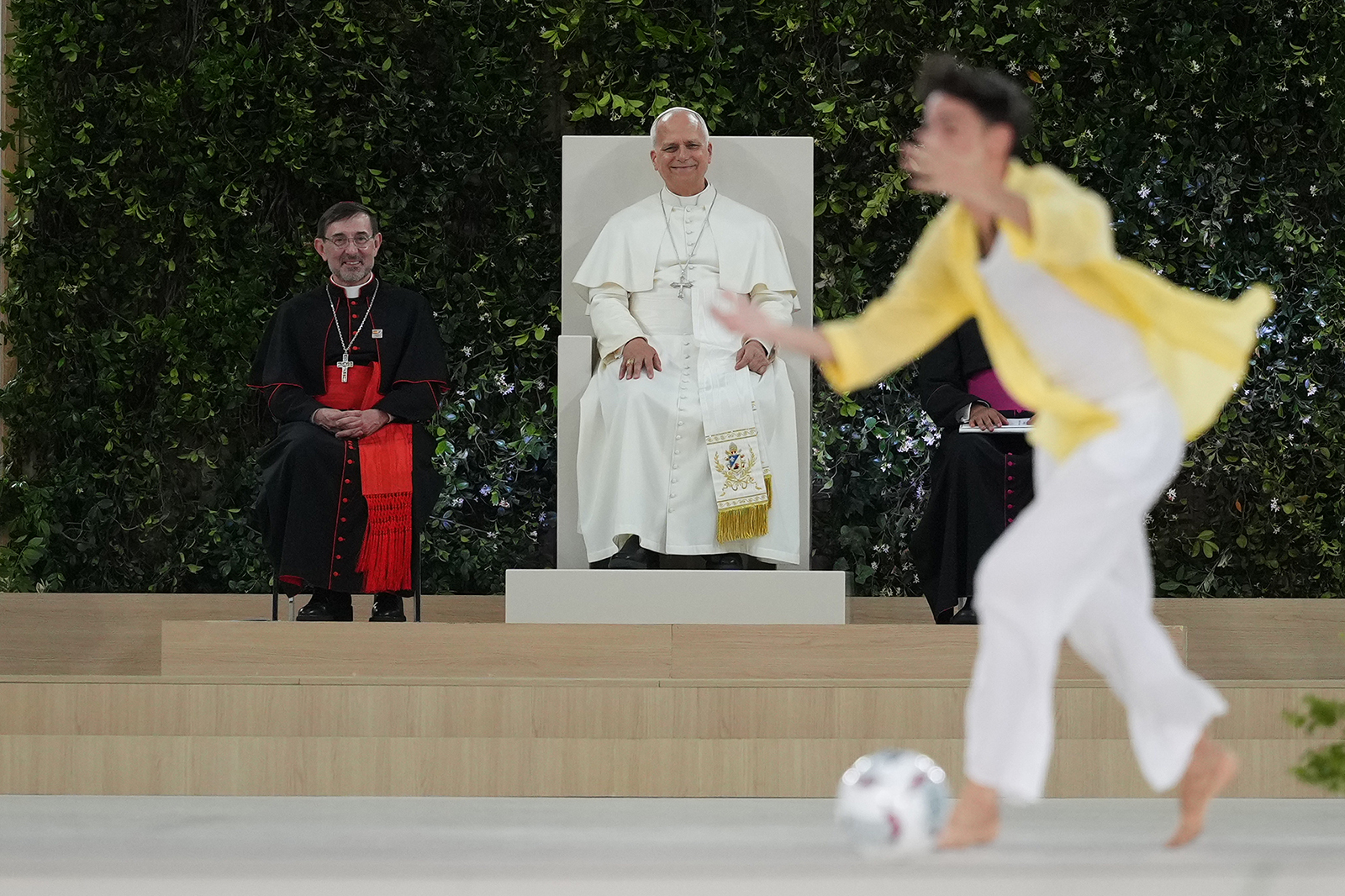
Youths stage a soccer match during a meeting with Pope Leo XIV and the diocesan community at the Santiago Bernabéu stadium in Madrid, Monday, June 8, 2026. (AP Photo/Alessandra Tarantino)
2. Sujood showed up on football’s biggest stage
At this year’s tournament, Yamal drew attention after performing sujood, bowing to God, bringing the islamic prayer gesture into one of the World Cup’s most-watched storylines. But he wasn’t the only Muslim athlete to perform sujood as a personal expression of gratitude to God.
Egyptian player Mohamed Salah did the same during his match, and Moroccan players have been photographed celebrating with sujood during Morocco’s World Cup runs in Qatar in 2022.
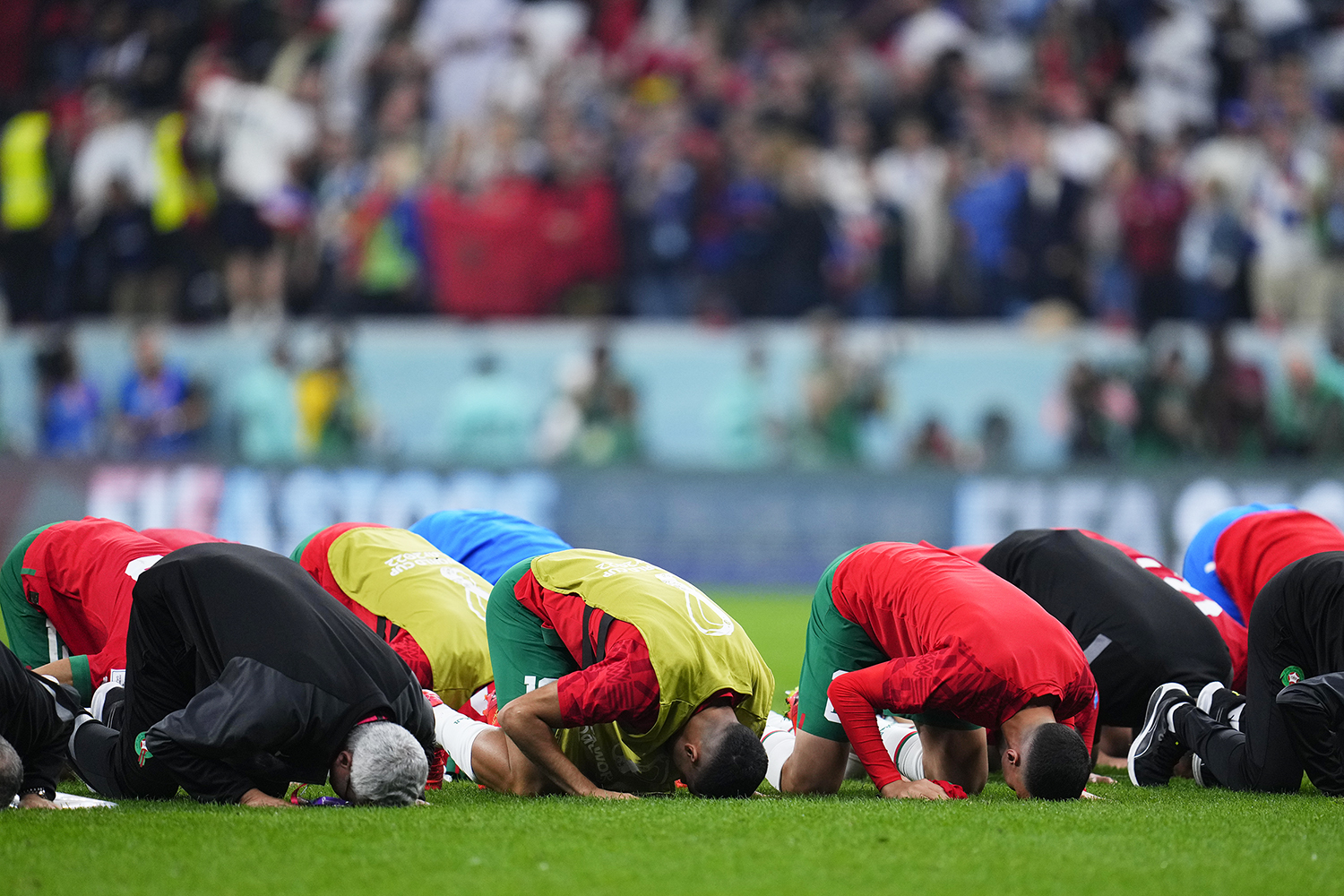
Players of Morocco kneel in sujood prayer after their 0-2 loss against France in a World Cup semifinal soccer match at the Al Bayt Stadium in Al Khor, Qatar, Thursday, Dec. 15, 2022. (AP Photo/Natacha Pisarenko)
3. A Sikh player made World Cup history
When New Zealand midfielder Sarpreet Singh made his tournament debut against Iran this year, he became the first Sikh to play in the men’s FIFA World Cup.
Speaking to reporters after the match, Singh said, “It means a lot to me, it means a lot to my people, my family, my community.” He added he hoped to see “many more Singhs and Sikhs and Punjabi footballers coming through, and Indian heritage footballers.”

New Zealand’s Sarpreet Singh (10) battles for the ball with Iran’s Saeid Ezatolahi (6) during the World Cup Group G soccer match between Iran and New Zealand in Inglewood, Calif., near Los Angeles, Monday, June 15, 2026. (AP Photo/Andre Penner)
4. Egypt and Iran challenge Seattle’s Pride Match on religious grounds
Seattle designated Friday’s June 26 match between Egypt and Iran as a “Pride Match” as part of the city’s annual Pride celebrations. Iranian and Egyptian faith and political leaders — who oppose LGBTQ+ rights on religious grounds — have been objecting.
The Egyptian Football Association wrote to FIFA asking it to stop Pride-related activities surrounding the match, saying they “directly contradict the cultural, religious and social values” of Egypt. Iran’s football federation also petitioned FIFA to prevent LGBTQ+ symbols and festivities from being associated with the match.
In a statement issued ahead of the match, FIFA said: “The FIFA World Cup 2026 is an inclusive event that welcomes people from all backgrounds.” FIFA also said that “general statements of human rights, including rainbow flags and other flags representing sexual orientation and gender identity, are permitted under the FIFA World Cup 2026 Stadium Code of Conduct and may be displayed inside stadiums.”
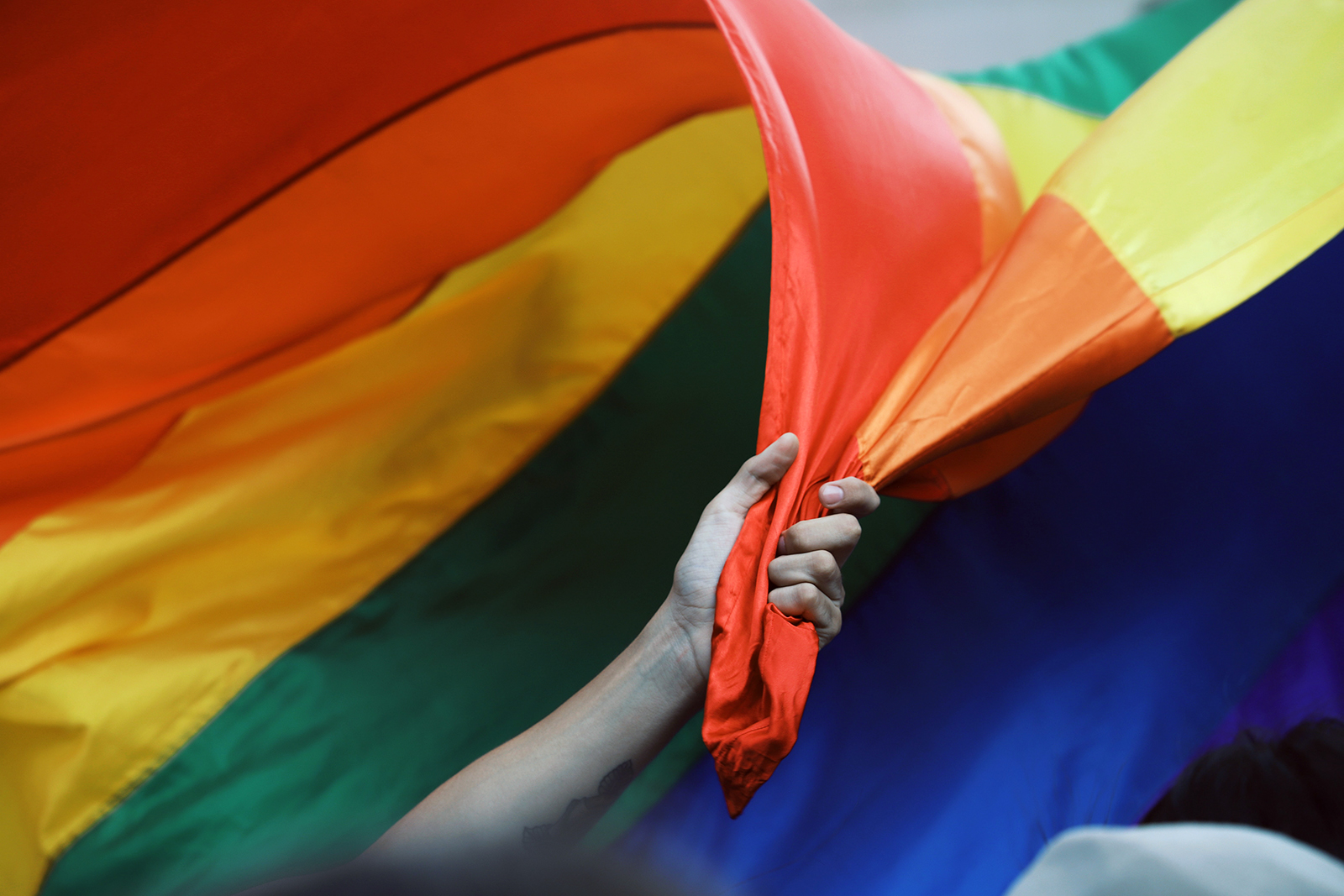
(Photo by Jose Pablo Garcia/Unsplash/Creative Commons)
5. Players form a Christian prayer circle after the final whistle
It was one of the memorable moments from Germany’s win over Curaçao: German and Curaçao players stood together in a prayer circle on the field after the final whistle.
The images were shared and reshared, highlighting a tradition that Christian footballers on winning and losing teams have followed after matches. “In the game we are opponents, but after the game we are all Christians, we are all brothers, and we said a little prayer because we believe Jesus is glorified through the game,” German midfielder Felix Nmecha later explained.