




(RNS) — On a chilly March evening, my children and I, dressed in traditional attire — an abaya and hijab for myself, Pakistani shalwar kameez for my kids — walked hand in hand to my daughter’s public school in Ontario, Canada. We were greeted by hand-painted signs reading “Ramadan Kareem,” a phrase wishing others a blessed and abundant Ramadan, in both English and Arabic.
Balloons, lanterns and extra-large marquee light-up letters spelling “RAMADAN” decorated the entire gymnasium, where a banquet was set up to celebrate the holy month for the many Muslim students and families who bring vibrancy to the school community. And not only Muslim families attended — school staff and friends hailing from different backgrounds broke bread together. One Muslim teacher loaned her best dresses to her non-Muslim teacher colleagues so they could be adorned just as glamorously to be a part of the festivities.
This welcoming community vibe is representative of not only Ramadan and Islam, but also of the school itself. It’s one of many ways Ontario’s public schools celebrate religious diversity. With the help of their respective school councils, consisting of parents, school staff and community members, Ontario’s schools work together to augment the educational experience for their students.
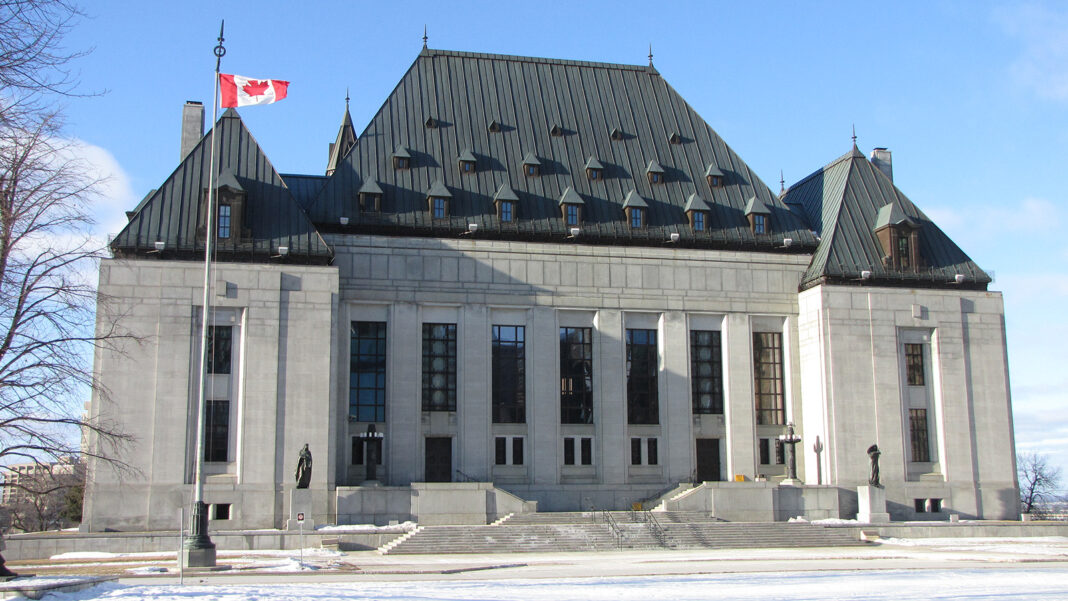
Conversely, just a few weeks later in the neighboring province of Quebec, secularism laws, which include banning wearing religious symbols and faith-based accommodations in public schools, were up for debate in a four-day hearing at the Supreme Court of Canada.
Since Quebec’s Bill 21 passed in 2019, public servants like teachers or police officers have been banned from wearing religious pieces like the hijab, kippah, turban or crucifix at work. Two more bills passed last year that expanded on the restrictions imposed by Bill 21, banning face coverings and religious symbols also among students, day care teachers, administrative workers and even volunteers at schools.
Religious accommodations under these laws have also been curtailed, meaning that prayer spaces are no longer permitted, and requests for religious days off, such as for Muslims celebrating Eid, Jews commemorating Yom Kippur, or Sikhs marking Vaisakhi, are not within residents’ rights. These laws even go as far as to dictate not only what people should wear, but also what they should eat, restricting the availability of religious-based menus, such as kosher or halal food, in public spaces.

The Supreme Court of Canada in Ottawa, Ontario. (Photo by D. Gordon E. Robertson/Creative Commons)
Quebec has a history of secularism dating back to the Quiet Revolution of the 1960s, a time when French-speaking Canadians sought greater control over their economy, health care and education, which, at the time, meant detachment from the Catholic Church. Over the years, social and economic progress became linked to adopting secularist views. At its root, Quebec’s secularism is tied to its strong desire to bolster its French identity and protect its own distinct language and culture.
There is an irony to the history of these secularism laws: In a bid to protect this singular identity, Quebec seeks to destabilize other identities.
As a result of the passage of these bills, almost 200 Quebecers have either been fired, forced to resign or taken unpaid leave, according to recent reports. Many of these employees are in schools, on school boards (or school service centers) and in day care centers that face a chronic staff shortage and often rely on under-qualified workers. Meanwhile, qualified Quebecers have been forced to reconcile their careers and their faith, pitting the two against each other — once again in an ironic move that would weaken the province’s own economy.
In the historic Supreme Court hearing in late March, and whose decision will come over the next few months, significant discussion took place on the use of Canada’s notwithstanding clause to override Canadian Charter rights and freedoms, which was how these secularism laws passed in the first place. It begs the question of what other laws rooted in discrimination could be passed in the future. And to that end, what power would Canadians hold to criticize or contest such laws?
In Ontario, though, whether it is a Sikh wearing a turban, a Catholic with a cross on her neck, a Hindu with a bindi on her forehead, a Jew wearing a kippah, a Muslim wearing a hijab or a student who does not subscribe to any religion at all, all students are made to feel safe, not strange, when walking through the same halls together. The government protects their distinct identities and Charter-given rights and freedoms to express themselves as a whole, not compartmentalized as Quebec would have it.
And whether it is through establishing a designated prayer and meditation space, completing a Diwali craft in class, lighting a communal menorah for Hanukkah or putting up a Christmas tree in the front foyer, Ontario’s schools exhibit not only a sense of religious or cultural accommodation or tolerance, but celebration of that diversity. An acquired understanding persists that schools are places of learning and enrichment not only through textbooks, but also through the very real, very influential experiences of the many identities of their biggest stakeholders.
Ontario’s schools and society at large promote social cohesion and strengthen society by creating a culture of understanding and knowledge-sharing. Forcing Quebecers who inherently identify with French culture and just as equally identify with their religion — yes, they are not mutually exclusive — to forgo their religious values does quite the opposite.
I am a product of Ontario’s public school system, and now my daughter is as well. I have worn the hijab throughout my school years and have witnessed the growth of cultural and religious diversity in Ontario over the decades. Today, my daughter’s decision to wear the hijab at school is almost second nature. It’s not considered a big deal. I believe her school environment is a big factor contributing to this ease — one that empowers her faith and identity.
When students feel empowered in their environments, they thrive. These same students will grow up and give back to strengthen their society in ways that we may not be able to foresee today. But one thing I can foresee is this: Quebec’s tactics, in an effort to promote a singular “cohesive” secularist identity, is fragmenting French Canadian society.
(Zehra Kamani is a Toronto-based freelance writer with a background in research. Her website is zehrakamani.com. The views expressed in this commentary do not necessarily reflect those of Religion News Service.)