













Mitochondrial fatigue is a lesser-known reason behind constant low energy.
There are days when sleep feels complete, meals are on time, and yet the body drags. The mind slows down, and even small tasks feel heavier than they should. This kind of fatigue often gets blamed on stress or age. But science has been pointing to something else, how well the body produces energy at a cellular level.Inside every cell are tiny structures called mitochondria. They convert food and oxygen into usable energy. When this system begins to falter, the result is not dramatic illness, but a steady drain. That persistent low energy has a name: mitochondrial fatigue.
What exactly is mitochondrial fatigue?
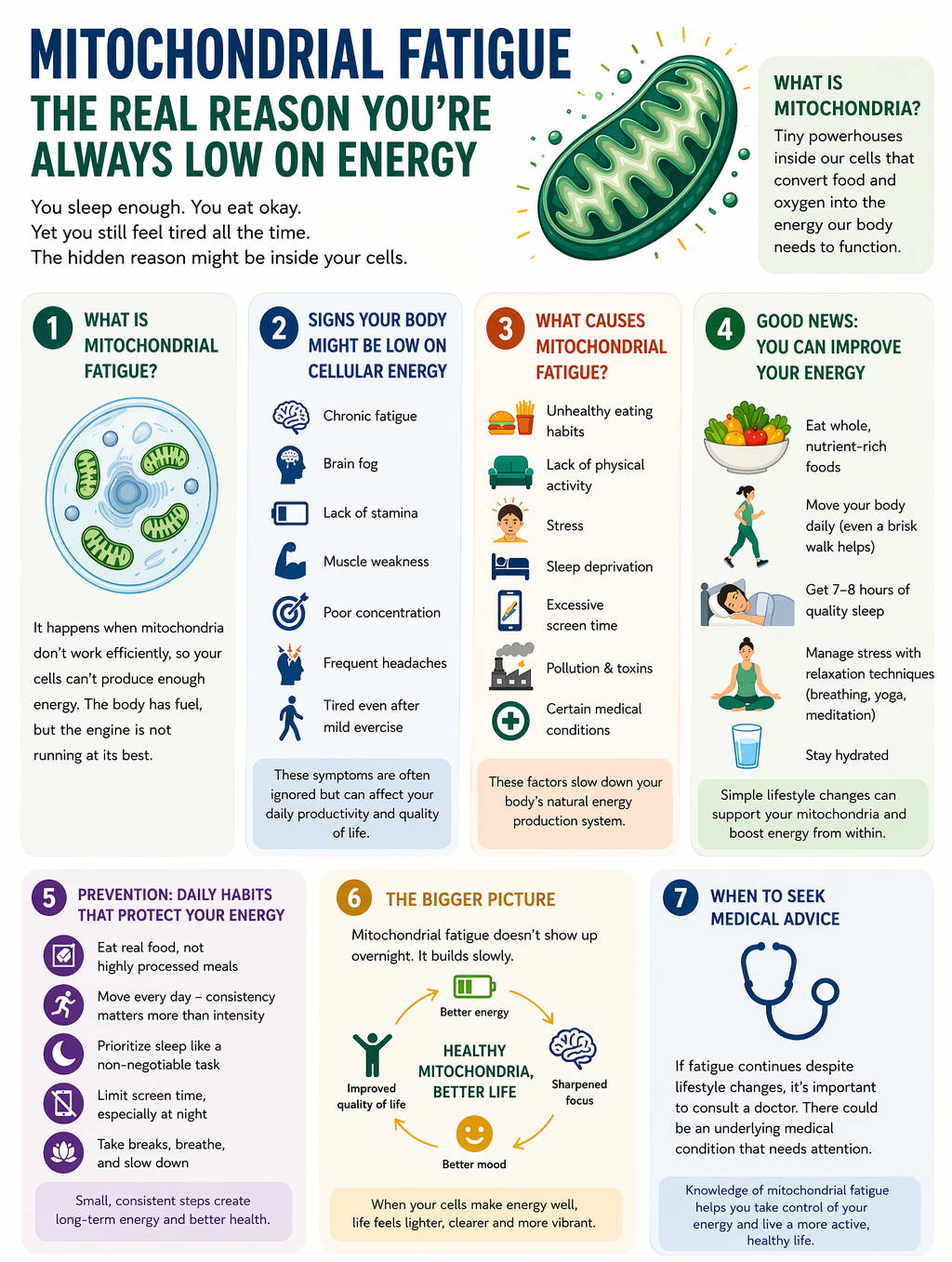
Dr Ravindra Srivastava explains it simply, “Most individuals are always exhausted despite their sufficient sleep. This constant tiredness is mostly attributed to stress or a hectic lifestyle, yet one not well known cause may be mitochondrial fatigue. Mitochondria are small structures located within our cells that can be considered as powerhouses since they help our body to generate the energy needed to perform its functions. When these giants fail to perform effectively, then the body will be unable to produce enough energy and will also experience continuous fatigue.”In plain terms, it is not the body running out of fuel. It is the body struggling to convert fuel into energy efficiently.


It begins at the cellular level, often driven by lifestyle habits. The symptoms are subtle but affect daily life.
The signs people often brush aside
This form of fatigue rarely shows up as a clear medical condition. It blends into everyday life, which is why it goes unnoticed.Dr Srivastava notes, “Mitochondrial fatigue does not necessarily manifest itself in a clear manner and that is why it is usually neglected. Symptoms such as chronic fatigue, brain fog, lack of stamina, muscle weakness and poor concentration are common. Other individuals might also get frequent headaches or feel tired despite mild exercise. Such symptoms may impact on the daily productivity and the general quality of life.”These signs often appear slowly. A missed deadline here, a forgotten detail there, or needing more effort for routine tasks, over time, they add up.
What pushes mitochondria off balance?
Energy production depends on a steady supply of nutrients, oxygen, and rest. When daily habits disrupt that balance, mitochondria feel the strain.Dr Srivastava points out, “There are a number of lifestyle factors that may influence the functioning of mitochondria. Unhealthy eating habits, insufficient physical exercise, stress, sleep deprivation, and too much screen time may decrease the efficiency of energy production in the body. Also, matters of pollution and some medical conditions may also contribute. These factors may eventually slack the natural energy system of the body.”Research from the National Institutes of Health highlights how oxidative stress damages mitochondrial function over time.These are not sudden changes. They build gradually, often unnoticed.
Why modern life makes it worse
The body was designed for cycles, activity and rest, daylight and darkness. Today’s routine disrupts that rhythm.Late-night scrolling, irregular meals, processed food, and constant mental load create a mismatch between what the body expects and what it gets. Over time, this mismatch affects how mitochondria function.The result is not dramatic illness, but a quieter slowdown. Energy dips become the new normal, and people start adjusting their expectations instead of questioning the cause.

The solution is not quick fixes, but consistent changes in diet, sleep, movement, and stress management.
Can energy be restored from within?
The encouraging part is that mitochondria are responsive. They adapt when conditions improve.Dr Srivastava explains, “The positive news is that in most cases, mitochondrial health is enhanced by simple lifestyle changes. A healthy diet consisting of fruits, vegetables, and whole foods is a good source of nutrients that are necessary in the production of energy. Exercise such as brisk walking, though it may be as simple as that, can be used to enhance the functioning of the cells. It is also important to get 7-8 hours of quality sleep, relax and manage stress using relaxation strategies, and keep hydrated.”Even small changes matter. A 20-minute walk, consistent sleep timing, and balanced meals can begin to reset energy patterns.
Prevention is not complicated, but it is consistent
There is no single fix. The focus shifts from quick boosts to steady habits.Eat foods that are close to their natural formMove daily, even if gentlyPrioritise sleep like a non-negotiable taskReduce constant screen exposure, especially at nightBuild moments of pause during the dayEnergy drinks and caffeine may offer temporary relief, but they do not fix the underlying process.
The bigger picture: small changes, lasting impact
Dr Srivastava sums it up clearly, “Rather than using a short-term solution such as caffeine or energy drinks, you should think about making some long-term habits that will keep your body nourished down to the cellular level. In case the fatigue does not improve even after lifestyle changes, then it is recommended to visit a doctor to be examined. Knowledge of mitochondrial fatigue can enable individuals to be more in control of their energy requirements and have a more active, healthy lifestyle.”There is a quiet shift that happens when energy returns. Focus sharpens, mood stabilises, and daily life feels less like effort and more like flow.Medical experts consultedThis article includes expert inputs shared with TOI Health by:Dr Ravindra Srivastava, Senior Consultant – Neurosciences, ShardaCare–Healthcity.Inputs were used to explain how persistent low energy may be linked to underlying mitochondrial function and metabolic imbalance, and to highlight the importance of medical guidance before using supplements or natural alternatives to address fatigue.