










PORTLAND, Ore. (RNS and NPR) — A few years ago, Greta Binford was hiking in the Columbia River Gorge when she saw a spider that “looked different from anything that I normally see when I roll over rocks and logs in this area,” she said.
An evolutionary biologist at Lewis & Clark College in Portland, Oregon, she thought the spider looked liked a Trogloraptor — a distinctive family of spiders that have a small extra hook on the end of their feet, which make them better at pouncing on and biting other spiders. The family only contained one known species, which lives about 350 miles away.
Over the next few years, Binford found more of these mystery spiders that her lab observed, analyzed and tested. It was, in fact, a Trogloraptor, but a new species. And when a new species is discovered, scientists get the honor of naming it, usually something that reflects the organism’s characteristics or some source of inspiration. But Binford’s lab decided to share it.
“We had an idea, really spearheaded by my student, Madeline Jones, who suggested, ‘Why don’t we reach out to the local tribes and see if they have an idea for a name?’” Binford said.
Binford’s lab reached out to the Columbia River Inter-Tribal Fish Commission, which coordinates management and fishery services for several Native tribes in the area, for help finding a name that would be significant to the tribes that traditionally lived in that area. The group connected the lab with Donella Miller, a biologist with the commission and a member of the Yakama Nation.

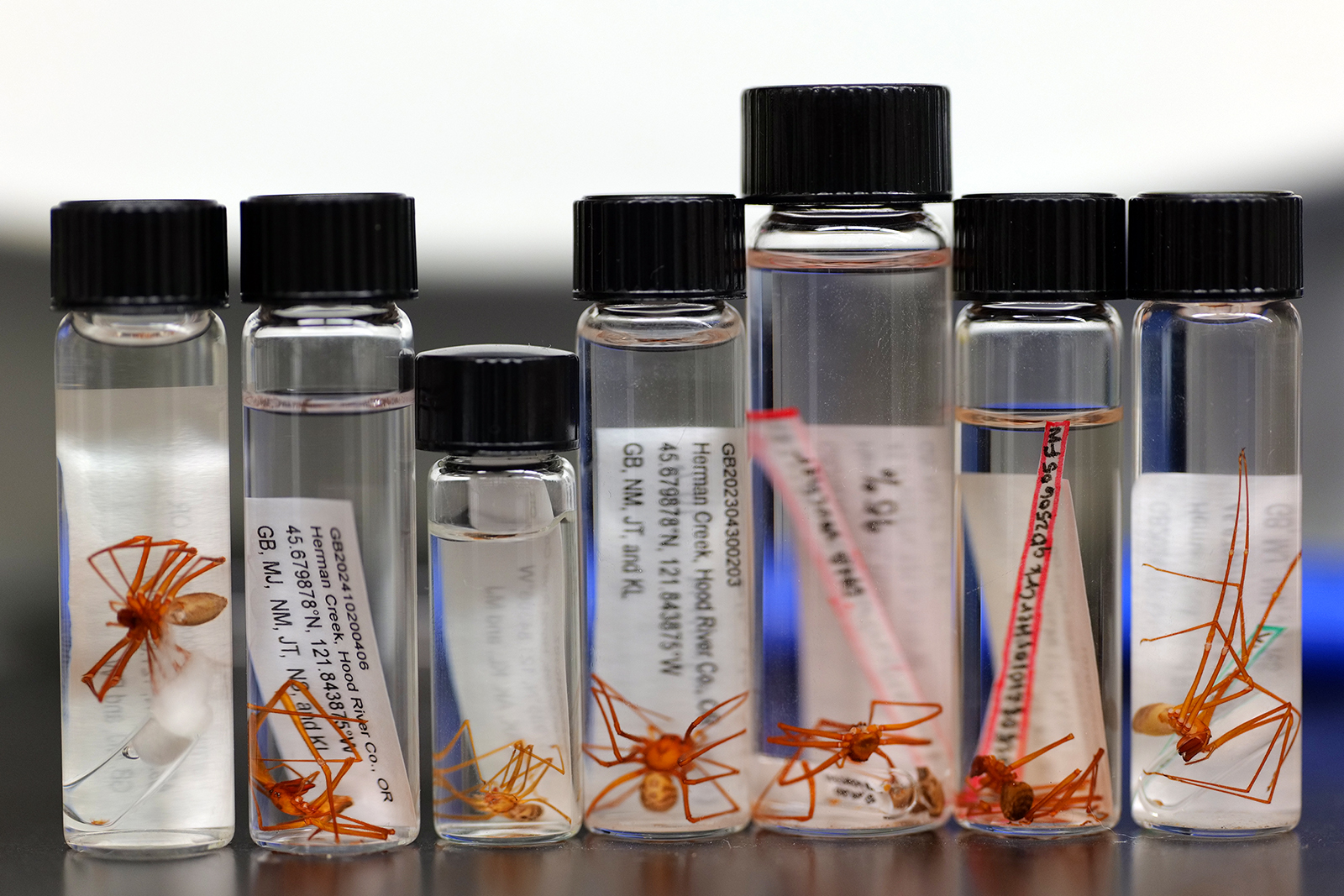
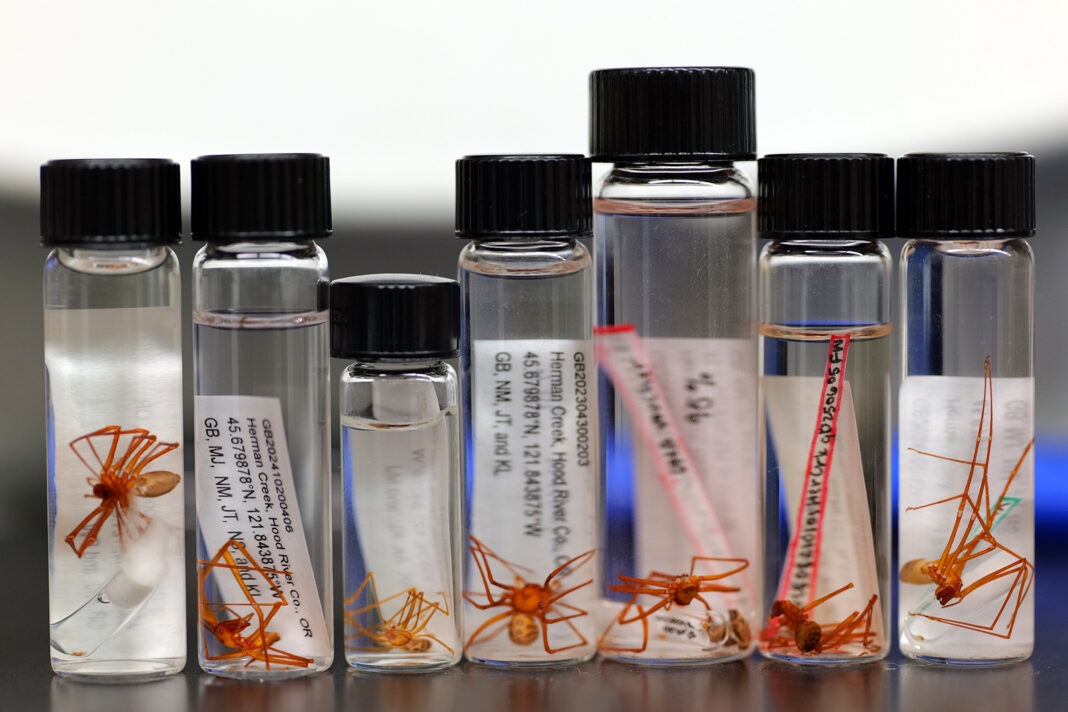
Multiple samples of Trogloraptor tulishpun in the lab of Greta Binford on June 9, 2026. (Photo by Lyric Aquino, Underscore Native News + Report for America)
“I totally nerded out,” Miller said, laughing . “I thought it was the coolest thing in the world, right? A new species and being able to be a part of the naming of that.”
She added, “Honestly, acknowledging the First People, the Indigenous people who live in that area, and bringing them into it, it kinda seems like this is what should’ve been done all along.”
Miller helped the lab connect with Anthony Washines, an elder who grew up speaking Sahaptin, the native language traditionally spoken in that region. And after reflecting, Washines selected the name Trogloraptor tulishpun, which means cave predator, honoring the spider’s role as a hunter.
Binford’s paper was accepted, and the spider was sent to the Smithsonian. But as Miller and Washines emailed back and forth about the name, Miller joked that because the spider was given a Native name it meant they would need to have a naming ceremony, referring to a formal bestowing of a name in Native traditions. It is seen as a way to welcome that individual and mark their place in the community.
”You’re introducing yourself to the land and to our people so that you’ll be recognized,” Miller explained.
Donella Miller holds up a hand-painted image of Trogloraptor tulishpun that was given to Greta Binford on June 10, 2026. (Photo by Lyric Aquino, Underscore Native News + Report for America)
Greta Binford holds up samples of the spider species she discovered, Trogloraptor tulishpun, in her lab at Lewis and Clark College, June 9, 2026, in Portland, Oregon. (Photo by Lyric Aquino, Underscore Native News + Report for America)
Attendees from the Trogloraptor tulispun’s naming ceremony on June 10, 2026 at Herman Creek Campground in the Columbia River Gorge. The naming ceremony was complete with song, dance, gift giving and a light lunch. (Photo by Lyric Aquino, Underscore Native News + Report for America)
Yakama citizens Aleeyah McJoe, 12, from left, Ava McJoe, 11, and her sister, Toppenish Creek Jr. Queen Audrina McJoe, 12, pack gifts for naming ceremony attendees on June 10, 2026. Gift giving is an important part of Yakama naming ceremonies, said Donella Miller, Yakama, fish science manager at Columbia River Inter-Tribal Fish Commission. (Photo by Lyric Aquino, Underscore Native News + Report for America)
A sample of Trogloraptor tulishpun, a new arachnid discovered by Greta Bindford in the Columbia River Gorge in 2021. (Photo by Lyric Aquino, Underscore Native News + Report for America)
This past week, several dozen tribal members and scientists gathered under the hemlocks and fir trees near where Trogloraptor tulishpun was found for that ceremony. Washines led the ceremony honoring the scientists who found the spider, the tribes who have cared for the land and the spider itself. He led the group in a traditional naming song, a recitation of the name and a gifting to elders, scientists and all who were gathered to bear witness.
A few spiders were gathered by Binford and local cavers to receive their name, and then returned back to the nearby caves.
Washines said he knows people will see tulishpun as a small thing, but it’s significant because not every creature has its place. This little spider has been in the same place even when Washines’ people were not.
“We were literally herded to a reservation,” he said. “Up in the high desert plateau, which was not our land. But he (the spider) stayed here, and remained. … He still took care of this land.”
Usually the discovery of a new species is celebrated with a pizza party in a lab, maybe a nod from the college dean as an academic milestone. But for Trogloraptor tulishpun, the naming became a gathering of scientists and citizens, of human and animal, to name all those who make up the land and to honor the connections between them.
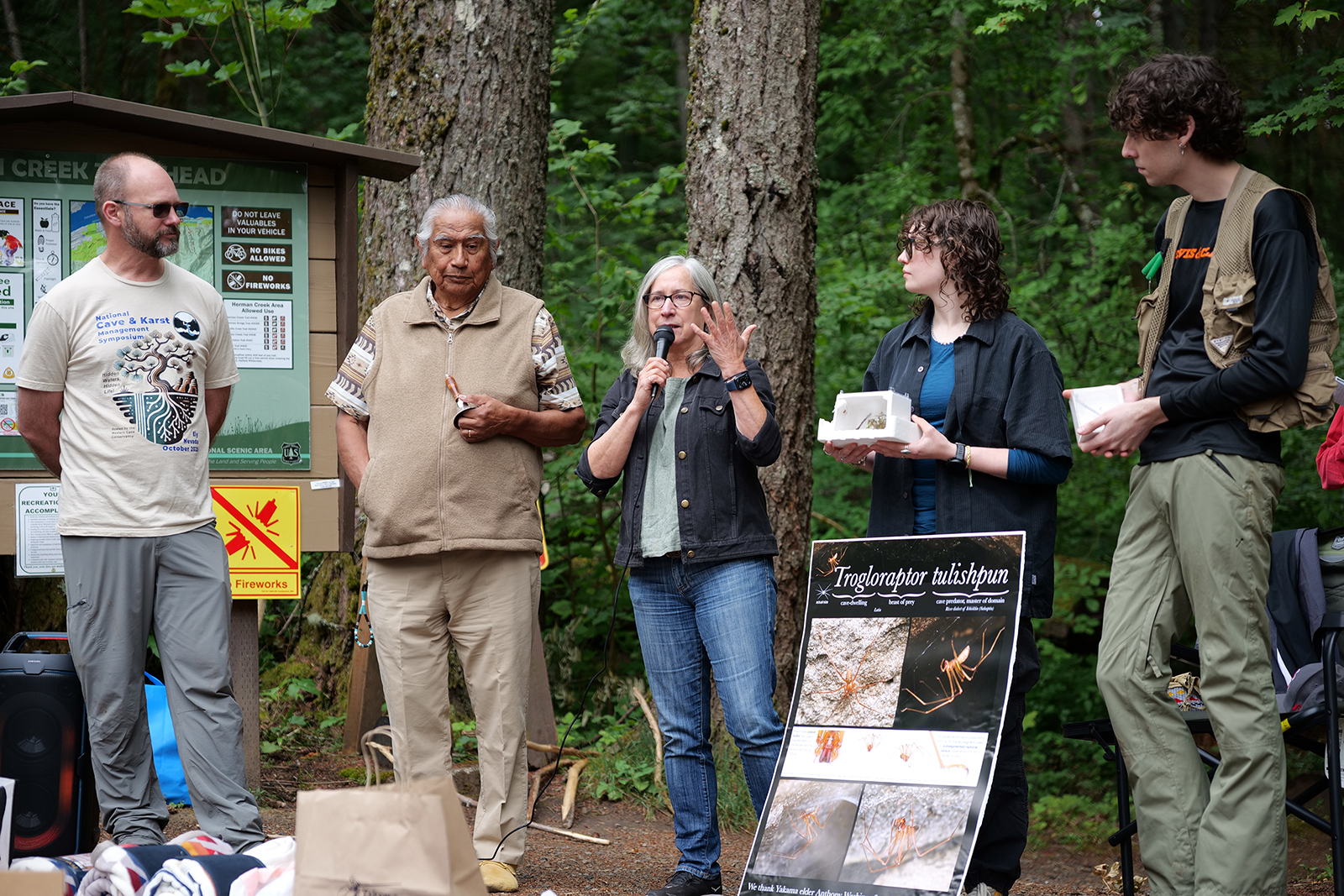
Neil Marchington, caver and director for Western Cave Conservancy, from left, Yakama elder Tony Washines, Greta Binford, arachnologist, Madeline Jones, researcher and Finn Watson, researcher, stand before attendees at the spider naming ceremony at Herman Creek Campground on June 10, 2026, while Binford shares information about the Trogloraptor tulishpun. (Photo by Lyric Aquino, Underscore Native News + Report for America)
This story was produced through a collaboration between NPR and RNS. Listen to the radio version of the story.