





BARCELONA, Spain (RNS) — Visiting one of the most recognizable landmarks in the world, the Basilica of the Sagrada Família, Pope Leo XIV celebrated Mass and blessed its recently constructed central tower of Jesus Christ, which made it the tallest church in the world.
During his Wednesday (June 10) homily before over 4,000 people, including 200 cardinals and bishops, and surrounded by the nature-inspired architecture of Antoni Gaudí, often referred to as “God’s architect,” the pope made a forceful appeal against war and in defense of human life.
“We cannot believe in Jesus and promote war. We cannot believe in Jesus and kill the innocent. We cannot believe in Jesus and abandon those who suffer, those who weep, those who flee from misery,” he said.
The liturgy was accompanied by a 600-voice choir and witnessed by church and state authorities in Spain, including the Catholic monarchs King Felipe VI and Queen Letizia.
The pope praised the Barcelona church, which has been under construction for over 140 years, as “a work in progress today, reminding us that the Christian life is always a journey because it is a project that God is carrying out.”
The imposing structure was built as a response to the industrial revolution of the 19th century through the support of the Association of the Devotees of St. Joseph, who sought to counter the secularization that accompanied the industrial era.
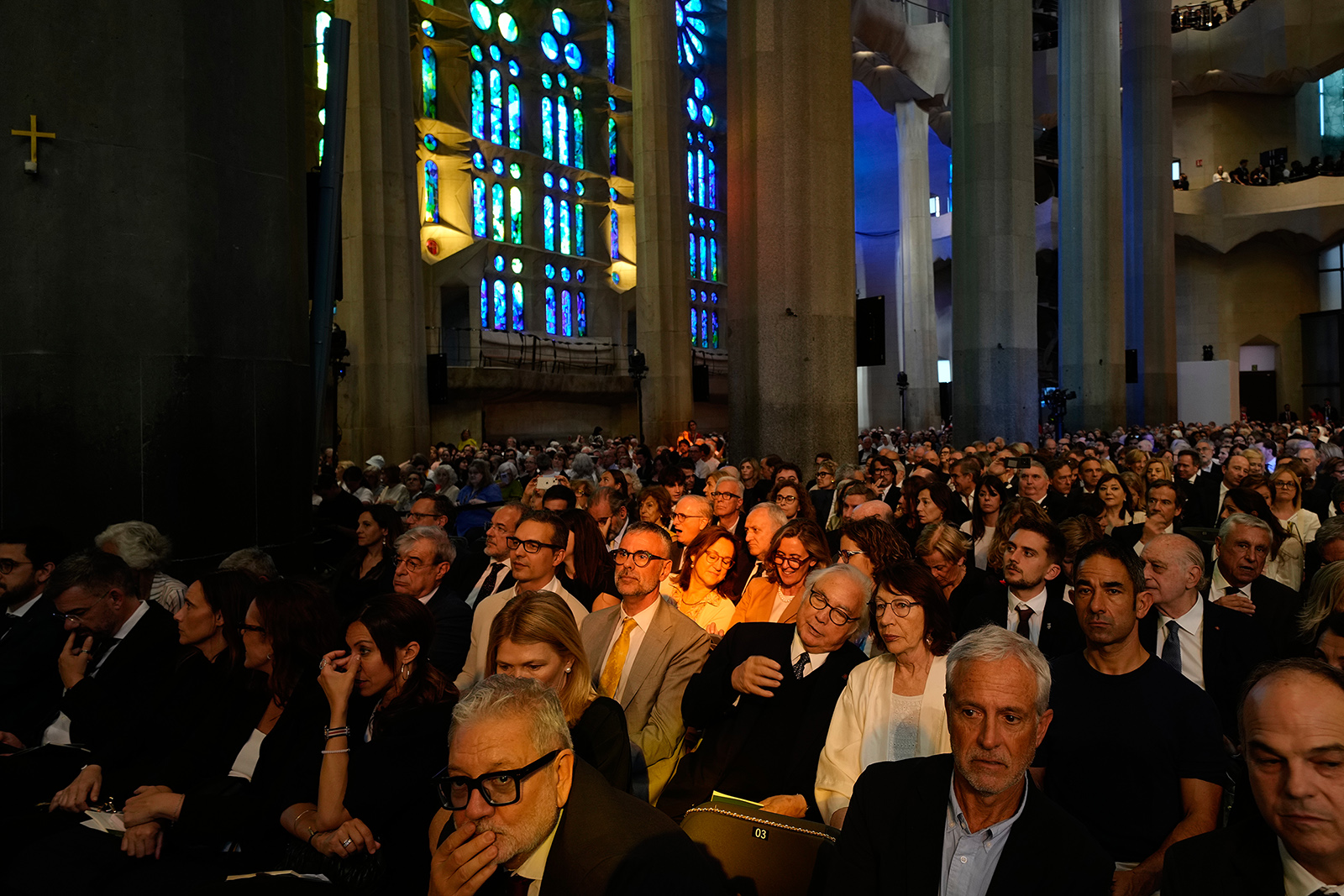
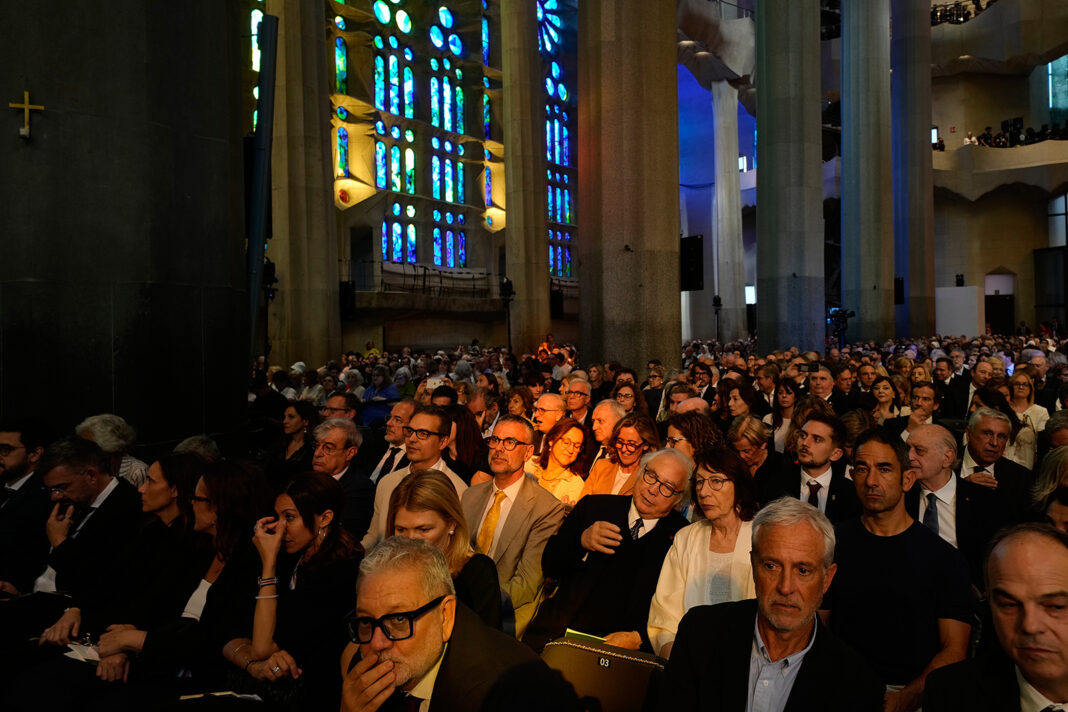
People wait for Pope Leo XIV’s arrival to celebrate Mass at the Basilica of the Sagrada Família in Barcelona, Spain, Wednesday, June 10, 2026. (AP Photo/Bernat Armangue)
Leo took his name from his predecessor Leo XIII, best known for his encyclical “Rerum Novarum” (“On New Things”), which offered answers to the challenges posed by the industrial revolution. In Leo XIV’s recent encyclical, the first of his papacy, he said we are witnessing a new industrial revolution and stressed the importance of putting human beings at the center of society, culture and education.
Gaudí saw the basilica as a project in which “an entire people” would come together and contribute, said the architect and scholar Chiara Curti, who has written three books on the Catalan architect, including her latest, “The Sagrada Família: The Cathedral of Light.”
Curti said the faces of the people in the façade of the nativity of the basilica were meant to look like the people working and living around its construction.
“ … The cathedral has this characteristic where each person places their own stone,” she said. “… It is as if (Gaudí) were saying that the history of salvation is made up of the people of today.”
The design of the basilica, covered in artwork and symbolism telling the story of Christ, was described by the pope as “an eloquent catechesis made of stones, colors and light.” He added that in modern society, “it becomes even more evident how art and beauty are privileged channels of evangelization.”
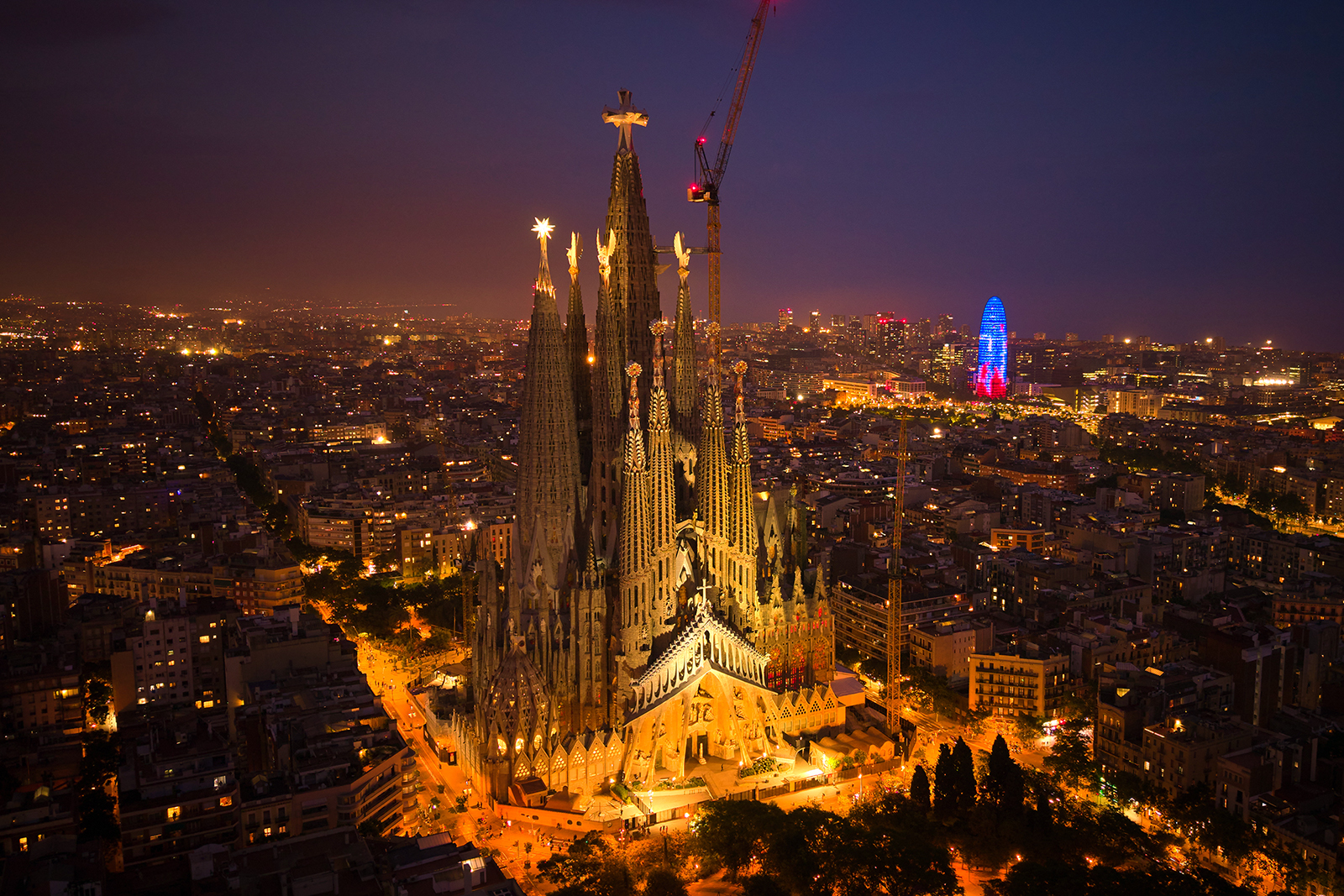
A view of the Basilica of the Sagrada Família in Barcelona, Spain, May 30, 2026, ahead of Pope Leo XIV’s visit to the city in June. (AP Photo/Emilio Morenatti)
Gaudí, who started working on the basilica in 1883, died before he could see it to completion, in 1926, after being hit by a tram car. Leo’s visit coincided with the centenary of his death, as some speculated on the possibility that the pope might soon approve his canonization. Before the Mass, Leo visited Gaudí’s tomb, located beneath the church.
“As an architect inspired by faith, the venerable Antoni Gaudí designed this place with the desire to narrate the mysteries of the Lord’s life,” he said in his homily. “In this way, he has proposed to us a spiritual pilgrimage, leading to an encounter with Christ, who for our sake was born, died and rose again.”
Pope Francis declared Gaudí venerable, a first step toward sainthood, in 2025, but the cause cannot move forward until a miracle is recognized, according to church rules. But a pope could potentially waive this prerequisite.
“The church always arrives a little late to saints,” Curti said, adding that Gaudí’s reputation for holiness was already recognized during his lifetime. “He already accompanies people toward the possibility of turning their lives into a work of art.”
Leo also blessed the monumental tower of Jesus Christ, which stands about 566 feet tall. In 2012, Pope Benedict XVI consecrated the church, praising it as “a visible sign of the invisible God, for whose glory its towers rise,” Leo recalled.
The pope said the cross was the “radiant sign” of Christ’s love. “When Christ is lifted up, the grandeur of his humanity shines forth, and our works glorify God. These are the works of faith, and art stands out among them,” he added.
The blessing was followed by music, fireworks and a light show before the 9,000 people including those outside the basilica. According to local estimates, 120,000 people followed the event on the screens placed in the nearby streets.