








In case of a surgery, we always trust doctors. The entire process is considered to be the baby of modern science, involving machines, complex procedures and experienced doctors. But long before trained professionals took over hospital rooms, renowned scholars were already cutting, stitching and healing people in organised ways.In ancient India, surgery was not only practised. It was professionally taught, documented and regulated. The record of this lies in an ancient text called ‘Sushruta Samhita’, a medical text written more than 2,000 years ago.The creator of the text and teacher of the science was Sushruta, a physician now known as the ‘Father of Plastic Surgery’. He was famous around the 6th century BCE and Sushruta Samhita is considered to be an organised collection of his work, teaching the Indian surgical science known as shalya tantra. The text divided into the Purva-tantra and Uttara-tantra, describes many present-day procedures including plastic surgery such as rhinoplasty, removal of dead foetus, lithotomy for bladder stones.The text also mentioned Ayurveda through toxicology, paediatrics and pharmacology. Surgery according to Sushruta, was not to be attempted casually. The text makes it clear that a surgeon has to be trained properly and for a long time. Students were advised to practise before operating on real patients. They learned how to make cuts on vegetables, how to stitch leather and how to handle animal tissue.
Tools for surgeries
One of the most interesting and shocking parts of the text is the description of surgical instruments. Sushruta divided them into two groups: the first is the sharp tools for cutting and the second is the blunt tools for holding, probing, and extracting. The text also mentions a hundred instruments, all for different purposes.Amon cutting instruments were Vrddhipatra, a scalpel; Mandalagra, used for curved incisions; Karapatra for severe bone injuries. To look at wounds, the doctor used a tool called Esani and forceps called Sandamsa. There were also tubular tools called Nadi Yantra.Methods of treatment and cleanliness during the operation were also vital. Bleeding, one of the most common dangers was treated with cauterisation. Moreover, surgeons were advised in the text to protect wounds while treating and cleaning the instruments as well. Among its most discussed contributions is its classification of surgery into eight categories, including excision, incision, puncturing, extraction, drainage and suturing. In total, the text recorded 1,120 illnesses, over 700 medicinal plants, more than 300 medical procedures and around 120 surgical instruments.
Acknowledging India’s contribution
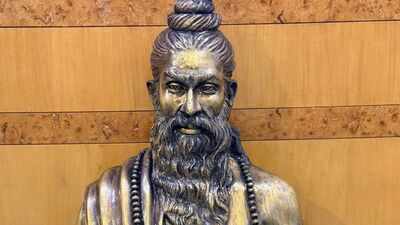
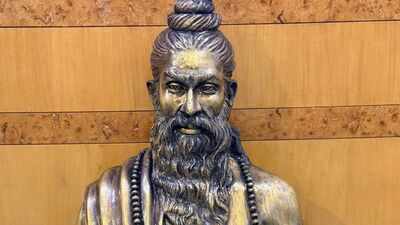
In recent years, claims that modern surgical equipment was invented in ancient India have surfaced. Amidst this, the Royal College of Surgeons of Edinburgh unveiled a statue of Sushrutha. The institution, considered the oldest surgical college in the world, unveiled the 90-kilogram bronze statue in tribute to his contributions to the field of surgery. Crafted in Swamimalai near Kumbakonam, the statue was produced by a sthapathi and a team of artisans from the temple town known for its bronze-casting tradition.Years earlier, the Royal Australasian College of Surgeons in Melbourne had honoured him similarly. It had Sushrutha’s celebrated statue telling about his recordings thousands of years back, standing tall.Both the institutions acknowledged that the history of surgery, cannot be told without acknowledging Sushruta’s contribution to the field. As Frank McDowell described him in the book ‘The Source Book of Plastic Surgery’: “Through all of Sushrutha’s flowery language, incantations and irrelevancies, there shines the unmistakable picture of a great surgeon. Undaunted by his failures, unimpressed by his successes, he sought the truth unceasingly and passed it on to those who followed. He attacked disease and deformity definitively, with reasoned and logical methods. When the path did not exist, he made one.”