






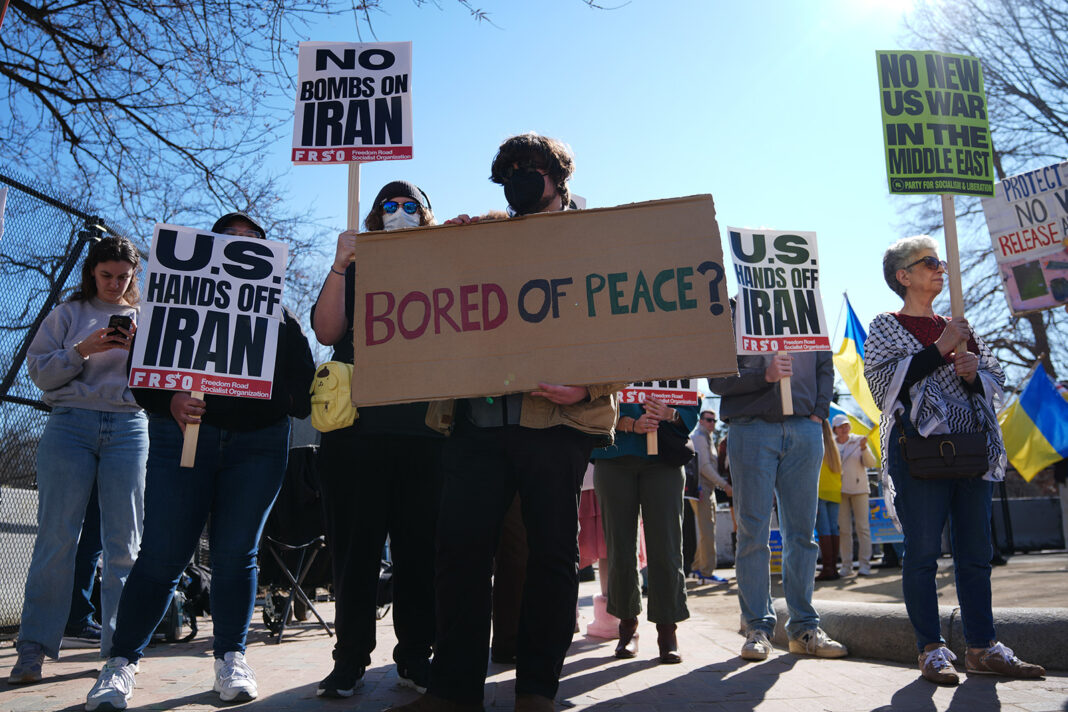
(RNS) — On April 14, the day before Tax Day, hundreds of people from across the country gathered on Capitol Hill in diverse, intergenerational delegations to meet with their members of Congress. Their message was clear: not one penny more for war on Iran. They came to Washington, D.C., for the first annual Friends Changemaker Weekend, organized by the Friends Committee on National Legislation and the FCNL Education Fund.
Representing a wide range of faiths, backgrounds and life experiences, they urged lawmakers to choose peace at a critical time for our country and world. In doing so, they reflected both the persistent power of our democracy and growing dissent over the use of our taxpayer dollars by the White House and Congress — especially in matters of war and peace.
Lobbying against runaway military spending is not new to FCNL and Quakers. For more than 80 years, we have worked to shift federal funding away from war and toward people, peace and planet. We have seen important progress — from defunding outdated weapons systems to increasing investments in peacebuilding and human needs. But these gains are overshadowed by our government’s massive investments in weapons and war, which have only ballooned year over year. The Pentagon budget has now surpassed $1 trillion, and President Trump is calling for even more: at least $1.2 trillion for the Pentagon, with a request for an additional $100 billion in supplemental war funding under consideration.
To be clear, military excess is not making us — or the world — safer. Lawmakers’ choices to pour resources into weapons and warfare at a time of urgent human need is nonsensical. When it comes to throwing money at the Department of War, the old adage holds: You get what you pay for.
As funding for war grows, so too does the violence it enables. The United States has launched military action against at least eight countries since President Trump took office, while militarizing our own streets through National Guard deployments and a cruel mass deportation campaign against our immigrant neighbors. The more the White House and Congress invest in waging wars and ramping up ICE operations, the more our communities — at home and abroad — bear the cost.
Even more disturbing, the administration’s relentless push for more spending on war comes alongside drastic cuts to the very government programs that sustain life and safety. The White House budget request once again targets vital supports: funding for nutrition assistance for babies and new moms, community violence interruption to prevent gun deaths, climate resilience, global migrant and refugee aid, and peacebuilding efforts that prevent atrocities and help societies rebuild social cohesion after war in places like Sudan, Ukraine and the Middle East. And this is on top of last year’s historic cuts to Medicaid and the Supplemental Nutrition Assistance Program.
These are not abstract line items. They are lifelines. Yet, at every turn, the message from lawmakers is the same: more for war, less for the conditions that make peace possible.
The good news is that many people around the country, and a growing number of Congress members, are saying enough is enough. The costs of reckless warmaking at home and abroad are simply too high. Too high at the gas pump and grocery store, too high for our communities and loved ones who are impacted and too high for the thousands of innocent people who are being killed, displaced and deported. This budget is not only immoral; it is irresponsible for everyone involved.
Dissent — in Congress and across the country — is growing, as evidenced by legislators who resort to budgetary gymnastics to avoid accountability. The longest partial government shutdown in history followed the killings of Renee Good and Alex Pretti, as lawmakers clashed over funding ICE and Customs and Border Patrol without clear guardrails for deportation operations. Now, Republican leadership is planning a reconciliation budget bill that can pass with a simple majority to fund ICE and CBP for the next few years — again without meaningful oversight.
Still, cracks are showing. Divisions are emerging among Republicans’ own party over escalating war with Iran and skyrocketing Pentagon spending, while many Democrats are speaking out against the administration’s budget plan.
Could this be a turning point for Congress to rethink how it spends our taxpayer dollars and finally put people over the Pentagon?
It can be if we make it so. The truth remains: You get what you pay for. If you fund fear and force, you get devastation. But by investing in programs that make our communities and world safe, healthy and resilient, Congress can help turn the tide from escalating war to enduring peace. And unlike unchecked Pentagon spending, these investments are not only more just — they are proven to be both effective and affordable.
Since January 2025, the Trump administration has wreaked havoc on the American and global economies, slashed vital programs at home and abroad and wasted hard-earned American tax dollars on cruel, militarized campaigns that make our communities and our world less safe. It’s time for Congress to reclaim its constitutional power of the purse and answer the growing public call: Enough is enough. Not one penny more for war, at home or abroad. It’s time to invest in people, peace and planet.
I saw that call come to life during Friends Changemaker Weekend. During some of the lobby visits I joined, advocates from across generations and geographies shared why funding peace, not war, matters to them. Their stories reflected a growing movement of people of conscience around the country standing up for a more just, peaceful and resilient world — reminding us that another path is not only possible, but is already being built.
(Bridget Moix is the general secretary of the Friends Committee on National Legislation and leads two other Quaker organizations, Friends Place on Capitol Hill and the FCNL Education Fund. The views expressed in this commentary do not necessarily reflect those of Religion News Service.)