











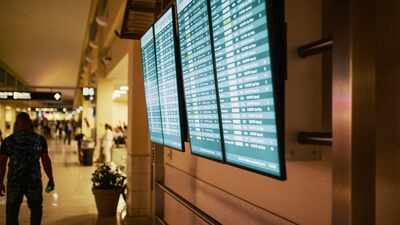
There cannot be anything more exasperating for travellers than to arrive at the airport and realize that their flight will be delayed or canceled. Although adverse weather conditions might be the culprit behind delays and cancellations, it should be noted that one problem at one of the major US airports is enough to spread its impact across all airports in the United States.On July 15, there were more than 3,000 delayed flights and over 140 canceled flights in the United States, according to a report published by Travel and Tour World. Such a massive number of flight disruptions resulted from a combination of strong thunderstorms in Texas and the Federal Aviation Administration (FAA) temporary ground stop at Ronald Reagan Washington National Airport caused by a security issue.
Why one airport can affect flights nationwide
The USA has one of the busiest national networks of air transport, where thousands of flights run daily. Most of these flights are connected via several key hubs like the Dallas-Fort-Worth airport, Charlotte Douglas airport, Atlanta, Chicago O’Hare and the Reagan National Airport in Washington.Flights change their routes very frequently during the day. An aircraft that starts its journey from New York and ends it in Dallas, will further fly to Denver, Phoenix or Los Angeles. The crew also works in coordination with their timings in which they have to operate several flights within one shift.A delayed flight affects the time of arrival of the aircraft, the pilots as well as the cabin crew in their next destination airport. This affects other flights scheduled after this, even in those cities where the weather conditions are perfect.

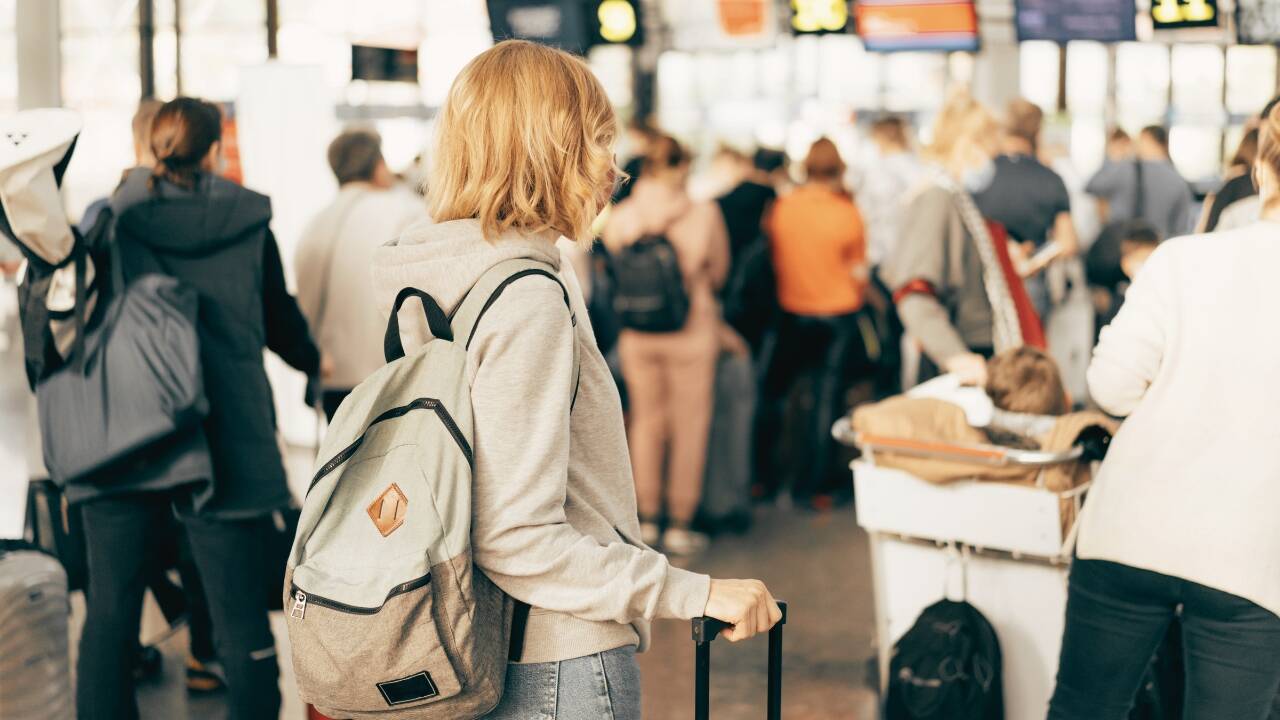
Travellers in a busy airport
Weather remains the biggest challenge
Thunderstorms are considered to be among the most common reasons for flights being delayed in America, particularly in summer times. Intense rains, lightning strikes, high winds, and poor visibility conditions compel air traffic controllers to increase the distances between planes, thus reducing both the number of arrivals and departures.Recently such situation was observed in DFW International Airport. Thunderstorms near the airport have decreased its ability to work effectively, causing numerous delayed flights. Being one of the largest airline hubs in the country, any delays in DFW Airport affect other domestic airports.As opposed to snowstorms, which usually can be predicted up to several days before they appear, thunderstorms may appear unpredictably and change their directions very fast.
Security events can also disrupt operations
However, not all flight delays are caused by weather conditions. There may be cases where airports institute temporary ground stops due to certain security requirements.For example, at Ronald Reagan Washington National Airport, FAA imposed a temporary ground stop on incoming flights for an incident related to security reasons. This was considered as a VIP movement, which is typically used for movements of the president and other high-security flights.Though this kind of restriction does not last long, it can greatly impact flights especially for those that have constrained runways.
Which airports are most vulnerable?
Other airports make a bigger contribution to the national aviation network simply because of the frequency of departures at their facilities.Dallas-Fort Worth Airport is one of the busiest airports in the world and is the main hub for American Airlines. Charlotte Douglas is yet another important connecting airport. Meanwhile, Reagan National is an airport where a large number of business travellers depart; however, it does not have much runway capacity.When there are disruptions at such airports, airlines find it hard to position the planes and the crew in time to restore the regular schedule of departures. Therefore, people who fly using connecting airports are likely to be delayed more frequently than those travelling point-to-point.
Why some airlines report more delays than others
In times of disruption, the airlines with the biggest presence in those airports will see the most disrupted flights.To take the same example, American Airlines is a major network airline flying out of Dallas/Ft Worth and Charlotte. In addition, Southwest Airlines is a major presence in all of Texas. If there is disruptive weather in these hubs, then the airlines will be seeing more disruptions simply due to the fact that they operate more planes and serve more passengers out of those airports.It doesn’t necessarily mean poor performance.
What travellers can do to minimise disruption
Even though passengers cannot influence the climate or airport operations, here are some ways to minimize the effects of unpredictable delays.First of all, checking the status of the flight before departure is a simple but highly effective method. Airlines’ mobile applications usually offer timely notifications concerning changes in gates, delays or cancellations of flights, so the passenger can adapt to the situation promptly.When a passenger has a connection, it is better to leave more time between flights, especially during the thunderstorms in summer and poor weather in winter. Early departures could also help a passenger avoid problems with punctuality, as flights usually get more delayed at the end of the day.If a flight gets cancelled, it is important to rebook a new one immediately as places on other flights may be sold out fast enough. Moreover, saving receipts for food, transportation and accommodation might turn out to be very helpful.As passenger numbers grow amid recovery in global air travel, airlines and airports have become highly efficient, despite the fact that they still suffer from weather conditions, security precautions or air traffic limitations.Knowledge of the aviation system can help passengers be more prepared for the possible delays due to the fact that a storm at several hundred kilometers away or a security limit at some airport in another state may appear to be irrelevant to one’s journey, however, in an interconnected aviation system, any delay can bring serious consequences.