












Erica Schwartz, President Donald Trump’s nominee to lead the Centers for Disease Control and Prevention, expressed support for vaccines — including mRNA-based covid shots — in a Senate hearing on Wednesday, though she didn’t dispel concerns the agency has lost any independence from the White House.
“I have been vaccinating people throughout my entire career in uniformed services. I believe in vaccines,” Schwartz said at the hearing. “I do believe that mRNA technology is safe and effective.”
Her position contrasts with that of Health and Human Services Secretary Robert F. Kennedy Jr., who ousted Trump’s previous CDC director, Susan Monarez, after she sparred with him over vaccines. Kennedy, a longtime anti-vaccine activist, has baselessly called mRNA vaccines the deadliest ever made.
Schwartz “has dedicated her career to protecting the health of the American people.” Emily Hilliard, an HHS spokesperson, said in an emailed statement. “The president nominated her because of that exemplary record, and Secretary Kennedy looks forward to working with her to advance the Administration’s public health priorities.”
The CDC has had a Senate-confirmed leader for only about one month during Trump’s second term, and the agency has been roiled over the administration’s cuts to public health funding, firings of scientists and other career employees, and efforts to scale back childhood vaccines and access to covid shots.
Schwartz, who was deputy surgeon general in Trump’s first administration and is a former chief medical officer for the Coast Guard, has support in the public health community, where it’s hoped she can restore credibility at the agency she would lead.
“I will follow the science wherever it leads,” Schwartz told senators. “My first priority will be restoring trust in public health institutions.”

Democrats and some Republicans have expressed doubt that Schwartz will maintain any more independence from Kennedy than Monarez, who has said she was fired in August after refusing to sign off on changes Kennedy demanded to vaccine recommendations and personnel cuts. In a series of emails released by Sen. Bernie Sanders (I-Vt.), it was revealed Kennedy had pressured Monarez to change CDC guidance regarding the universal childhood flu vaccine.
Monarez “refused to act as a rubber stamp for Secretary Kennedy’s very dangerous agenda,” Sanders said July 15 at the Health, Education, Labor and Pensions Committee’s confirmation hearing for Schwartz. “Frankly, she stood up for protecting the well-being of the American people.”
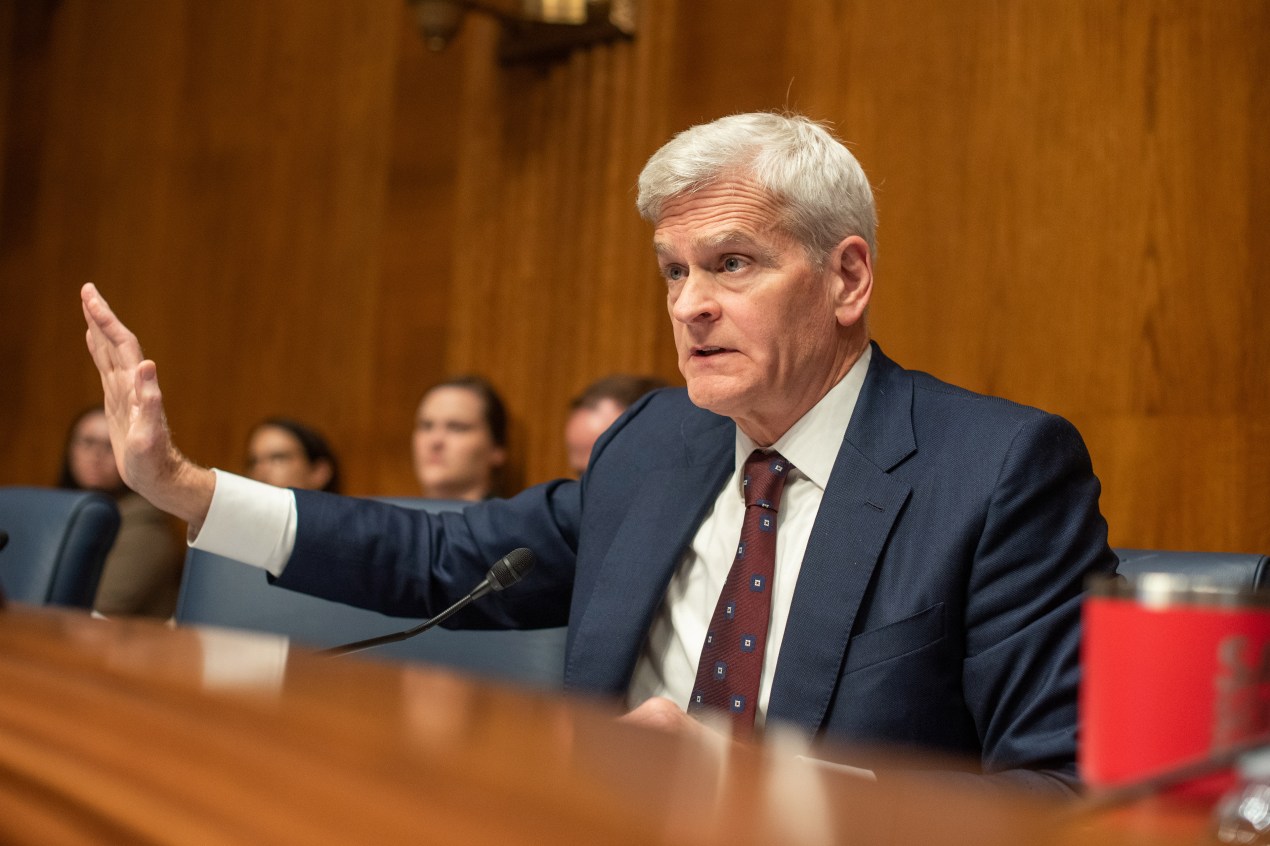
The chairman of the HELP Committee, Sen. Bill Cassidy (R-La.), pressed Schwartz on whether she would push back against rhetoric or policies not based in science.
“We need unbiased leaders who make decisions based upon science, not politics or ideology,” Cassidy said. “This is not a theoretical.”
Cassidy, a physician, has also quarreled with Kennedy over vaccines. He lost a Republican primary for reelection in May after Trump endorsed one of his opponents. Despite his rupture with the White House, Schwartz almost certainly needs Cassidy’s support to win confirmation. That requires publicly committing to support vaccination and mainstream science.
Schwartz told the committee she would “never compromise” on science.
“The president would never ask me to not follow the law,” she said. “But I will always follow the law.”
Many Democrats on the committee raised concerns about the administration’s politicization of public health. Sen. Tammy Baldwin (D-Wis.) asked about the “political scrubbing” of research grants. Trump officials have canceled many research grants under the CDC and the National Institutes of Health for political reasons, including targeting diversity, equity, and inclusion efforts.
“Restoring trust to the CDC is my No. 1 priority,” Schwartz said. “Scientific integrity is core.”
The American Public Health Association’s CEO, Georges Benjamin, endorsed Schwartz in April, saying she “possesses the medical background and public health knowledge to understand that the Centers for Disease Control and Prevention must be guided by evidence-based science.”
The APHA has fought many of Trump’s initiatives on public health. After Monarez’s resignation, the organization issued a news release titled “Kennedy’s attack on public health must be stopped.”
Schwartz told the committee that if she is confirmed, she is committed to “radical transparency” and modernization.
Schwartz expressed support for one Kennedy initiative: She told senators she believes nutrition education and physical fitness assessments are important.
“I am all in on the Make America Healthy Again agenda,” she said.
At the July 15 hearing, Schwartz faced questioning alongside Trump’s pick for HHS assistant secretary for preparedness and response, Sean Kaufman.
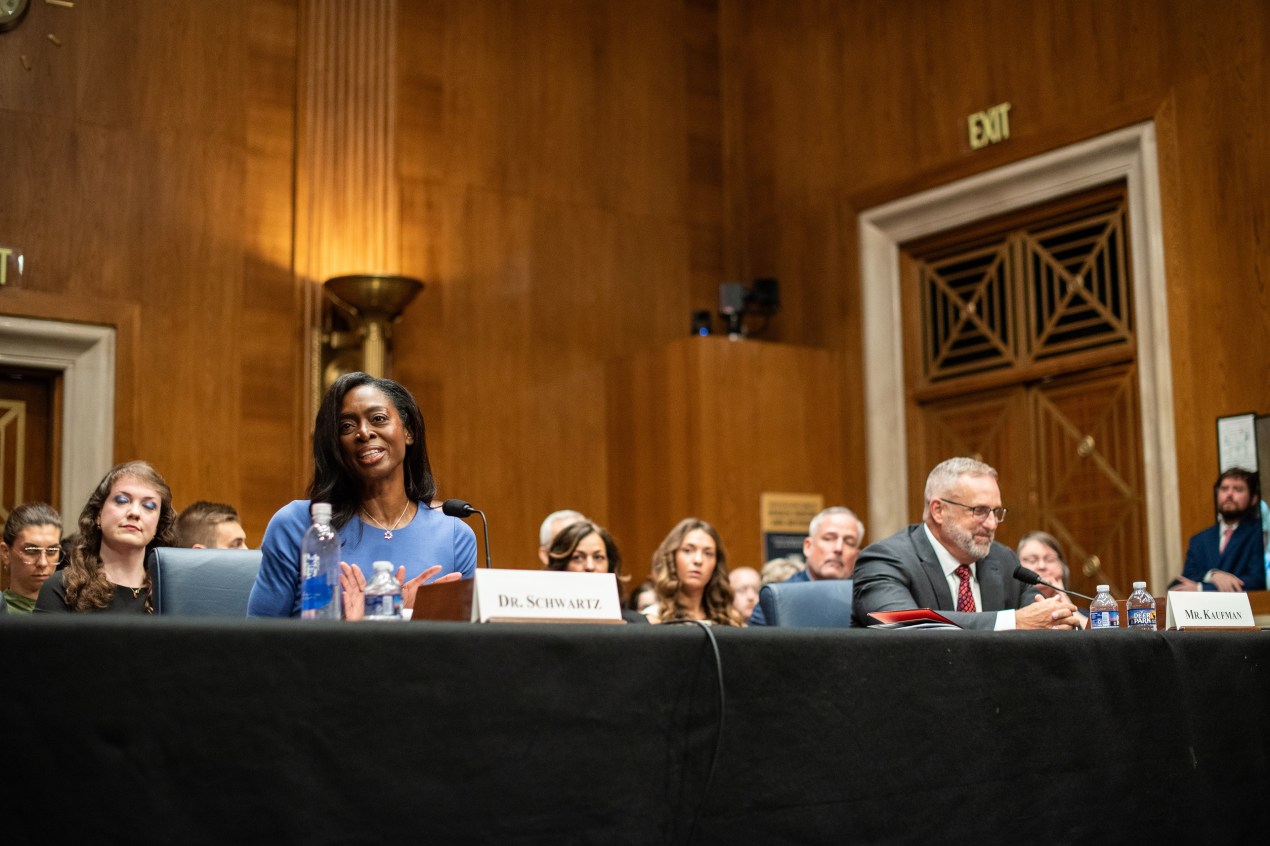
Cassidy called out Kaufman for past comments casting doubt on the efficacy of vaccines. The senator raised his voice as he accused Kaufman of spreading “those damn lies.”
Kaufman was conciliatory. “Let me be clear: Vaccines save lives,” he said. “They are safe and effective.”
If confirmed by the Senate, Schwartz will replace Jay Bhattacharya, who is performing the duties of CDC director but is not officially the acting director. Bhattacharya is also the director of the NIH.