





VATICAN CITY (RNS) — Pope Leo XIV returned to Rome in late July from his summer vacation just as one of the Catholic Church’s longest-running internal conflicts came back into the spotlight.
Prominent prelates were sparring on Catholic television and social media over how to address Catholics attached to the traditional Latin Mass, which had been sharply restricted by Pope Francis in 2021.
The liturgy wars, as they are called in Catholic circles, concern how the Mass expresses the church’s theology, authority and tradition. After the church introduced the new rite, or Novus Ordo, in 1969, some believers remained attached to the traditional Mass, celebrated in Latin and with the priest’s back to the congregation.
Pope Benedict XVI attempted to mend the rift with a 2007 decree, Summorum Pontificum, allowing faithful to attend the Latin Mass without their bishop’s approval and enabling stable groups of parishioners to request the older rite.
Benedict hoped the decree would promote reconciliation, particularly with the traditionalist Society of St. Pius X or SSPX, which promoted the Latin Mass and rejected reforms of the Second Vatican Council meant to reconcile the church with modern society.
Pope Francis overturned his predecessor’s opening toward the Latin Mass in 2021 by issuing Traditionis Custodes, restoring episcopal and Vatican control over where and by whom the older rite could be celebrated. Francis believed that traditional Latin Masses were a breeding ground for opposition to Vatican II reforms and papal authority.
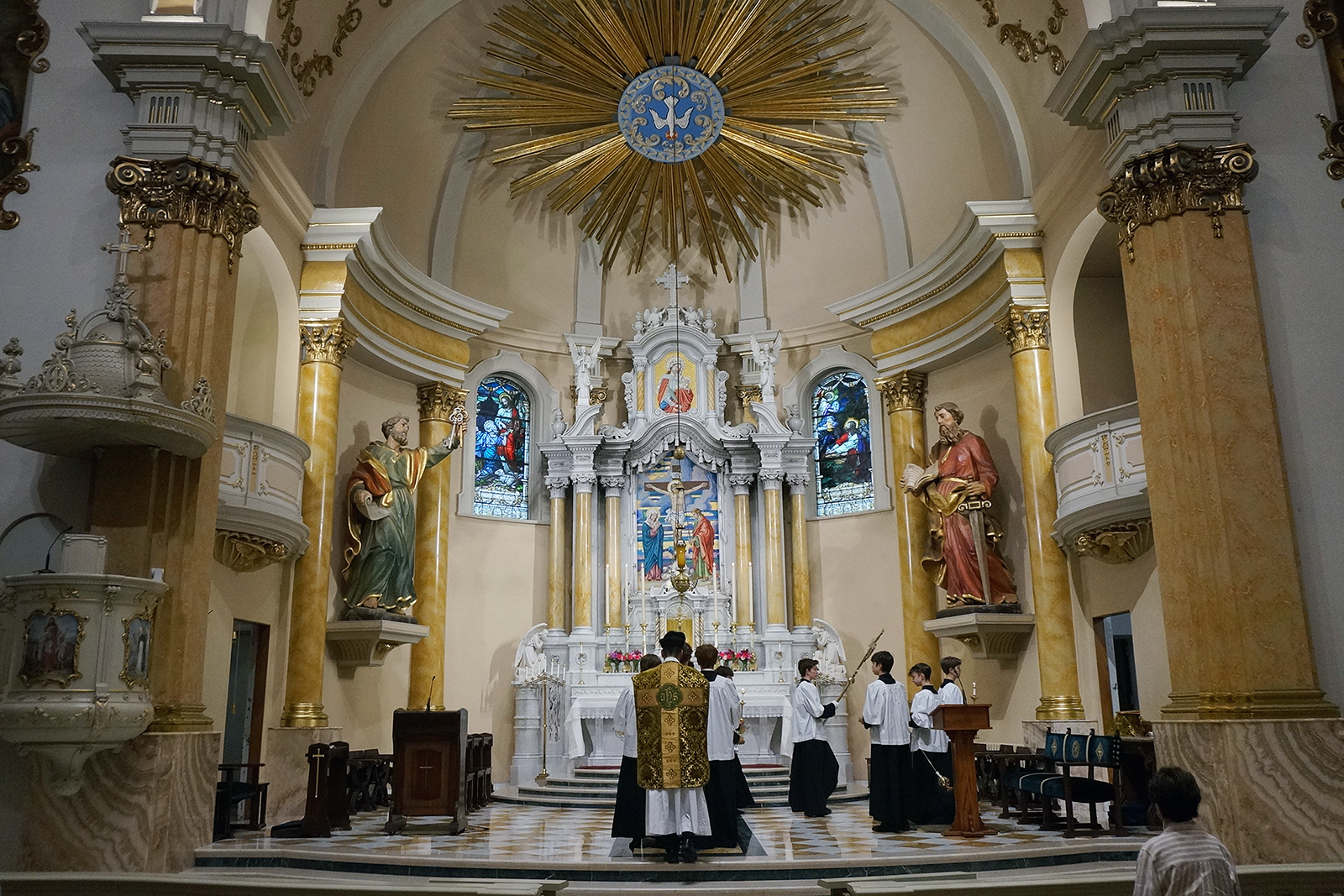
Now Pope Leo, who has made the theme of unity the central theme of his pontificate, has inherited a tense liturgical battlefield that has already split the church. SSPX bishops incurred automatic excommunication on July 1 when the Society consecrated four bishops without papal approval; and even though the liturgy was not the only reason for the official break, the Society is inseparable from the traditional Latin Mass.
Archbishop Salvatore Cordileone of San Francisco, who has opposed restrictions on the Latin Mass, called in a July 10 post on X for “more access to the traditional Latin Mass for the faithful but also more reverent Novus Ordo Masses inspired by the tradition.”
Cardinal Arthur Roche, the Vatican’s liturgy chief and the leading institutional defender of Pope Francis’ restrictions on the older rite, in a July 29 interview with The Tablet, seemingly debunked hopes that Leo might overturn Traditionis Custodes.
“It’s a very complex area. And it’s a very important area because the Eucharist is the sacrament of unity,” he acknowledged. “But no, Pope Leo is not going to change Traditionis Custodes, and he’s not going back to Summorum Pontificum.”
The comment sparked debate among Catholics on social media and beyond. Cordileone responded to Roche during an interview on the Catholic television network EWTN. He argued that if Francis’ restrictions are not lifted, some faithful “will then go to these other groups that are not in full communion with the See of Rome,” hinting at groups like SSPX.

Only 2% of U.S. Catholics, roughly 1 million people, said that they attend the Latin Mass weekly, according to a 2025 Pew Research Center Study.
But sociologists Stephen Cranney and Stephen Bullivant, authors of the upcoming book “Trads: Latin Mass Catholics in the United States,” estimate only 100,000 to 110,000 Catholics attend the traditional Latin Mass on a typical Sunday in the U.S. Reports show that many of the old rite Catholics do not identify with SSPX and recognize papal authority. These findings support similar research throughout the years.
In the interview, Cordileone questioned how well Roche ‘knows the mind’ of the pope. In the hierarchical structure of the church, how Leo feels about the Latin Mass will determine the current resolution of the liturgy wars.
In March, Leo wrote a message to bishops in France, which like the U.S. has experienced tensions over the Latin Mass and a surge in young converts seeking spirituality in old rituals. The pope called for “concrete solutions” enabling the “generous inclusion” of Catholics sincerely attached to the Old Rite
“It is troubling that a painful wound continues to open within the Church concerning the celebration of the Mass, the very sacrament of unity,” read Leo’s message, conveyed by Cardinal Pietro Parolin.
The letter was interpreted as a sign that Leo might at least ease the restrictions, urging bishops to allow for the celebration of the Latin Mass in their dioceses, but it did not point to any intention of overturning Traditionis Custodes.
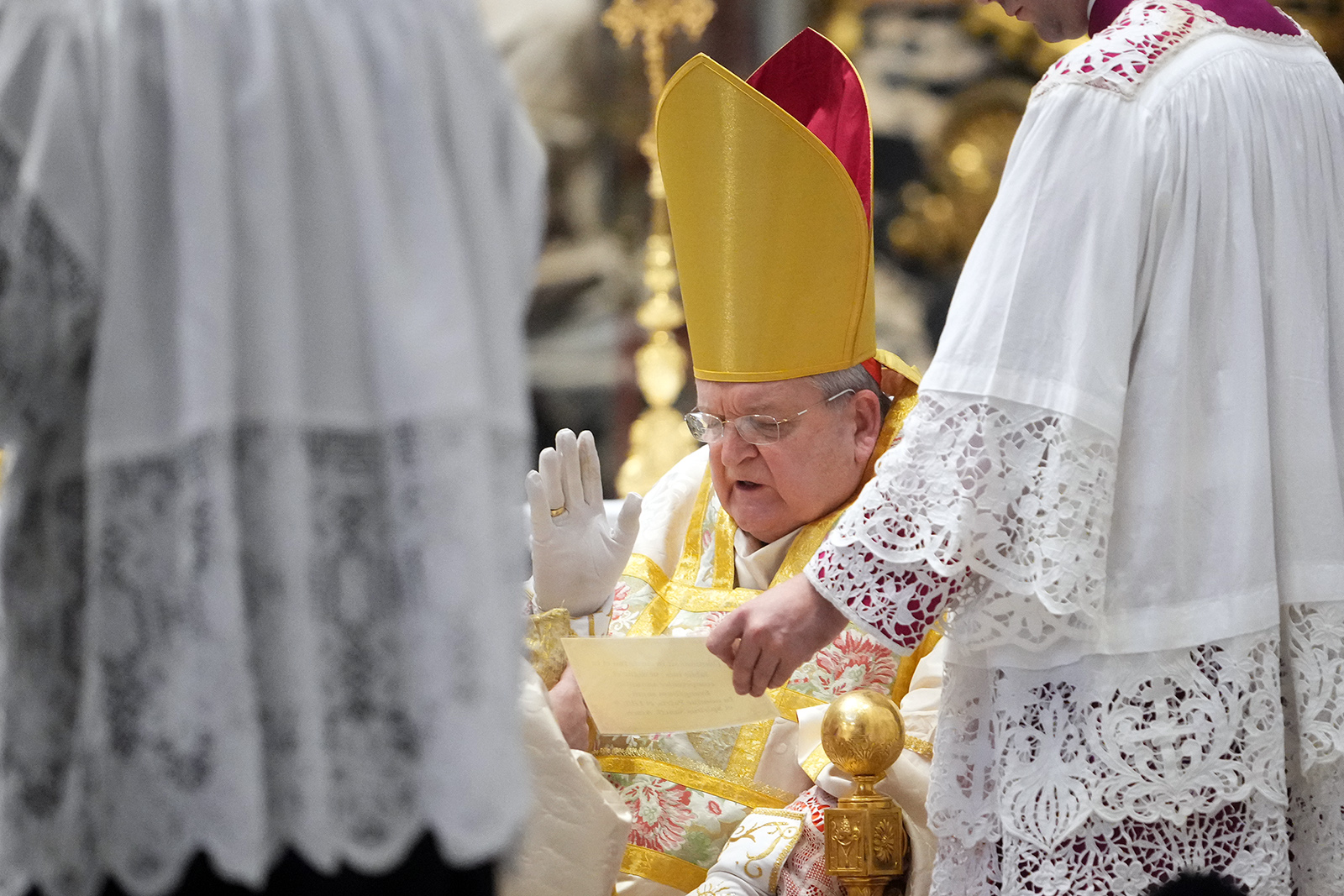
So far, Leo has allowed Latin Mass celebrations selectively. In October 2025, he permitted conservative Cardinal Raymond Burke to celebrate Mass in the Old Rite in St. Peter’s Basilica, and the Vatican recently granted or maintained temporary exemptions for some dioceses.
More recently, on July 25, Leo appointed Cordileone as one of seven new members of the Supreme Tribunal of the Apostolic Signatura, the Vatican’s highest court, which reviews disputes over church governance and oversees the administration of justice. Leo also appointed veteran canonist Bishop Juan Ignacio Arrieta, who only days earlier had raised questions about some of the broader legal consequences attributed to the SSPX excommunications.
A canon lawyer, Leo would likely have weighed those appointments carefully. They could lend conservative credibility to any future Vatican legal action involving the SSPX.
Our greatest insight into “the mind of the Holy Father” regarding the Latin Mass is in the 2025 interview he gave to Elise Ann Allen of Crux, where he reflected on the numerous letters and requests he received regarding the celebration of the Old Rite.
While admitting that the situation is “obviously very complicated,” Leo displayed a deep understanding of what drove many faithful away from the reformed liturgy. He pointed to an “abuse” in some of the post-Vatican II Masses that left Catholics seeking deeper prayer and contact with the mystery of the faith.
But he also seemed to share the concerns of his predecessor, Francis, saying that, for some, the liturgy has become “a political tool” and driven an ideological polarization so fierce that “people aren’t willing to listen to one another.”
If the SSPX excommunication taught us anything about this pope, it is that Leo is willing to seek a unifying option as long as there is possibility for dialogue. He wrote a personal appeal to the Society pleading for them to “please turn back,” which was swiftly ignored. In the interview, Leo reported that bishops had invited traditionalist groups to talk about the Latin Mass, only to be declined. How the pope addresses the tensions may depend on how willing Latin Mass goers are to dialogue and seek compromise.
An opportunity for that dialogue may come Sept. 25-28 when Leo visits France, home to one of the world’s largest and fastest-growing communities of Catholics attached to the older liturgy.
An annual traditionalist pilgrimage from Paris to Chartres has grown from roughly 12,000 participants in 2022 to about 20,000 this year, made up mostly of young people. Notre-Dame de Chrétienté, the association behind the pilgrimage, has also been asked to help mobilize volunteers for the pope’s visit — an acknowledgment of a movement that is difficult for the French church or Rome to dismiss as either marginal or fading.
Leo will therefore arrive in France facing the question he posed to its bishops in March: whether Catholics attached to the older rite can be “generously included” without allowing the liturgy to become a vehicle for rejecting Vatican II or papal authority.