











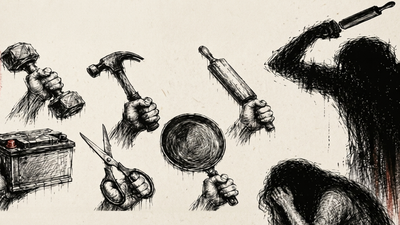
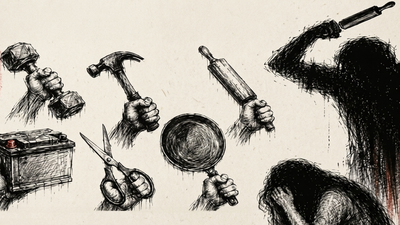
NEW DELHI: In most domestic murders, the knife has traditionally been the weapon of choice — a common kitchen tool that can be picked up in a jiffy in the heat of a quarrel.But of late, crime scenes inside Delhi’s houses reflect a shift: Instead of the knife, heavy iron tawas used to make rotis, dumbbells lying unobtrusively in the corner of a bedroom and rechargeable batteries that power homes are increasingly being weaponised.

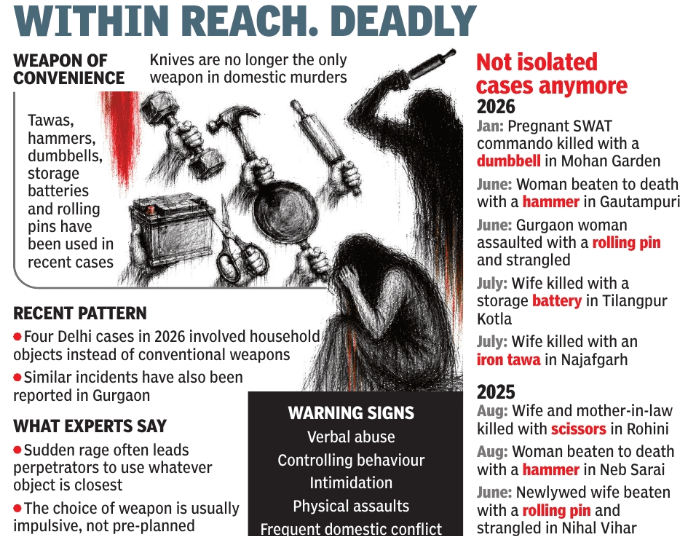
Earlier this month, two cases surfaced in Delhi within a week of each other. In outer Delhi’s Tilangpur Kotla village, a 28-year-old man allegedly bludgeoned his wife to death with a storage battery after suspecting her of having an affair. Three days later, in southwest Delhi’s Najafgarh, a 48-year-old man allegedly killed his wife by battering her with a tawa following a late-night argument.In the first case, following the murder, the man consumed toxic aluminium phosphide tablets, took his three-year-old daughter to his sister’s house, confessed to the killing and died. In Najafgarh, the man, walked into Baba Haridass Nagar police station, confessed to his crime and claimed that he had been suffering from schizophrenia.Last month, in northeast Delhi’s Gautampuri, a woman was allegedly beaten to death with a hammer by her husband following a domestic dispute before calling up his friend to inform him that she was unconscious.Mental health experts attribute this trend to sudden rage and an inability to regulate overwhelming emotions. “The choice of common household objects as weapons of murder indicates these killings were not premeditated but the result of impulsive acts,” said Sonali Mangal, a counselling psychologist.Counselling psychologist Esha Mehta said, “These weapons reflect opportunity rather than intent.”The confessions and apparent remorse that followed the murders indicate that once their anger subsided, the perpetrators realised the gravity of what they had done.Earlier this year, Delhi Police SWAT commando Kajal Chaudhary, who was fourmonths pregnant, died after her husband allegedly attacked her with a dumbbell. Last Aug, a man allegedly killed his wife and mother-in-law with a pair of scissors following an argument over a birthday gift for his son.The common thread in these cases was not only the use of domestic objects as deadly weapons but a sudden surge of violence before and during the act. “The assault in such cases often continues until the aggressor has exhausted his emotional intensity,” Mangal added.Mehta said she has counselled men who reported being assaulted by their wives with utensils and glass vases during domestic disputes.Fatal violence, the expertsadded, is usually preceded by warning signs. Verbal abuse, intimidation, controlling behaviour, physical assault and conflict are often seen long before an assault turns deadly. They also point out that these incidents are increasingly being seen among educated and successful people in metros.Those facing domestic abuse should seek counselling, confide in friends or family and have a safety plan ready if they believe they are at risk, the experts said, adding that if violence persists or there is an immediate threat to life, the matter should be reported to police as timely intervention can help prevent domestic disputes taking a fatal turn.