







(RNS) — If you’re a Latter-day Saint, you’re aware that the church changed under President Russell M. Nelson, who died last year. The temple ceremony was updated, Sunday meetings were reduced to two hours and the missionary program was overhauled and expanded.
But other swings can be harder to put your finger on, especially ones that don’t come accompanied by a shiny new policy change. Think of them as vibe shifts.
Researcher Christian N. K. Anderson. (Courtesy photo)
But for researcher Christian N. K. Anderson, a geneticist with a Ph.D. from Brigham Young University, even vibe shifts can be quantified. He’s got a terrific new article in the Journal of the Mormon Social Science Association — which is open access and therefore free to all — in which he tracks the rise and fall of various LDS themes spoken about during General Conferences, the biannual gatherings of LDS members. Specifically, he compares the trends during Nelson’s tenure, which began in 2018 and continued until his death in 2025, with the presidents before him, and the results are fascinating.
Here are some highlights. All of the exact percentages are in the article, so I’ll let the graphs do the talking here, showing you visually what Anderson’s research found.
Trending up: Jesus as savior
Many evangelical Christians still don’t think that Latter-day Saints are Christians, but we sure do talk about Jesus a lot. More than ever, in fact. Specifically, Anderson traced a spike in references to Jesus as “savior,” with an emphasis on glory and the kingdom, during Nelson’s presidency.
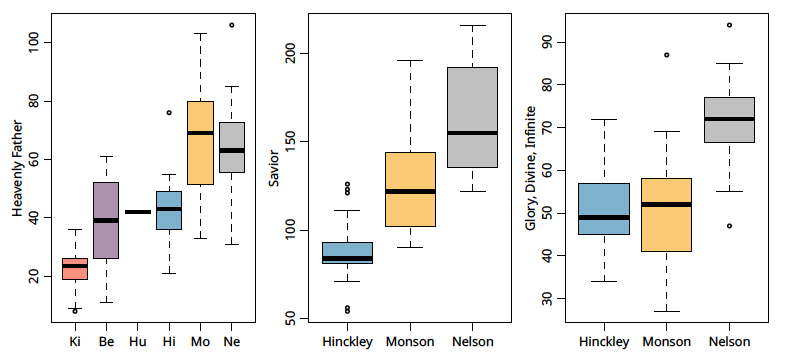
(Data by Christian N.K. Anderson, published by the Journal of the Mormon Social Science Association.)
Anderson said in an RNS interview that this focus on the savior comes at the expense of other approaches to Jesus. “There’s been a very strong pivot to Christ the king, Christ the savior and Christ the glorified leader that we should be following,” he said. “But there’s radio silence on social issues that Jesus cared very much about, like immigration and kindness to strangers and dealing with the downtrodden.”
Trending down: We’re not quite as focused on the family
Nelson’s presidency continued a surprising long-term decline in references to the family, the home and parenting. I say “surprising” because it feels like General Conference speakers bring this up all the time, or at least more than I ever hear at other churches. But compared to Spencer W. Kimball’s presidency in the 1970s and early 1980s, we’re hearing about the family far less than we used to.
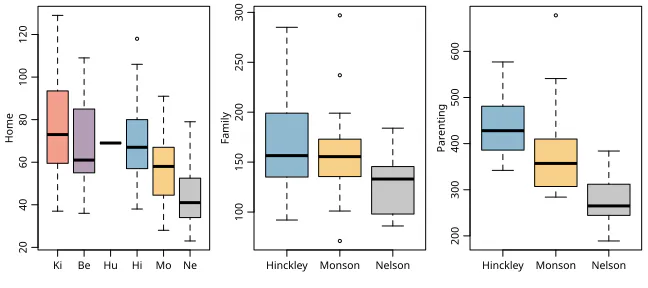
(Data by Christian N.K. Anderson, published by the Journal of the Mormon Social Science Association.)
On a related note, references to the 1995 Proclamation on the Family, which outlined the church’s official stances on marriage, family, gender and sexuality, fell off a cliff during Nelson’s presidency. Of particular interest is that the few female speakers in General Conference are talking about the family much less than they did in the past. During Nelson’s presidency, women speakers ranged more freely in topics, including doing some heavy-duty scriptural work and theology (thank you, Emily Belle Freeman!).
Under previous presidents, women speakers’ topics stayed more strictly in the “marriage and child-rearing” lane. (But before you get excited about women having more of a voice in General Conference, here’s a reality check: There are still 10 male speakers for every female one. And that’s one of the best ratios we’ve had in our history.)
Trending up: Temples and the covenant path
President Nelson’s signature achievement was a stunning increase in temple building around the world. In just seven and a half years, he announced 200 temples, by far the most of any prophet. So it’s not surprising that mentions of temples and covenants surged during his tenure, as did his signature phrase “the covenant path.” Anderson points out that President Nelson didn’t come up with that phrase — that was Sister Elaine Dalton in a 2007 General Conference talk — but he certainly popularized it.
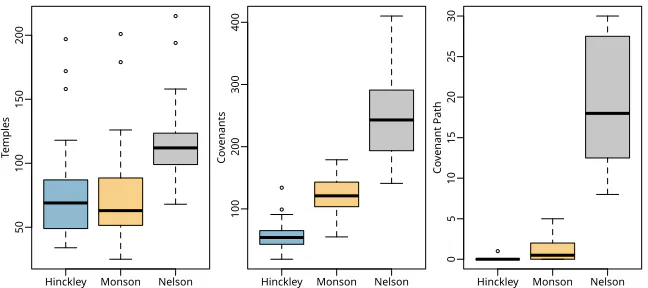
(Data by Christian N.K. Anderson, published by the Journal of the Mormon Social Science Association.)
Since Nelson’s presidency, temple mentions have taken a nose dive. “They’ve pumped the brakes so hard on the temples,” Anderson said. “We’ve dropped from 300 mentions of the temple per conference session to 50 in the last two.”
Trending down: Word of Wisdom
Also down are warnings to LDS members against coffee, alcohol, smoking and caffeine. The Word of Wisdom, a cornerstone of Mormon identity that defined beliefs and permitted behaviors surrounding health for most of the church’s second century, seems to be taking a back seat as we enter its third century.
“Church leaders don’t talk about the specific elements” of the sins of the body anymore, Anderson said. They’ve softened what is said over the pulpit.
Also down are denunciations of adultery, premarital sex and pornography. That certainly doesn’t mean those things are permitted for church members, just that leaders seem less preoccupied with them.
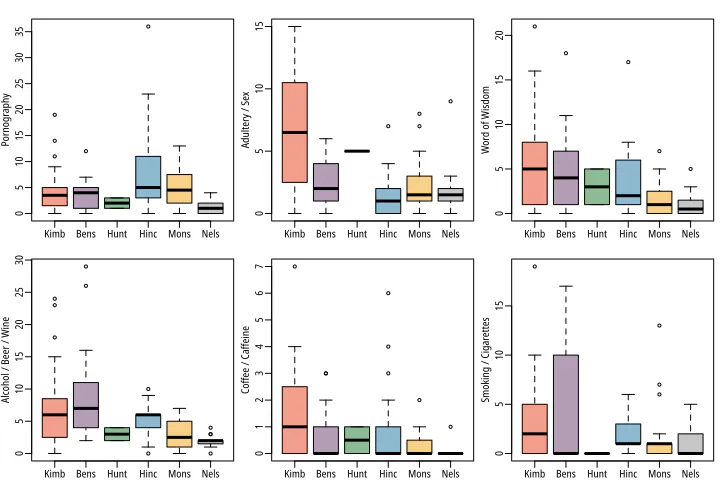
(Data by Christian N.K. Anderson, published by the Journal of the Mormon Social Science Association.)
Trending up: The blessings of the gospel
Recent leaders have emphasized the positive benefits of following Christ and being a member of the church. “It’s become less legalistic,” Anderson explained. “If you follow Jesus, you’ll get love and joy and peace and blessings in your life. In some ways, it’s become slightly transactional, but it’s an increasing emphasis on mental health and goodness” as the reward for faith, rather than avoiding eternal punishment. “I think it’s also an indication that Mormons’ totalizing social structure is weakening when leaders need to tell members that the reason why people need religion is to have identity and purpose,” he added.
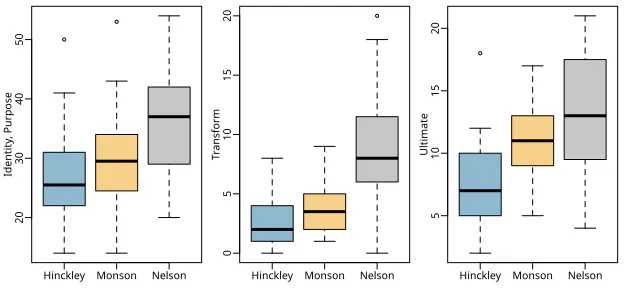
(Data by Christian N.K. Anderson, published by the Journal of the Mormon Social Science Association.)
Trending down: Obedience and priesthood authority
This emphasis on individual growth is happening alongside a de-emphasis of priesthood authority and obeying leaders. This surprised me, but Anderson said it’s part of a broader movement in the wider culture that church leaders are trying to reach. Today, “do this because your leaders said so” is less effective than “do this because it will bless your life,” he said.
Related to this is that during Nelson’s presidency, General Conference speakers were less likely to use terms related to hierarchical offices in the institution of the church (e.g., apostle, quorum, bishop, seventy, Melchizedek priesthood).
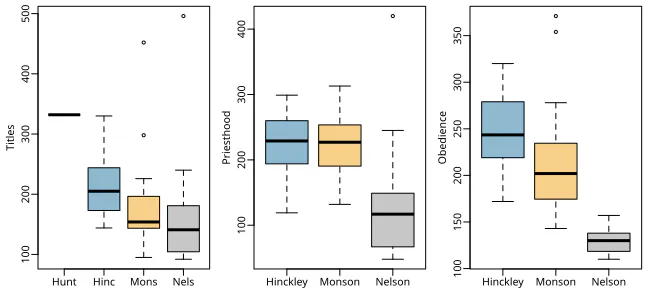
(Data by Christian N.K. Anderson, published by the Journal of the Mormon Social Science Association.)
Trending up: Prophet adoration
One significant exception to the general rule about downplaying church offices and priesthood was what Anderson called “the astounding increase in the frequency of references to Nelson himself.” No other church president has had so many worshipful phrases directed toward him — our beloved prophet, our dear prophet and beyond. “We haven’t seen someone who really enjoyed basking in the limelight the way Nelson did,” Anderson said.
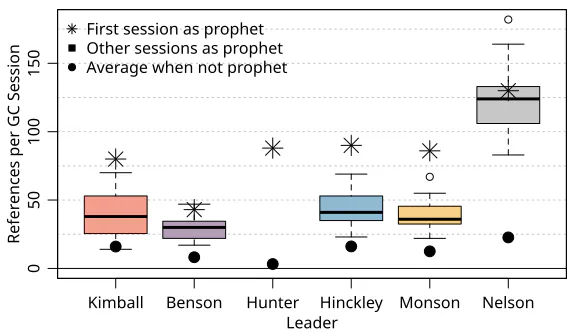
(Data by Christian N.K. Anderson, published by the Journal of the Mormon Social Science Association.)
It remains to be seen whether love-bombing the prophet or any of the other six trends will continue in Dallin Oaks’ presidency. Anderson is keeping an eye on the numbers, and noted that in Oaks’ first General Conference talk as the new prophet in October 2025, he chose to emphasize marriage and having children. “We may be seeing a return to baseline,” he said.