






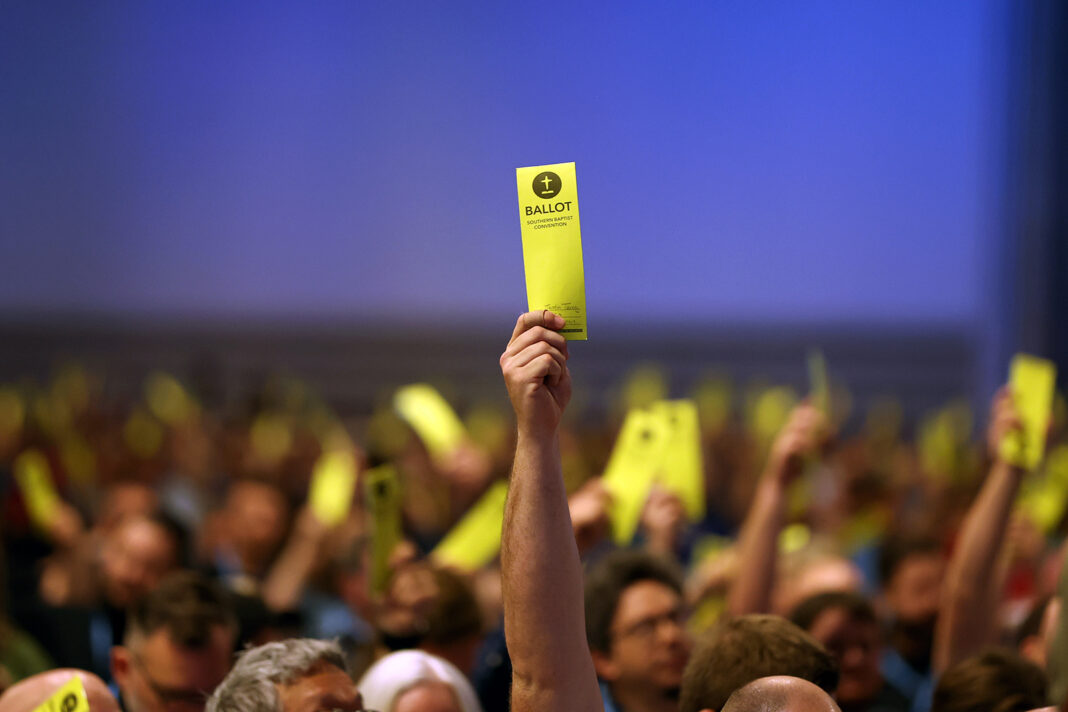
ORLANDO, Florida (RNS) — Over the past decade, members of the Southern Baptist Convention have touted the denomination’s diversity, sought to keep sexual abusers away from churches and passed statements advocating for immigration reform and a path to legal status for those in the country without authorization.
Now, for a vocal group of Southern Baptists, diversity is seen as too woke for the Bible. The two candidates running for SBC president say the SBC does not have an abuse crisis, with one claiming the sexual abuse crisis was a “snipe hunt” that led Baptists astray. And the more than 11,000 local church delegates, known as messengers, gathering at the Orange County Convention Center in Orlando, Florida, this week will debate a resolution that claims compassion should not get in the way of deportation.
They will also consider a call to ban churches with women pastors and churches that allow women to preach in Sunday services.
Al Mohler, president of Southern Baptist Theological Seminary in Louisville, Kentucky, plans to introduce what he calls a “Truth and Unity Amendment” during the SBC annual meeting, set for June 9-10. That amendment to the SBC Constitution would bar churches that affirm, appoint or endorse women pastors — and specifically mentions women who preach.
The SBC’s statement of faith already says that only men can be pastors. But some churches believe that only applies to the senior pastor of a church and give women on staff titles like associate pastor or children’s pastor. And some allow women to preach.
Two previous attempts to bar those churches have failed, falling short of the two-thirds majority needed for approval.
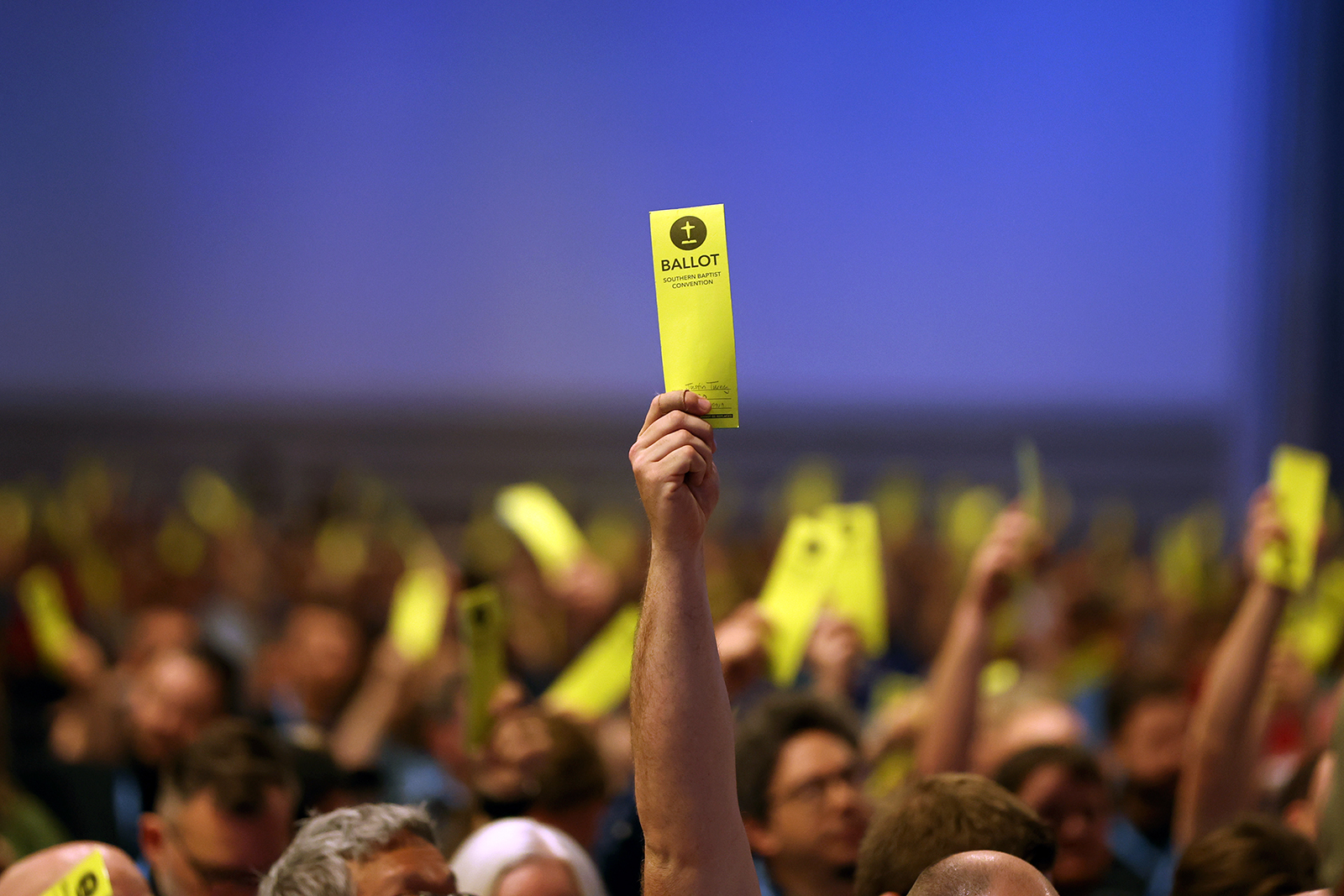
Messengers vote during the Southern Baptist Convention annual meeting at the Kay Bailey Hutchison Convention Center in Dallas, Texas, June 11, 2025. (RNS Photo/Tim Heitman)
Leaders of the SBC also appear to want to shift the narrative — away from internal disputes, news of declining members and headlines about sexual abuse and toward a focus on missions instead.
“I’ve said it before, I keep saying it over and over again — Southern Baptists are a force for good,” Jeff Iorg, CEO of the SBC Executive Committee, told trustees in a meeting Monday (June 8). “We have much to celebrate, and that will be our focus these next two days.”
Rev. Willy Rice, pastor of Calvary Church in Clearwater, Florida, told RNS in an interview that he believes a decade of controversies and bad decisions has hurt the SBC. Local churches, he said, no longer trust the denomination’s leaders.
“The seams of our fellowship seem to have been stretched and torn over the last decade,” Rice, one of two pastors running for SBC president, said. “I’m concerned about our trajectory if something doesn’t change.”
Rice has said that concerns about an abuse crisis in the SBC were overblown and that the convention’s response to concerns about abuse was overblown, too.
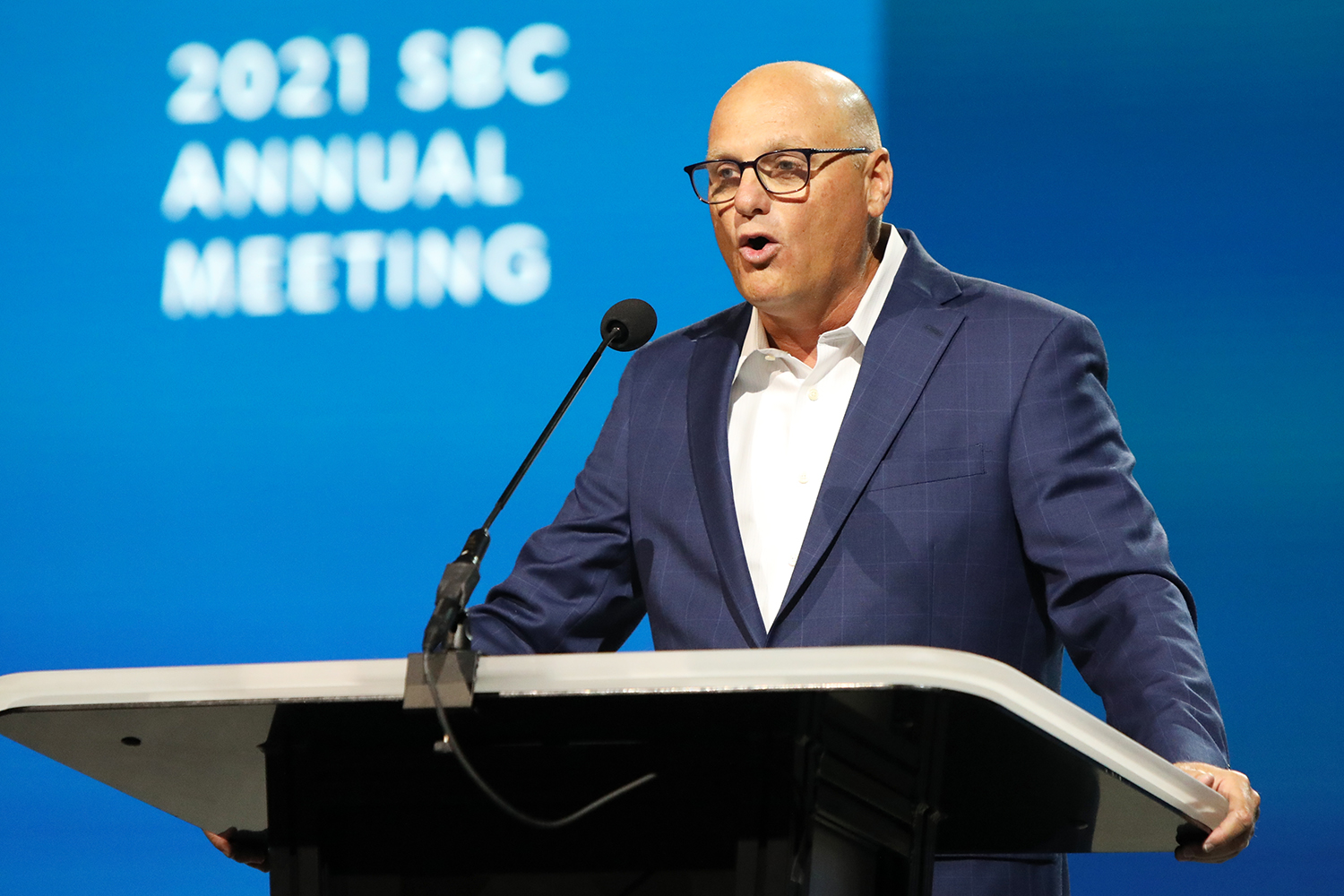
Willy Rice, senior pastor of Calvary Church in Clearwater, Florida, delivers the convention sermon, Wednesday, June 16, 2021, during the Southern Baptist Convention annual meeting in Nashville. (RNS photo/Kit Doyle)
A 2021 report from Guidepost Solutions, which was commissioned by the SBC messengers, found that convention leaders had long sought to downplay the issue of sexual abuse and had stonewalled efforts to address the issue on a national basis. That led to a series of reforms, including more training for churches on abuse prevention and a database of abusive pastors. While progress has been made on church training on how to prevent and respond to abuse, plans for that database have been largely abandoned.
Rice, who dropped out of the SBC presidential race in 2022 over concerns about past misconduct by a leader at his church, has said that any abuse should be reported to the police. But he also has said the SBC’s response to abuse went badly wrong.
“The Southern Baptist Convention got the Brett Kavanaugh treatment — and probably for the same reasons,” he wrote in a 2024 essay for the Center for Baptist Leadership, a group that claims the SBC has become too liberal.
Rice has also said the SBC needs more financial transparency. If elected, he also wants the SBC to get back to a focus on missions and evangelism. A fourth-generation Southern Baptist, he said he loves the SBC despite its issues.
“I love Baptist people, and I care about the Southern Baptist Convention,” he told RNS. “There is so much that I celebrate.”
Rev. Josh Powell, pastor of Taylors First Baptist Church (CQ) in South Carolina, agrees.
Powell, who is also a candidate for SBC president, said that for the most part, the denomination is doing well. The number of missionaries has grown, he said, and the SBC continues to start new churches. Baptisms and church attendance have also started to rebound post-COVID.
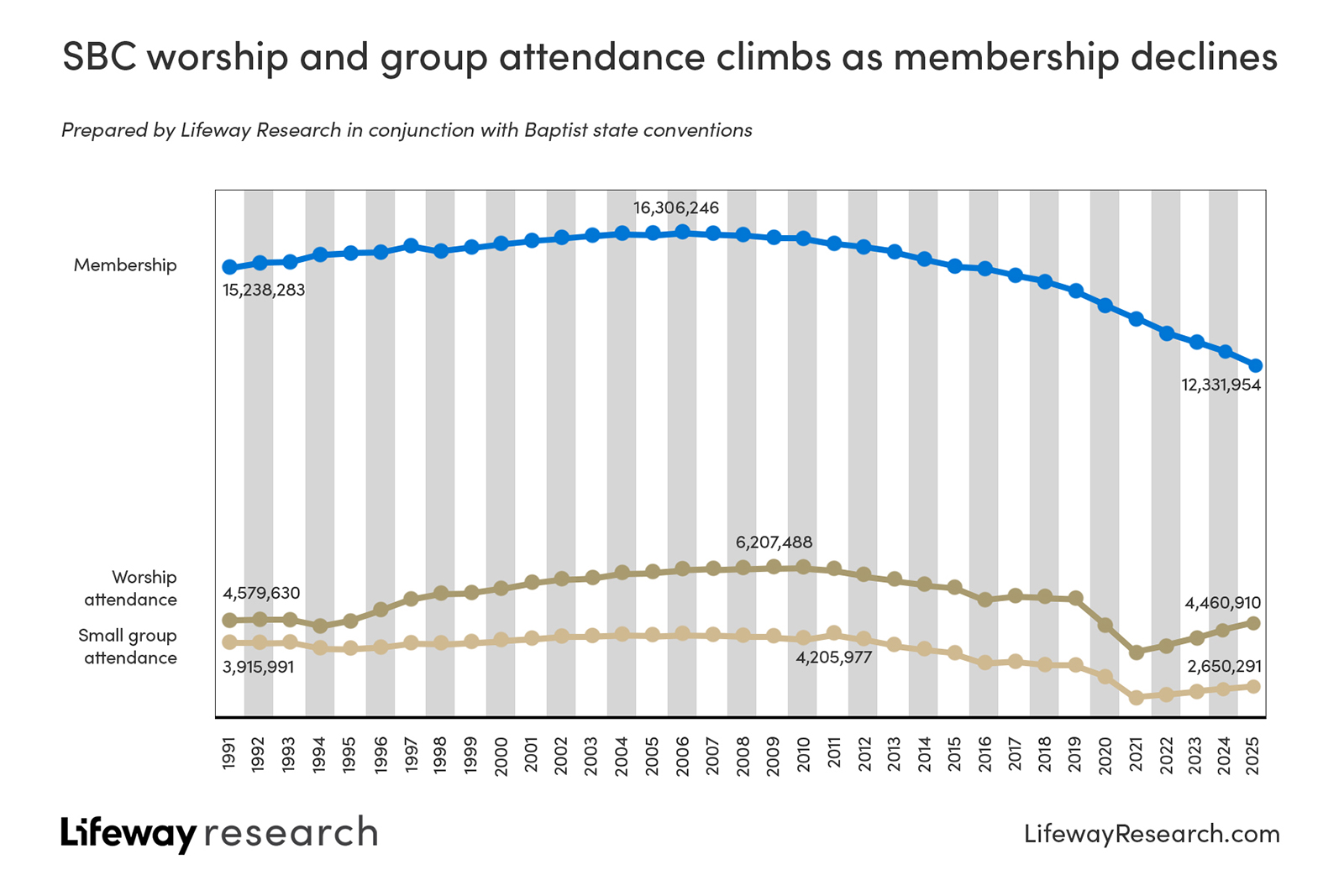
“SBC worship and group attendance climbs as membership declines” (Graphic courtesy of Lifeway Research)
Still, he said, convincing more than 40,000 churches to get along is not easy.
“Cooperation is hard,” he said. “It’s always been hard.”
He worries that, like the country in general, the SBC has become too polarized. Focusing on missions, he said, can unite the denomination.
During their meeting in Orlando, the SBC’s International Mission Board will recognize 63 new missionaries being sent out. The convention will also vote on a plan that would boost the IMB’s budget by more than $2 million a year.
If approved, 51% of the denomination’s total budget would go to missions.
During the meeting, Southern Baptists will debate a number of proposed resolutions, including one on immigration. A resolution entitled “On Immigration, Human Dignity, and the Rule of Law” expresses support for “lawful immigration enforcement” and says that “Christian compassion and hospitality do not negate lawful order or excuse indifference to public justice and social peace.”
The immigration resolution also rejects nativism and “ethnic supremacy,” as well as amnesty for those in the country illegally. Unlike past SBC resolutions, it makes no mention of a path to legal status for those in the country without approval. Last fall, the SBC’s public policy arm dropped out of an evangelical immigration advocacy group.
With 12.3 million members, the SBC remains the largest Protestant denomination in the country. At its peak in 2006, the SBC claimed 16.3 million members.
A report released earlier this year found that attendance and baptisms in the SBC have continued to rebound from declines during COVID. In 2025, about 4.5 million worshippers attended SBC churches, while 263,075 people were baptized.
By contrast, in 2015, more than 5.6 million people attended SBC churches, a loss of more than a million attenders.