









Content warning: If you or someone you know is experiencing mental health struggles or suicidal ideation, please call or text 988 or access click here for support.
(RNS) — On June 28, 2026, Ryan Stollar — age 42, writer, child liberation theologian and advocate for children’s rights — died by suicide. The impact of his death has been rippling through my community of survivors and advocates the past few days. I feel intense grief over his loss, as well as mixed feelings about his public legacy and his final words to us. What I know for certain is Ryan helped change my life.
The first time I crossed paths with Ryan was around 2013, when I discovered Homeschoolers Anonymous, which I later learned Ryan had co-founded. I was in my mid-twenties and finding my way out of the Christian patriarchy movement. I was a stay-at-home daughter, which meant I was not allowed to leave home until I married a man my father approved of. I had been homeschooled since kindergarten and isolated for most of my life.
Before I escaped the movement, I felt trapped and was ruminating on ways to kill myself to put an end to the psychic pain. HA, an online community where homeschooled alumni shared their stories, made me realize I wasn’t alone and gave language to my experiences: religious trauma, educational neglect, abuse, coercive control. I realized if others had found ways to leave, I could too. I began to imagine a different life from the one I’d been given.
Ryan had been homeschooled too, and while he often said he had a good experience, he’d witnessed the suffering of many of his homeschooled peers. This inspired him to become an advocate, and HA was just one piece of his life’s work.


In December 2013, Ryan was part of a group of homeschool alumni who founded the Coalition for Responsible Home Education (CRHE), a nonprofit that advocates for the rights of homeschooled children. Since then, CRHE has conducted research to provide data on homeschooling, helped create legislation to make homeschooling safer for children, provided extensive training for child welfare professionals and created resources for homeschooled children and alumni with the goal of eliminating abuse and neglect within the homeschool community.
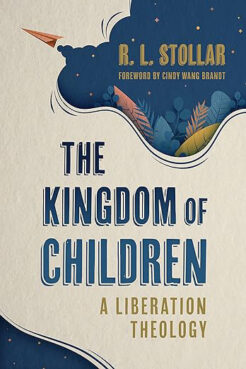
Ryan’s investment in children’s welfare drew him to later became a child liberation theologian and to write the book “The Kingdom of Children,” which recast familiar Bible stories to see children at the center.
Ryan was open about being a victim of child sexual abuse (CSA), and it motivated him to build a life around helping others. Those of us who interacted with his work may not have realized the depths of his struggles with mental health. For years, I was not aware of his experiences of childhood trauma because in my interactions with him, he de-centered himself, focusing more on helping my story be heard. He did beautiful things for survivors like us, and I will always be grateful for him.
Ryan could be fiery online, passionate in how he spoke against abuse and injustice. Ryan was also empathetic and kind. One of the other cofounders of CRHE, Kieryn Darkwater, told me, “One of his biggest flaws and also sources of power was that he was the type to set himself on fire to keep homeschool alumni and children warm.”
Being an advocate is costly, and the stories of survivors are heavy to carry. I know they weighed on Ryan, putting pressure on his own wounds. In his last blog post, a suicide note published the day he died, Ryan mentioned his mental health struggles, including PTSD, depression, substance abuse and bipolar disorder. He and I were trained as children to sacrifice all of ourselves to save the world, groomed to have savior complexes. We worried that if we failed, others would go to hell. Deprioritizing our health in favor of helping others was rewarded from a young age, and I worry that many of us, like Ryan, continue to do this even after deconstructing our fundamentalist beliefs.
I have not felt suicidal for many years, but the presence of suicide in my community is often on my mind. Ryan is my third friend connected to homeschooling in the past two years to die by suicide. I’m feeling everything at once — the grief and rage, the regret and confusion. If only, if only, if only …
Ryan wasn’t a perfect person, and I don’t know the details of his closest relationships. I find myself reading between the lines of his blog post. I see the self-destruction of depression. I see cruelty in putting blame on his spouse and their impending divorce. (I hope his spouse knows this is not her fault.) I see exhaustion. I see the pain he felt and the pain he has perpetuated with this final act and final writing.
I wish I could tell Ryan to stay, but I also feel I understand his choice. When you’ve looked death in the eyes, it isn’t quite as terrifying. It isn’t a friend, but it isn’t an enemy either. When I was suicidal, I was under intense stress, and my depression was lying to me about the value of my life. But those feelings and thoughts were temporary. I feel lucky I waited long enough for them to pass.
Life is harder for some of us. We know that those of us with high ACE (Adverse Childhood Experiences) scores are at higher risk of physical and mental illness. Not all of us have the same access to therapy and medical care. A lot of us don’t have strong family support systems. We struggle.
Once you lose the innocence of believing in happily-ever-afters, there is no going back. You can’t unsee the evil. That is why many survivors become advocates: to help others survive too. We believe a better world is possible and that no matter how dark it gets, there is always light if you look for it.
For those struggling, I will voice what I wish I could tell Ryan: Please stay here. Please give those destructive thoughts time to pass. Please remember you matter.
In the face of this loss, I am thinking about Ryan’s legacy, how he helped build a movement supporting children’s rights and how he will be remembered for his role in homeschool reform and child liberation theology. I am also contemplating where we go from here. What have we, as survivor-advocates, learned about our activism? We who are still here can build on this legacy, becoming better advocates by becoming healthier ourselves. We can learn to share the work so each of us can rest when we need to, remembering lasting reform never depends on just one person.
Ryan Stollar was an advocate, a survivor, a friend. He was a human being struggling. Ryan was not a martyr or a savior, and we should not set out to make him one. He was not perfect. He was a human being who survived childhood trauma, who struggled with mental illness, who both hurt and helped people, whose advocacy work for children will continue to be both imperfect and meaningful. I believe he’d want us to keep up this fight, not as saviors but as co-collaborators in a movement toward liberation for all.
(Cait West is a writer and survivor advocate working to spread awareness about the harms of religious patriarchy and authoritarianism and the author of “Rift: A Memoir.” The views expressed in this commentary do not necessarily reflect those of Religion News Service.)