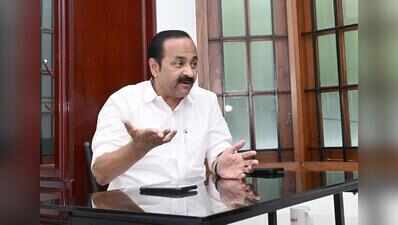






(RNS) — When he was 12 years old, the Rev. Raphael Warnock said, he was frisked and patted down at a grocery store between Sunday services, accused of shoplifting alongside his friends. After nothing was found in his pockets, he and his friends were dismissed without an apology. “That was one of my earliest encounters with what it means to be perceived as the other,” Warnock said.
Decades later, that child, who grew up in a public housing project, is a sitting U.S. senator and senior pastor of Ebenezer Baptist Church, the pulpit long associated with Martin Luther King Jr. One of a few ordained pastors serving in Congress, the Georgia Democrat frequently cites his faith as a moral framework for his legislative work. Warnock, who holds a doctorate in systematic theology, has been outspoken about what he considers misinterpretations of Scripture to justify immoral politics and has criticized lawmakers, such as House Speaker Mike Johnson, over his use of Matthew 25.
Given his roles as both preacher and policymaker, Warnock was a natural subject for the RNS video series created to mark America’s 250th: “What does it mean to belong in America?” In the fifth and final episode, released Thursday (July 23), Warnock spoke about growing up the son of Pentecostal preachers, the social gospel of Martin Luther King Jr., what the Bible says about immigrants and why he has faith in the American experiment.
“America’s a freedom train,” Warnock said in the interview. “And at each stop, different people who have different life experiences have had to get on that train and help us to keep moving towards our destination. Freedom is a journey.”
RNS sat down with Warnock in late May. What follows is an edited transcript.
His upbringing:
My first sense of belonging was to the incredible family that I was blessed to be born in. I grew up a rich kid in the projects. I hit the jackpot because I had two incredible parents. They were people of faith and they loved on me. I had a deep sense of confidence, the recognition that I’m a child of God.
I grew up in the Pentecostal holiness tradition. My parents were both Pentecostal preachers. And these are folks who lived their lives in a real sense informed by Scripture. They were people of the book, people of the faith. They passed that on to me. Part of my heritage is I had grandparents who were Baptists on my mom’s side.
I’m glad that my parents poured that into me because it inoculated me against racism and against any idea that I’m something other than a child of God.
Confronting racism as a 12-year-old:
They paraded us through the grocery store as if we were criminals. They took us upstairs. They had been behind some mirror, watching. And we were all frisked and patted down, 11- and 12-year-olds. Of course, none of us had taken anything.
And they dismissed us without even as much as an apology, a recognition for the embarrassment that we felt, the humiliation. And so that was one of my earliest encounters with what it means to be perceived as other. And yet I had to go ahead.
Thankfully, I had a dad who really knew from experience the brutality of Jim Crow segregation. He knew what racism looked like. He did not allow me to be consumed by my anger.
Thankfully I had a dad who really knew from experience the brutality of Jim Crow segregation. He knew what racism looked like. He did not allow me to be consumed by my anger.
Raphael Warnock
His teachings and my mother’s teachings taught me how to channel that in constructive ways. Learn as much as you can learn. Be the best, as good as you can be.
Shaped by Martin Luther King Jr. and the Baptist tradition:
It was around that time that I had begun to really study Martin Luther King Jr., who was killed a year before my birth. I was just enamored with his words, with his activism, with his public witness as a man of faith who was moving in the political and social world. And I think that spark of activism, that desire to make the world better, that was a moment where that began to catch fire in me.
And so I ended up serving in the Baptist tradition. Part of what drew me to that was a particular kind of prophetic social gospel tradition, most clearly embodied in the ministry of Martin Luther King Jr. A lot of the pastors who were were a part of this tradition also drew me to Morehouse, a school that has Baptist roots, and it’s what shaped where I would end up living out my life as a pastor.
America’s ideals:
The founding of our country is complicated. In our charter documents are words that represent an inflection point in human history — the idea that we have certain inalienable rights, that they are endowed not by government, but by a creator. We codify in government that which God has provided to us: a right to life, liberty, the pursuit of happiness, the affirmation of our humanity and the idea that power belongs to the people themselves and not to some monarch. Those are the high ideals of our country.
They are complicated by the ugly side of that story, which includes human domination, slavery, the genocide committed against Indigenous people. “All men are created equal.” I was not in that “all.” Women were not included. We shouldn’t gloss over that story.
‘All men are created equal.’ I was not in that ‘all.’ Women were not included. We shouldn’t gloss over that story.
Raphael Warnock
The freedom train:
In the mix of that, these Jeffersonian ideals — what Dr. King called sublime words, which he would quote often — are part of the story. It has been the errand — the moral homework assignment, if you will — of those who have found themselves on the margin, the descendants of slaves especially, to bear witness to America, to love on America in a way that’s honest about who it is and where it’s flaws are, and to try to get it to live up to its ideals, not just for people of color, but for everybody.
America’s a freedom train. If you look at our history, different passengers — folks who were marginalized in ways that privileged people do not readily see — have had to get on and help us to keep moving towards our destination. Freedom is a journey. And we’re still on that journey 250 years later.
Faith in the American experiment:
The American creed is not the same thing as biblical faith. And I don’t want to live in anybody’s theocracy. But there is some continuity between the affirmation of our humanity as children of God and the American democratic experiment. Two hundred and fifty years later, I think it’s such a radical idea that even those who try to speak the loudest about what it means to be an American, somehow they’re afraid of that idea. They’re afraid to embrace people who they want to see as the other. It scares them to death. I dare them to actually embrace the American idea.
One of the sad ironies I must point out as a Christian pastor and someone shaped by the Judeo-Christian tradition is that Scripture is pretty clear about how you treat the immigrant. The Scriptures say over and over again, welcome the immigrant, welcome the stranger.
You wouldn’t know that listening to the loudest so-called Christian voices in America. It’s in the very Judeo-Christian tradition that some like to weaponize as a symbol without engaging the substance thereof. The Hebrews are reminded that you were immigrants. Jesus then picks up that tradition in Matthew 25. But somehow whole communities have been so maligned, so assaulted in their basic humanity and integrity. They’re being persecuted in a real sense. And it is our obligation, all of us, people of moral courage, people of faith especially, to speak out.
Tribalism and belonging:
Tribalism is what’s driving our politics in this moment. We’re American, they’re not American. Sadly, there are political actors who are counting on this division. And much of this, of course, is being facilitated and exacerbated by algorithms created by trillion-dollar tech companies that keep us in our own silos.
Human beings always want to belong. We belong to a family. We belong to a faith community. We all are a part of some tribe. But the experiment, the grand experiment of America, is whether human beings can be part of various tribes and not give in to tribalism, a kind of nativism. That makes it impossible for us to build what Dr. King called the beloved community.
We all are a part of some tribe. But the experiment, the grand experiment of America, is whether human beings can be part of various tribes and not give in to tribalism.
Raphael Warnock
In a country as big and as diverse as ours, there are always going to be fault lines of disagreement. This whole big and grand experiment of a diverse republic, which stitches people together based on an idea of a covenant we have with one another, is by nature messy. In a real sense, that’s part of what makes our country great. It’s in the heart of our creed — “e pluribus unum,” out of many, one.
Watch the video interview:
This video series was produced as part of The Atlas of American Belonging, a RNS project examining faith and immigration communities, which was funded by the Luce Foundation.