



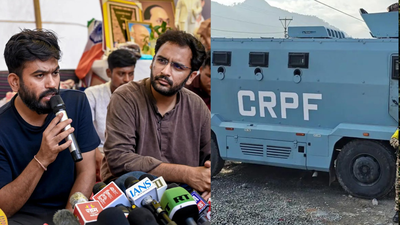
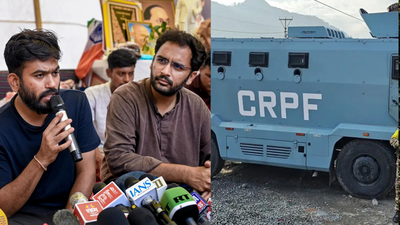
NEW DELHI: The Centre has directed the airlifting of 10 more Central Reserve Police Force (CRPF) companies from Chhattisgarh to Delhi to strengthen security arrangements amid the ongoing student protests in the national capital, news agency PTI reported on Friday.Thousands of students and activists have been protesting at Jantar Mantar for over a month, demanding the resignation of Union education minister Dharmendra Pradhan over the NEET paper leak issue.The Central Industrial Security Force (CISF) has also curtailed leave for personnel deployed with its Delhi Metro security unit in view of the prevailing security situation.Officials told PTI that a security review meeting held in Delhi on Thursday decided that all Central Armed Police Forces (CAPFs) units scheduled to be deployed in the national capital ahead of Independence Day should report earlier than planned.According to officials, around 150 CAPF companies are expected to be deployed across Delhi over the next few days. A CAPF company comprises about 100 personnel.About 100 CAPF companies are already assisting the Delhi Police in maintaining law and order, officials said.As part of the enhanced deployment, 10 CRPF companies were airlifted from Chhattisgarh to Delhi on Friday.Earlier this week, the Centre had airlifted 20 CRPF companies from West Bengal to the national capital to oversee protests being organised under the banner of the Cockroach Janta Party (CJP).The deployment has also been reinforced with three Rapid Action Force (RAF) units and personnel from other CAPFs, including the Sashastra Seema Bal (SSB), Border Security Force (BSF) and Indo-Tibetan Border Police (ITBP).CISF officials said only emergency leave is being sanctioned to personnel of its Delhi Metro unit as maximum manpower is required at metro stations in Delhi-NCR due to the prevailing security situation.The CISF has deployed about 13,000 personnel to provide counter-terrorist security across the Delhi Metro network’s 250 stations.Authorities have closed 15 to 17 metro stations in and around the Jantar Mantar area over the last four days citing security concerns linked to the protests.Meanwhile, the Cockroach Janta Party said it would continue its protest at Jantar Mantar, asserting that its demand for Union education minister Dharmendra Pradhan’s resignation was “non-negotiable”.The CJP made its position clear during a meeting with Union ministers JP Nadda and Jitendra Singh on Friday, where it also demanded a public apology to students who were “brutally thrashed” during the July 20 protest march.Earlier in the day, the party also sought Rs 1 crore compensation for the families of those who allegedly died by suicide following the cancellation of the NEET examination on May 3, CJP spokesperson Saurav Das said.The two-hour meeting at Vithalbhai Patel House was aimed at finding an amicable solution to the protests over the NEET paper leak and alleged irregularities in the examination system.Nadda said the ministers heard the party’s demands and conveyed that the government would respond later. “We will again meet on Saturday,” he said.Friday’s meeting was the third official round of talks between the government and the CJP.Nadda had held two meetings with CJP leaders on July 20, the day thousands of protesters marched towards Parliament under the ‘Sansad Chalo’ call before being stopped by police using batons and tear gas. Several protesters were injured.The latest meeting came hours after activist Sonam Wangchuk ended his 26-day hunger strike late on Thursday night following government assurances on his key demands.The CJP had earlier declined the government’s invitation to meet at a minister’s residence or office, insisting that talks be held at a neutral venue.The organisation reiterated that its protest at Jantar Mantar would continue until Pradhan resigns.In a video message late on Thursday, Prime Minister Narendra Modi announced that a Bill providing for stringent action against paper leaks would be introduced in Parliament next week.Hours later, the Union Cabinet approved the draft legislation proposing stricter punishments for paper leaks.(With agency inputs)