




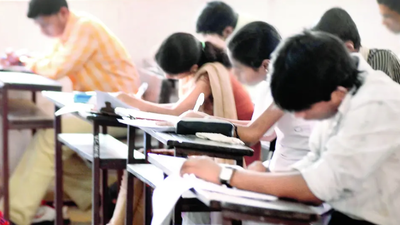
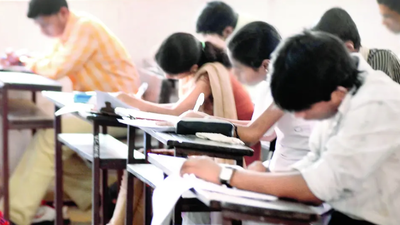
NEW DELHI: The bar for entering the IITs has steadily risen, with the JEE (Main) cut-off for JEE (Advanced) for general category climbing to a record 93.4 percentile in 2026, up from 89.7 in 2019, reflecting intensifying competition and a sharp post-pandemic surge in high scorers. Cut-offs across all categories — EWS, OBC-NCL, SC and ST — as well have risen sharply over the past few years to a record high this year, signalling intensifying competition at every level of the exam, which is consistent across successive years, with no category showing a reversal in trend in the latest cycle.Eight year data from National Testing Agency releases between 2019 and 2026 show that while the general cut-off stood at 89.7 percentile in 2019, it remained largely in the 88–91 range till 2023 before witnessing a steep jump to 93.1 in 2025 and further this year. The rise mirrors a broader trend across categories. The EWS cut-off has increased from 78.2 in 2019 to over 82 in 2026, while OBC-NCL has moved from 74.3 to around 80.9. For SC candidates, the threshold has climbed from 54 to nearly 64, and for ST candidates from 44.3 to about 52. In percentage terms, this translates into gains of roughly 4–10 percentile points across categories over the period.The pandemic years provided a brief dip. In 2021 the general cut-off fell to 87.8, before rising to 88.4 percentile in 2022, one of the lowest in recent years, amid disruptions and multiple exam attempts. However, the recovery since then has been swift, with the cut-off rising by nearly five percentile points in three years.The upward shift coincides with a surge in the number of candidates. Unique registrations have grown from about 11–12 lakh in 2019–20 to over 15 lakh in 2025–26, significantly increasing competition for a relatively fixed number of IIT seats. The increase in candidate volume has outpaced the expansion in available seats during the same period.There is a quiet shift underway in the ambitions of India’s engineering aspirants, and IIT Hyderabad director B S Murthy finds it encouraging. Cut-offs are climbing, a reflection of both heightened competition and a growing awareness among students that entry into the IITs demands more than intent, it requires sustained excellence. “Everyone wants a seat in an IIT now,” he said, noting that this realisation has pushed students to work harder and aim higher. Yet, alongside this surge in aspiration, Murthy voiced a measured concern: the need to draw more students toward core engineering disciplines. For IIT Madras alumni and centre head at Narayana CO campus, Nerul, Bhushan Jamsandekar, the change is evident not just in performance, but in how early the journey now begins. Students, he noted, are approaching preparation with greater structure and intent, often starting well before the traditional timelines. A key driver of this shift is the rising interest in national-level Olympiads and foundational programmes, which are no longer confined to metro cities. “If you look at the number of students preparing for Olympiads today, it’s not just urban centres,” he says. “Even small towns across India are seeing a significant surge.” This widening base points to a larger trend: greater awareness among parents and students alike.With more aspirants crowding the top percentile band, qualifying for JEE (Advanced) is becoming progressively tougher, underlining a structural shift in India’s engineering entrance landscape where even marginal score differences now determine access to the next stage.