






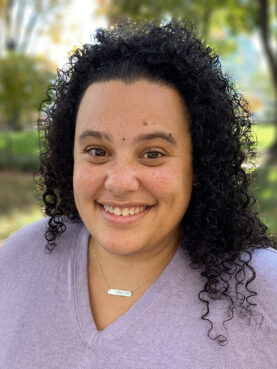
(RNS) — Rachel Faulkner was working at a Jewish nonprofit that advocates for gender equity when she was selected for a prestigious, three-year professional development fellowship through the Wexner Foundation.
Established by retail billionaire Leslie Wexner, the foundation headquartered in New Albany, Ohio, had been highly regarded for its competitive and rigorous fellowships that train midcareer Jewish leaders, both clergy and lay.
Faulkner said she knew that Wexner had financial and personal ties to sex offender Jeffrey Epstein, who once was Wexner’s financial manager, when she accepted the fellowship in 2022. But she was not aware of the extent of the two men’s collaboration. Especially after Wexner’s congressional testimony in February on the heels of the Epstein files’ release, she said, she has now felt the need to distance herself from the foundation and to make amends for her association with Wexner’s foundation.
Earlier this month, Faulkner and a handful of other Wexner alumni launched a fund to help survivors of sexual violence and exploitation. The Ashru Fund’s first goal is to raise $100,000 for two nonprofits helping victims of sexual trafficking: World Without Exploitation and the National Survivor Network. It has raised more than $46,000 as of Tuesday (April 28).

Rachel Faulkner. (Photo courtesy of Faulkner)
“The reality is that (Wexner’s) money was mixed up with Epstein’s, and it’s the same money that I benefited from through this program,” said Faulkner, 40, senior director of events and programs with the National Council of Jewish Women.
More than 100 alumni of the Wexner Foundation professional development programs have so far contributed to the fund — about 15% of the total number of Jewish leaders who have taken part in the organization’s offerings.
A longtime Ohio resident, Wexner is a former top executive of Victoria’s Secret and other retail giants such as Bath & Body Works and Abercrombie & Fitch.
A lawsuit filed against Wexner last month on behalf of 11 women who say they were sexually exploited by Epstein alleges the billionaire retailer enabled Epstein’s crimes. The suit, filed in New York state Supreme Court, alleges Wexner gave the sex offender $200 million, a six-story New York City townhouse and an airplane — all of which the plaintiffs say were used for sexual trafficking, often of underage women.
Wexner, who is now 88, has denied the claims cited in the suit. He told Congress he didn’t know about the late sex offender’s crimes and did not participate in Epstein’s abuse of girls and young women. His foundation declined to comment for this story.
There is little dispute, however, that Wexner hired Epstein to manage his personal finances in the late 1980s and granted him power of attorney in 1991, giving him control over his business deals and properties. The two severed their relationship around 2008, after Epstein entered into a plea deal that would require him to serve 18 months in a Florida jail on a state charge of soliciting prostitution from a minor.
Wexner told members of Congress in February that he had been “conned” by the sex offender, whom he accused of stealing from him. He told his foundation the same thing in in 2019, when Epstein was found dead in his jail cell, with the death ruled as a suicide. Wexner said Epstein “misappropriated vast sums of money” from him and his family.

Jeffrey Epstein in 2017. (New York State Division of Criminal Justice Services)
Wexner has never been charged with a crime. But the ongoing Epstein revelations — Wexner’s name appears more than 1,000 times in the Epstein files released by the U.S. Department of Justice — continue to inflict reputational harm to his foundation. Epstein was a trustee of the Wexner Foundation from the early 1990s to mid-2000s.
Now, several Jewish professionals, including Faulkner, said they’ve removed any reference to the Wexner fellowships from their resumes.
Rabbi Josh Feigelson, a Wexner alum who is now CEO of the Institute for Jewish Spirituality, said he was invited to be a scholar in residence at a synagogue in February. He asked the person introducing him to omit any reference to his participation in a Wexner fellowship.
“I told her, ‘I think you should just leave it off because I don’t want to spend the weekend having to deal with people asking me about the Wexner Foundation,’” Feigelson said. “It’s an example of how it had stopped becoming an asset and, in fact, had become a liability.”
Feigelson joined with Faulkner to create the Ashru Fund. The name is a Hebrew reference to a passage from the first chapter of Isaiah in which the prophet beseeches his listeners to “aid the wronged.”
He said he hoped the Wexner Foundation would donate money to help survivors.
“They don’t need to contribute to this fund, but I think there’s a wonderful opportunity for the Wexner Foundation to become a leader in helping the Jewish community understand the relationship between money, power, sex and philanthropy,” Feigelson said. “It would really be amazing if the foundation decided this should really become a focus of the work, and if it also then engaged in restoring and rehabilitating Epstein’s victims.”

Rabbi Danya Ruttenberg. (Courtesy photo)
Rabbi Danya Ruttenberg, a Wexner alumna who divested from the foundation by donating the advance she received for her 2022 book, “On Repentance and Repair,” to the National Survivors Network, said monetary contributions can make a difference.
“Alumni of the Wexner Foundation programs benefited ultimately in financial ways, so it makes sense that financial reparations would be the way,” she said. “It makes perfect sense because concrete amends, instead of words, is a way to have a real impact.”