



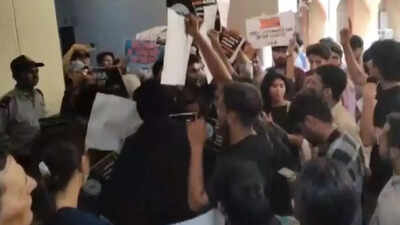
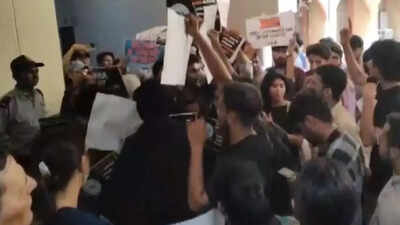
NEW DELHI: Protests were reported at Jamia Millia Islamia on Friday night as students raised slogans against Vice Chancellor Mazhar Asif during an annual hostel function, alleging his complicity in allowing an RSS-linked event on the university campus, according to ANI. According to videos circulating on social media and a press note issued by AISA-JMI, students residing in the boys’ hostel objected to the Vice Chancellor’s presence at the event and raised slogans, expressing anger over what they described as the “saffronisation” of the university space. The student body also alleged that the VC made derogatory remarks during the event, referring to protesting students in objectionable terms. However, there was no immediate response from the Jamia Millia Islamia administration. “At the annual event of the Boys hostel at Jamia Millia Islamia, the students of MMA Jauhar Hall raised slogans against the VC for his complicity in hosting the recent RSS event on the campus. Shamefaced, the vice chancellor resorted to derogatory comments about the students, referring to them as dogs on a public platform for expressing their dissent,” Left-affiliated group AISA said in a statement. The incident comes amid a series of protests on campus over the recently held ‘Yuva Kumbh’ programme linked to the RSS centenary celebrations. Several student organisations, including SFI and AISA, had earlier staged demonstrations opposing the event, calling it an attempt to introduce “communal and majoritarian politics” into a public university space. On April 28, protesting students gathered on campus, raising slogans and demanding accountability from the university administration for granting permission to hold the event. The controversy has also been fuelled by the Vice Chancellor’s remarks at the RSS-linked programme, where he spoke about “Mahadev’s DNA” in the context of Indian identity and suggested giving “Sanatan” traditions a chance. These remarks drew sharp criticism from several student organisations, which termed them “unscientific” and “undemocratic,” arguing that such statements imposed a narrow definition of Indian identity on a diverse population.