



(RNS) — It was a beautiful Sunday morning in New York City, exactly 45 years ago this week, when I stood on the ornate bimah inside Temple Emanuel and was ordained as a Reform rabbi.
Five years before that, on the day of America’s bicentennial celebration, I landed in Israel to begin my rabbinical studies. It was also the day of the Entebbe rescue, which explained why there were people dancing at Ben Gurion Airport when I arrived.
In the course of my 50 years within the Jewish professional world, I have participated in the largest and deepest issues that have confronted Reform Judaism: intermarriage and LGBTQ inclusion.
But I cannot recall a time that has been as challenging for American Jews, and in particular the Reform Movement, as this one.
The question: Should the seminary of the Reform movement, Hebrew Union College, admit and ordain rabbis who are anti-Zionist?
Or, is it antizionist?
One hyphen; one nuanced conversation.
(HUC President Andrew Rehfeld has responded to this week’s criticism of his institution for doing so, arguing that it’s “an unfortunate but necessary risk” of a liberal education. His response is worthy of your attention.)
Once upon a time, there was anti-Zionism — with a hyphen.
One group of anti-Zionists were classical Reform Jews — or, at least, a substantial number of them. Forty-five years ago, when I began my career, I encountered Jews in my synagogue who found the singing of “HaTikvah” to be offensive — it was not their national anthem, they told me loudly.
My Reform ancestors believed Jews were not a nation; we were a religious community. Zionism was a regression into ethnic tribalism. It raised the specter of dual loyalty. That was the position of the American Council for Judaism, founded in 1942 — at the very moment the Nazis were murdering European Jews by the millions.
Another group of anti-Zionists was the General Jewish Labour Bund – or, simply, the Bund. They were secular, socialist and Yiddishist. They argued that Jews should transform the societies where they lived. Their anti-Zionism was principled, passionate and, in the end, tragically overtaken by history. Molly Crabapple’s new book, “Here Where We Live Is Our Country: The Story of the Jewish Bund,” tells that story with the seriousness it deserves.
Yet another group of anti-Zionists, Satmar Hasidim, believes that restoration of Jewish sovereignty in the Land of Israel must await the Messiah. For them, Zionism is the political equivalent of a ham and cheese sandwich.
On May 14, 1948, Israel was created, and those arguments became dated. (Many members of the American Council for Judaism left the organization on that day.) To argue about Israel’s existence became as relevant as debating the existence of, say, France.
Today’s conversation is radically different. It is no longer about anti-Zionism — with a hyphen — a debate on the future of the Jewish people. It is about antizionism — no hyphen — and that is something else.
Adam Louis-Klein, a Ph.D. candidate and founder of the Movement Against Antizionism, has argued that antizionism is a triangle of three hateful sources: the former Soviet Union, which created the libels of Israeli genocide and apartheid; radical Islam; and academic jargon, which codes Zionism as “settler-colonialism.”
This is the performative antizionism of “from the river to the sea;” the antizionism of the kaffiyeh as fashion statement; the antizionism that parades itself outside of synagogues; the antizionism that targets Jewish restaurants, cultural events and Jews on the street; the antizionism that is terrorizing Jews in the United States; the antizionism that is complicit in creating an atmosphere of “ambient antisemitism.”
When a movement has made Jewish students afraid to identify themselves on college campuses, what do we call it?
When a movement has forced Jewish communities around the world to spend far more money on physical security than on education, what do we call it?
When a movement has forced Jews into wondering, “Should I wear a kippah in public? Should I remove the mezuzah from my doors?,” what do we call it?
When a worldview treats the mere existence of a Jewish state as an ongoing crime against humanity, and its Jewish supporters as complicit in that crime, what do we call it?
We call it a hate movement.
Let us understand what the Hebrew Union College controversy is not about.
It is not about the right of rabbinical students, and all Jews, to criticize Israeli policies, as well as right-wing politicians. Those are conversations about Jewish values. They are the arguments of people who want Israel to be better. Our young people deserve and need those conversations.
It is not about academic freedom at Reform Judaism’s seminary. That is precious and it should reveal itself in conversations over various forms of Zionist ideology, as it should in conversations about theology and the meaning of sacred text. Frankly, a good time to do that would be during the students’ Year in Israel program, using as much Hebrew as they can muster.
It is not about establishing litmus tests for entrance into rabbinical school. It is about something else: cultural fit.
As Rabbi Samantha Kahn has written, a Reform seminary would most likely not admit someone who does not believe in LGBTQ inclusion or the inclusion of women in Jewish life.
That is why we adopted a resolution on Jewish peoplehood at the recent Re-Charging Reform Judaism conference in New York City.
It reaffirmed every statement on Zionism in the Reform movement, dating back to 1937.
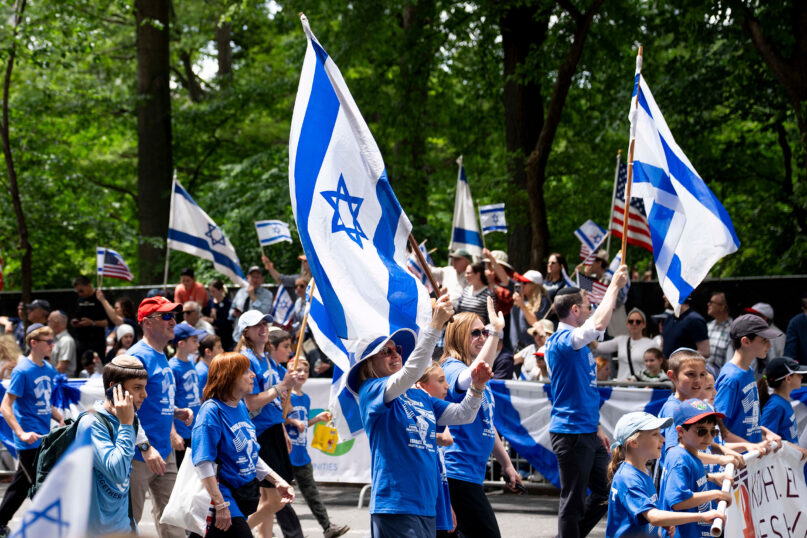
It affirmed that “the State of Israel represents the modern and living expression of Jewish peoplehood, self-determination, and collective aspiration in our ancestral homeland” and that “Reform Judaism recognizes Zionism as a central and indispensable component of contemporary Jewish identity, religious life and communal responsibility.”
And, this is crucial: “All candidates for HUC-JIR’s educational programs — rabbinical, cantorial, educational and nonprofit management — will be committed to a Zionism that echoes the commitments of Reform Zionism.”
This is who we are, as a Reform movement. We are committed to Reform Zionism — the crossbreeding of Zionism with such values as justice, the image of God within each person and religious freedom — which just happen to be the ideals of Israel’s Declaration of Independence.
Reform Judaism is not alone in this battle of ideas. It is true in every non-Orthodox movement in American Judaism — over the meaning of Zionism, anti-Zionism and antizionism. It is a large, exhausting conversation about how wide our tents should be open. This will be the struggle of our time — and smart, good people are engaged in it.
Yisrael means struggle.
That is what we Jews do.
And we do it so well.