






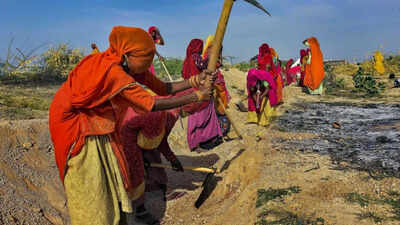
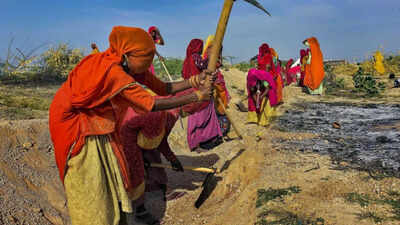
The Centre’s newly launched Viksit Bharat-Guarantee for Rozgar and Ajeevika Mission (Gramin) (VB-G RAM G), which replaces the Mahatma Gandhi National Rural Employment Guarantee Act (MGNREGA), could improve rural incomes through higher wages and increased employment guarantees.However, its long-term success may be constrained by the significantly higher financial burden placed on state governments, according to a report by Systematix Research.
Higher wages, more work days
The report noted that the revamped scheme increases the annual employment guarantee from 100 days to 125 days and raises the average daily wage by nearly 10 per cent, from Rs 299 to Rs 327.These changes are expected to strengthen rural purchasing power and support consumer demand at a time when rural wages and incomes have remained under pressure.
Funding shift raises concerns
Despite the enhanced benefits, the report cautioned that the scheme’s new funding structure could limit its effectiveness.Unlike MGNREGA, where the Centre bore the bulk of the expenditure, the new scheme follows a 60:40 Centre-state cost-sharing model for most states.According to the report, this marks a fundamental shift from an open-ended funding model to one with centrally capped allocations.
States face four-fold increase in spending
Systematix Research estimated that state governments may have to spend around Rs 35,300 crore in FY27, compared with about Rs 8,690 crore in FY26 under the previous scheme.“The overall burden on states in funding VB-G RAM G could rise by four to five times their contribution under the outgoing MGNREGA scheme,” the report said.It warned that fiscally constrained states may have to increase revenue spending, reduce capital expenditure or cut back on other welfare schemes to meet the additional financial commitments.
Implementation will be key
The report also noted that higher wages and longer employment guarantees alone may not significantly improve rural demand if implementation is hampered by funding shortages or declining employment trends.While the scheme aims to create durable rural infrastructure and improve accountability, the report concluded that its impact on the rural economy will ultimately depend on how effectively states manage the higher funding requirements and implement the programme in the years ahead.