






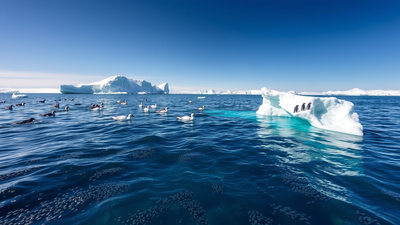
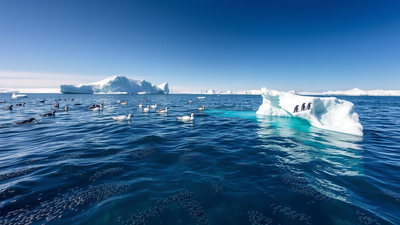
In February 2015, British endurance swimmer Lewis Pugh entered the freezing waters of Antarctica’s Ross Sea wearing nothing but a pair of swimming trunks, completing a series of five short but record breaking swims in temperatures as low as minus 1.7 degrees Celsius. The swims were not simply a personal endurance challenge. Pugh, who serves as the United Nations Environment Programme’s Patron of the Oceans, undertook them specifically to draw global attention to the Ross Sea and push world governments toward creating a marine protected area there. Almost two years later, in October 2016, that campaign culminated in the designation of the Ross Sea Region Marine Protected Area, a 1.55 million square kilometre zone that remains the largest protected area on Earth, on land or at sea.
Why Lewis Pugh chose to swim in the Ross Sea
The Ross Sea is a deep bay of the Southern Ocean, widely regarded by scientists as one of the least disturbed marine ecosystems left on the planet. Pugh’s five swims took place across a range of locations within the region, including Campbell Island and the Bay of Whales, with several of them recognised as the southernmost swims ever recorded by a human being. Rather than attempting to swim long distances, each swim lasted around 20 minutes and covered roughly a kilometre, a duration and distance chosen specifically to manage the extreme risk of swimming in near freezing water without a wetsuit.Pugh’s goal was to use the visibility of his physical feat to highlight a threat that was otherwise difficult for the public to see. Unlike deforestation or other visible forms of environmental damage on land, degradation happening beneath the ocean’s surface is far harder for people to witness directly, and Pugh has said this contrast was part of why he chose swimming as his platform for ocean advocacy.
How the campaign helped secure a stalled international agreement
At the time of Pugh’s swims, the proposal to create a marine protected area in the Ross Sea had already been under negotiation for several years within the Commission for the Conservation of Antarctic Marine Living Resources, the international body responsible for managing Antarctic waters. According to CCAMLR’s own records, the Ross Sea proposal was first put forward jointly by the United States and New Zealand in 2012, but repeated attempts to reach agreement among CCAMLR’s member nations had failed for several consecutive years, with Russia among the countries blocking consensus.Following his swims, Pugh made multiple trips to Moscow to meet directly with Russian officials, working to build support for the proposal from a government that had previously opposed it. According to the Lewis Pugh Foundation, these efforts eventually helped secure Russian backing for the agreement, contributing to the consensus that CCAMLR reached at its annual meeting in October 2016.
What the Ross Sea Marine Protected Area actually protects
When CCAMLR’s 24 member countries and the European Union formally agreed to the designation in October 2016, it marked the first time the body had reached unanimous consensus on a marine protected area of this scale. According to CCAMLR’s own records, the agreement covers a total of 2.09 million square kilometres once waters beneath the floating Ross Ice Shelf are included, while the MPA’s open ocean surface area comes to 1.55 million square kilometres. Of that surface area, roughly 1.12 million square kilometres, about 72 percent, falls within what is known as the general protection zone, where commercial fishing is fully prohibited. The remaining area is split into smaller zones that permit limited research fishing under strict CCAMLR oversight.The protected area is designed to safeguard large scale ecosystem processes across the region, conserving biodiversity and protecting key species including penguins, seals, whales, krill and Antarctic toothfish, along with areas considered ecologically important to their life cycles. The designation officially came into force on December 1, 2017, and is set to remain in place for 35 years, giving researchers a long term opportunity to study one of the ocean’s most pristine environments largely free from commercial fishing pressure.
Why the Ross Sea agreement remains a landmark moment for ocean conservation
The Ross Sea Region Marine Protected Area holds particular significance because it was established in international waters that do not fall under any single nation’s jurisdiction, an achievement that had never previously been reached at this scale. Reaching consensus required years of scientific review and diplomatic negotiation among more than two dozen governments, a process complicated further by broader geopolitical tensions between several of the countries involved at the time.Since the Ross Sea designation, Pugh has continued similar advocacy work through further high profile swims, including a full length crossing of the English Channel and a swim across the Red Sea, each tied to a specific ocean protection message. The success of the Ross Sea campaign remains one of the clearest examples of how a single, highly visible personal challenge can help unlock a stalled international environmental agreement, showing governments and the public alike exactly what was at stake in a part of the world that few people will ever see for themselves.