











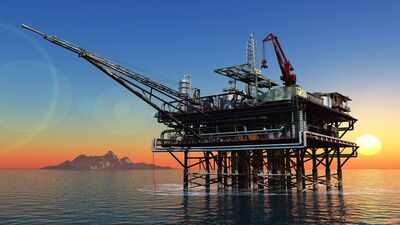
Wars and geopolitical conflicts often have unexpected impacts for economies. Countries are struggling with tight energy supplies and companies in the Gulf are forced to rethink their production volumes. The key question is, what impact will the Middle East conflict have on Indian companies?While most Indian retailers are facing losses amid supply concerns, the Iran war might translate into major financial gains for upstream Indian oil giants. Since the conflict began on February 28, crude oil prices have hovered near and beyond the $100 per barrel mark. If peace efforts, which have already ended on a cold note twice, and tensions continue, India’s average crude realisation could rise from about $65 per barrel to nearly $90 per barrel. That jump could significantly improve the earnings of state-run oil producers such as ONGC and Oil India.
Upstream Indian oil giants to bag big gains
According to an ET report, for ONGC, every $10 rise in crude prices adds around Rs13,000 crore to its Ebitda (earnings before interest, taxes, depreciation and amortisation). At the same time, for Oil India, the gain is around Rs2,200 crore.If average crude prices move to $90 per barrel, the two companies together could earn an extra Rs30,000 crore to Rs35,000 crore in Ebitda in FY27 compared with FY26, even if production remains mostly flat.The finance ministry’s budget calculations are based on crude prices of around $65 per barrel. A rise to $90 would mean a 35%-40% increase in realisations. Since production costs for upstream firms do not rise as sharply, much of this increase would directly boost profits.ONGC has said in investor disclosures that every $1 change in crude price impacts its Ebitda by around Rs1,200 crore-Rs1,300 crore. Oil India has estimated a $1 change impacts its Ebitda by around Rs200 crore-Rs220 crore.An analyst at ICICI Securities, as cited by ET, said “Upstream earnings are now almost completely a function of crude prices. Volume growth is limited, so any upside in oil directly translates into Ebitda expansion. At $90, both ONGC and Oil India are in a very strong earnings zone.”
Challenges to windfall
While higher prices can lift profits, both companies are still struggling with long-term production decline.ONGC’s crude production peaked at around 32 million metric tonnes in 1990 and has since dropped to nearly half. Meanwhile, Oil India’s fall has been slower, but steady. Together, the two companies have lost around 15 million metric tonnes of annual output over the past three decades.Their biggest fields are aging. Mumbai High, ONGC’s key asset, is over 50 years old, while Oil India’s main Assam fields are even older. As oilfields age, production becomes harder and more expensive because water content rises and pressure falls.ONGC has admitted in its annual reports that “most of the major producing fields are mature and have high water cut, impacting production levels.” Oil India has also pointed to natural decline in older fields.Some new projects could help. ONGC’s KG-98/2 deepwater block and Mumbai High redevelopment are seen as important for future production, but analysts say it is too early to count on them fully.Pratyush Kamal of InCred Equities said, “The modest FY26 uptick, with ONGC growing 2.3% and Oil India flat, is an early sign of stabilisation after years of decline. But whether this is a real turnaround or just a pause depends largely on KG-98/2 and Mumbai High TSP-1 delivering on time. We would not read short-term stable volumes as a production revival.”Another analyst at Motilal Oswal Financial Services said, “The recent stabilisation in production is encouraging, but it is too early to call it a turnaround. The heavy lifting is still being done by crude prices, not volumes.”
Not every oil giant wins
While upstream oil companies are expected to gain, oil retailers are facing mounting losses. State-run fuel retailers are facing deeper losses as petrol and diesel prices remain unchanged at the pump despite rising global crude costs, according to sources.Oil marketing companies IOC, BPCL and HPCL are now losing around Rs 18 per litre on petrol and Rs 35 per litre on diesel while continuing to hold retail prices steady since April 2022, even though fuel prices were officially deregulated over a decade ago.During this period, crude prices have swung sharply, climbing above $100 per barrel after the Russia-Ukraine war, falling to nearly $70 earlier this year, and then jumping to around $120 last month following US-Israel attacks on Iran that reignited supply fears.
Government also stands to gain
Higher crude prices would also increase government earnings through dividends, as it owns majority stakes in both companies.In FY24, ONGC paid around Rs7,224 crore in dividends to the government, while Oil India paid around Rs700 crore-Rs750 crore.If crude prices stay high and profits rise, dividend payouts could also increase sharply, especially since central PSU rules require at least 30% of profits to be paid out.
Is everything a win-win?
Despite the windfall, higher oil prices also mean that India’s import bill is set to rise.Uttam Kumar Srimal, deputy head of research at Axis Securities, said, “India’s import dependence means every $1 increase in crude adds $1.5 billion–$2 billion to the import bill. At $25 higher crude, that is a $37 billion–$50 billion annualised hit. Every $10 rise can widen the current account deficit by 0.35%–0.5% of GDP and push inflation up by 20 basis points.”In short, while expensive crude could create a major profit windfall for ONGC and Oil India, it would also put pressure on India’s wider economy through higher imports and inflation. For upstream companies, this is largely a price-led boost, not a production-led turnaround.