NEW DELHI: Flipkart is set to take on Zomato and Swiggy in the food delivery space as it expands its offerings. In an interview, Flipkart Group CEO Kalyan Krishnamurthy argues that companies that execute well with a good value proposition can disrupt the market even if they enter the arena a little later. Excerpts:You are completing 10 years as CEO at Flipkart, how have things evolved, especially since Walmart became a majority shareholder?Everything has evolved. The country has evolved: technology adoption, infrastructure, number of internet users, access to internet, the speed of consuming, the evolution of small screen devices, their cost, the payments infrastructure, digital infrastructure, logistics. Don’t forget taxes, GST and its rationalisation. All enablers to e-commerce have exponentially evolved. Govt has thought about a lot of these things. The country has progressed and we have participated in that progress, and we have been a beneficiary of that progress. The customer has evolved in a very big way — from pure trials to increased velocity and transaction, to more adoption to eventually habit-forming loyalty. Initially, people were risk averse, they would only try and experiment things that are very standard so that they didn’t go wrong. That’s the other evolution, books and consumer electronics are standard, easy to describe, easy to catalogue, easy to deliver. Today, the most evolved categories of e-commerce, namely grocery and unbranded fashion and unbranded beauty are the mainstay. The other area where there has been a lot of evolution has also been led by us: we were the first ones to introduce in-house supply chain for an e-commerce company. We figured out the need to offer very unique customer value propositions for unique customer needs. For the first time we brought the concept of 24×7 customer service, try out your clothes, open box deliveries.Is Indian e-commerce the most competitive market in the world in terms of players, categories, speed of delivery?I won’t say the world’s most competitive, (but) it is very competitive. A part of the reason is that availability of and access to funds has been a little bit easy for several years. It became very, very competitive in a good way. It’s always good for the customer to have choice and eventually the customer forces all the platforms to be competitive and to offer the best value proposition. Second is talent availability in India is very good, it’s world class.It appears that Walmart as the largest shareholder is experimenting in India and seeking to take it elsewhere?Flipkart’s management team leads the business in India. Our strategy is developed with oversight from the Board and in alignment with our shareholders, while execution is led locally. As part of the Walmart family, we benefit from their global experience, and equally, many innovations developed in India provide useful learnings for the broader Walmart ecosystem.Has the rapid adoption of quick commerce surprised you?Value proposition has always been central to how we think — and value doesn’t mean cheap. It means offering something genuinely worthwhile to customers across all price points. We had ourselves attempted something like that in the past, six-seven years back. We had a lot of learnings, but we did not scale it in a very big way. And then we saw that the market is eventually coming together towards that and we quickly jumped in. What has been very encouraging is how quickly customer behaviour has evolved and how well adoption has taken off. Some of what we see is quite surprising in a positive way.Was the market not ready or did you wait too long?There is no such thing as waiting too long. It’s a combination of having the right value proposition and a good execution plan. It doesn’t matter if somebody starts a particular business or a business model and anybody comes in after two years or seven years, if they execute well, if they have a solid team, if they are focused, they can easily win after that.

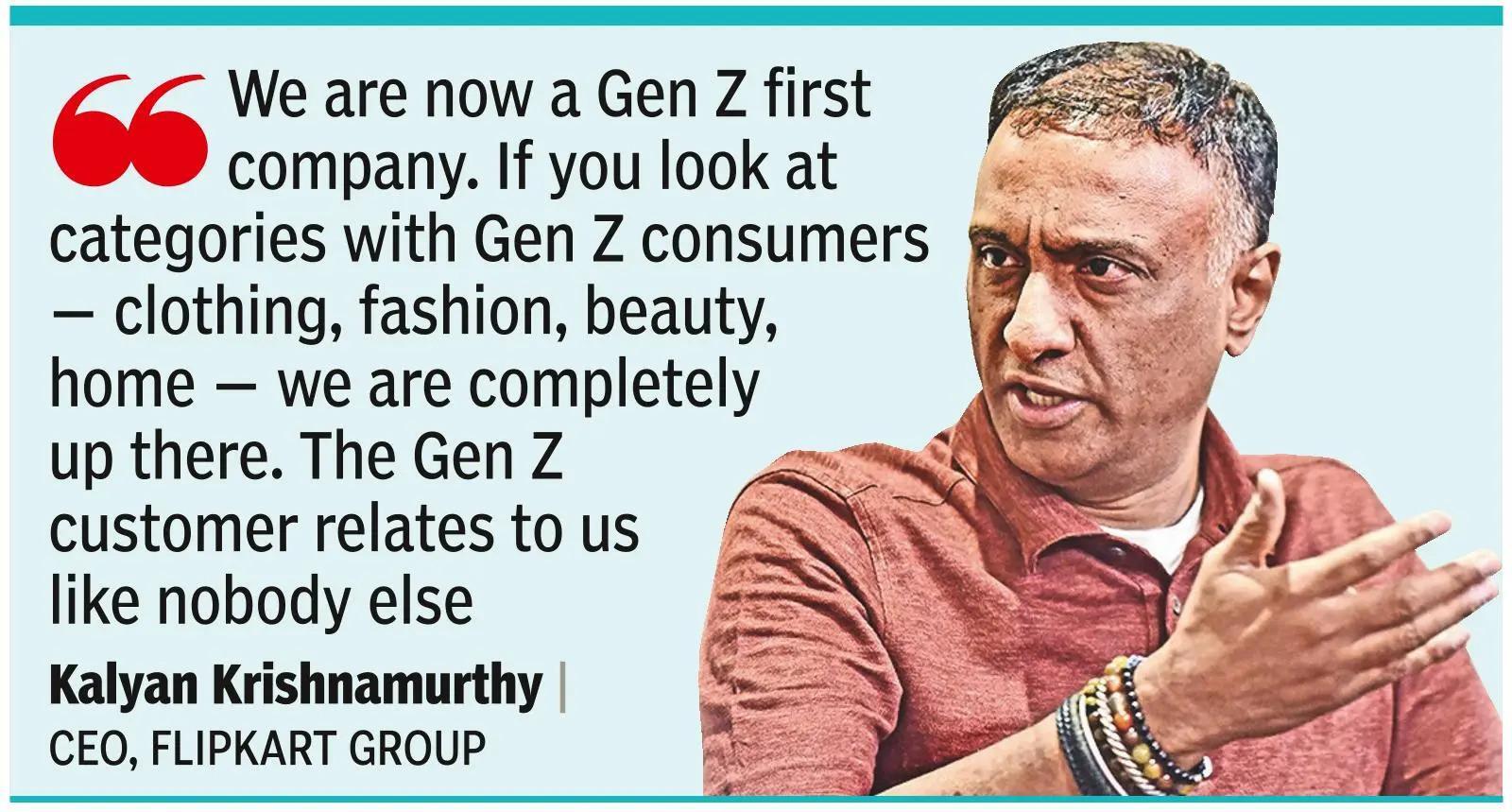
What about grocery. How is it today compared to five years ago?The e-commerce industry in India has come a long way. The numbers are now in the tens of billions. It follows a particular adoption curve. I would say 80% of this adoption curve is consistent across the world. Initially, it is books and media, then you look at some branded electronics, consumer electronics, and branded fashion and then it goes to unbranded, to appliances and eventually it comes to consumables, essentials. India has followed the same curve. Right now, we are in that journey of that last leg where e-commerce penetration is by far the lowest. The other thing about India is that each and every customer segment and category had to be solved for by market leaders. It is not an organic process. The way televisions and refrigerators are delivered in the country, a lot of things have to be solved through the way you show them on your app. It’s a family purchase. It’s not an individual purchase like a book or a phone. The way you want to see the product, see all financing options, you even have to think if it will fit into your house. We were the ones who took a lot of effort and took years to solve that.You are in multiple business segments, e-commerce, travel, finance…It’s all e-commerce, I would say products, services. Super.money is slightly different as it’s an enabler for Flipkart and also financial services. It’s a lending or a financial services marketplace.Is there a plan to expand the set of offerings?So, we are launching something in the next few weeks. Again, it’s e-commerce, it’s food delivery. We are launching a pilot in 30 days.So you’ll compete with Swiggy and Zomato?Food delivery is another customer use case within our broader e-commerce platform. We will begin with a pilot, learn from it, and decide how to scale across the rest of the country. We will always come with a solid value proposition and innovate as we go along.This is a space where we thought the action is over…Nothing is over. You go back in history, especially in our industry, somebody has innovated, somebody has disrupted and eventually the market expanded. New players will also come into the market.How is AI shaping the way you compete and stay agile?AI can be used in 20 different ways and everybody will benefit through productivity improvement. You can personalise your offerings, that can improve the way supply chain routes products, that can improve the way sellers and small merchants work with big platforms — anything can improve. People who will win using AI will be the ones who are able to use it to become more agile. The moment you see a particular new customer trend emerging because of a demographic shift, somebody who’s able to get there even four to six months faster than others, because of the way they use technology, will be the one who wins.How do you reimagine the process for refrigerators or any other product?Nothing we have done worked right the first time. The important aspect here is to really have that feedback-taking mindset and realising that the customer is not accepting a value proposition or it’s not making sense as a business model and very quickly evolve from there. More than 50-60% of what the company has done in the past, we have gotten it right the second time or the third time, not the first time. In the case of televisions or refrigerators, we did not realise, for example, when we launched it first, the importance of post-transaction services. Unlike a mobile phone or a laptop on the marketplace, where there isn’t a need for after-sales services, here the real work starts after you deliver. How do you deliver it to the third floor, do the wall mounting, what do you do with your old TV, financing? We actually take back the TV. Today we also offer same-day and next-day delivery on large appliances in key markets — something that seemed impossible in this category not long ago. This is a business which needs post-transaction services end to end. We bought a company called Jeeves focused on post-transaction services and today it’s very deeply integrated with Flipkart.You had mentioned live commerce and video commerce, especially in the context of smaller cities. Can you dwell on that a little more?In many parts of the world, it is mainstream. In India it’s not one of the big things yet. It’s something Gen Z users prefer. There will be a lot of evolution because of the changing customer demographics and technology. Gen Z users prefer consuming videos even on transacting platforms versus just images and text. General videofication of Flipkart is going on. Eventually, live commerce will also play a role in it.Regulatory issues are something which have been bothering the sector. Has it fully evolved or is that sword still hanging?We have always believed that lawmakers and regulators have an important responsibility in protecting consumers and ensuring healthy market development. As regulations evolve, our responsibility is to comply fully and continue serving customers responsibly within that framework. Technology and markets evolve rapidly, so it is natural that regulatory frameworks evolve alongside them.There are large domestic homegrown players which have not been able to scale up the way you or Amazon have. What gives you an edge?We are very much a homegrown player and always have been — and we have now also completed our redomiciling to India. We are very clear: understand the customer, figure out what they want and offer a superior value proposition. That’s it. Our edge, if you want to call it that, comes from our ability to understand local customers deeply — the nuances, the behaviours, the unmet needs that aren’t obvious from the outside. And then the ability to attract very high-quality talent that translates that understanding into execution every single day. We are ready to experiment, take feedback. As long as the startup, entrepreneurial culture of the company is intact, we can continue doing this right. There is a culture of ownership, all employees feeling that this is their own company.What are some of the recent inputs that made you sit up or surprised you?We are now a Gen Z first company. If you look at categories with Gen Z consumers — clothing, fashion, beauty, home — we are completely up there. The Gen Z customer relates to us like nobody else.What share of consumption is coming from them, 50%?It will be very high across fashion, electronics, and beauty. Myntra could be even a bit higher than 50%. And it is not just products — Gen Z wants experiences. We are seeing very strong engagement from Gen Z on Cleartrip as well. They travel, they eat out, they spend on experiences. That shift from products to experiences is very real and very visible in our data.My own personal experience and the way we think about it at Flipkart, is that by itself data analysis doesn’t show you anything at all. You have to start anything with customer intuition and then back that with data, rather than the other way around. You need to meet customers and then draw that back using data. We are a data company at the core of it. We have a huge data science team, business analytics teams.