











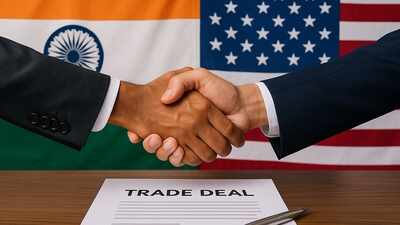
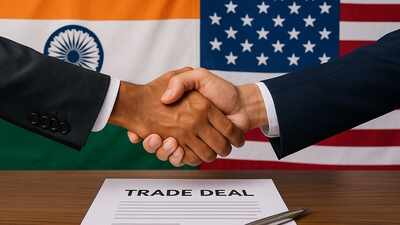
By Shishir Priyadarshi, President, Chintan Research Foundation (CRF) & a former Director, WTOThe trade discussions between US Trade Representative Jamieson Greer and Commerce Minister Piyush Goyal concluded in New Delhi on June 24 without the breakthrough many had anticipated. Predictably, this has triggered speculation about whether India and the United States are struggling to bridge their differences on tariffs, market access, agriculture, and digital trade, and whether the chances of the two countries signing off on a trade deal are diminishing.However, history suggests caution before drawing pessimistic conclusions.If there is one consistent feature of India-US trade relations over the past three decades, it is that major agreements rarely emerge from a single round of negotiations. More often, they are preceded by sharp disagreements, missed deadlines, public posturing, and seemingly irreconcilable positions. Yet, time and again, the two countries have managed to find common ground. The current negotiations may well follow the same trajectory.An inconclusive meeting is not necessarily a failed negotiationTrade negotiations between major economies are rarely linear. Domestic political pressures, competing economic interests and bureaucratic processes ensure that difficult issues are seldom resolved overnight.India and the United States know this better than most. Their trade relationship has witnessed disputes over intellectual property, food security, agricultural subsidies, steel tariffs, digital commerce, and market access. In many cases, experts predicted prolonged stalemate. In several instances, commentators declared that the differences were simply too large to bridge.Yet the history of the relationship reveals something else: both countries have repeatedly demonstrated a willingness to continue talking even when agreement appeared distant. That habit of engagement may be one of the most underappreciated strengths of the partnership.When differences have looked irreconcilableConsider the debate over pharmaceutical patents during the negotiations that led to the creation of the World Trade Organization.The United States was among the strongest advocates of robust intellectual property protections through the WTO’s Agreement on Trade-Related Aspects of Intellectual Property Rights (TRIPS). India, by contrast, worried that stronger patent protection would make life-saving medicines less affordable and undermine the country’s ability to serve as a supplier of low-cost pharmaceuticals to the developing world.The disagreement was not merely technical. It reflected fundamentally different perspectives on development, innovation, and public health. Yet the eventual outcome was neither an American victory nor an Indian one. Through subsequent negotiations and the Doha Declaration on Public Health, a framework emerged that strengthened intellectual property protection while preserving important public-health safeguards. What had once appeared irreconcilable became manageable.A similar drama unfolded during the WTO’s Bali Ministerial Conference in 2013. The United States strongly backed the Trade Facilitation Agreement, which promised to reduce global trade costs by streamlining customs procedures. India, on the other hand wanted to prioritise its concern that existing WTO rules could constrain its food-security programmes and public stockholding operations.For months, the disagreement threatened to derail the WTO’s most significant negotiating achievement in years. Predictions of institutional paralysis became commonplace. Yet sustained diplomacy eventually produced a compromise that allowed both objectives – a Trade Facilitation Agreement & Peace Clause – to simultaneously coexist. The lesson was simple: when strategic interests are sufficiently important, solutions based on a ‘give and take’ basis do emerge.From tariff wars to trade dealsMore recent disputes offer similar lessons.The Trump administration’s decision to impose tariffs on steel and aluminium imports under Section 232 generated one of the sharpest trade disagreements between India and the United States in recent memory. India challenged the measures at the WTO and imposed retaliatory tariffs on a range of American exports, including almonds, apples, and chickpeas.The dispute quickly became politically charged. WTO litigation followed. Trade tensions escalated. Yet by 2023, both governments had negotiated a settlement that led to the withdrawal of retaliatory measures and the resolution of multiple WTO disputes. What had appeared to be a major rupture ultimately became another example of pragmatic accommodation.The period between 2019 and 2023 provides an equally instructive example. The withdrawal of India’s benefits under the Generalized System of Preferences, disagreements over agricultural market access, steel and aluminium tariffs, and a growing list of WTO disputes created the impression that bilateral trade relations had entered a period of extreme turbulence.Instead, patient negotiations produced a package of understandings that resolved several disputes simultaneously. The process was gradual and often frustrating. But it demonstrated an important reality: trade diplomacy is frequently less about dramatic breakthroughs than about incremental progress.Why history matters nowThe current negotiations are taking place in a very different global environment. Supply-chain resilience, economic security, technological competition, and geopolitical uncertainty have become central concerns for both countries.This does not mean that disagreements have disappeared. Tariffs remain contentious. Agricultural market access continues to generate friction. Digital trade and e-commerce rules remain subjects of debate. Negotiators on both sides face domestic constituencies that expect them to defend national interests vigorously.Yet it is worth remembering that many of today’s disagreements are arguably less fundamental than those that divided the two countries in the past. Questions involving pharmaceutical patents, food security and WTO reform touched on issues of development strategy and national sovereignty in ways that were often far more sensitive. If India and the United States could find common ground on those questions, there is little reason to believe that current disputes are totally beyond resolution.Indeed, both countries now possess stronger incentives than ever before to deepen economic engagement. Bilateral trade has expanded dramatically. Strategic cooperation has widened. Businesses on both sides increasingly view the relationship as one of the most consequential economic partnerships of the coming decades.None of this guarantees a quick agreement. The Greer-Goyal discussions may yet be followed by difficult rounds of bargaining and prolonged negotiations. But history offers an important reminder. Several times prior to this, India and the United States have found themselves divided on major trade questions. But each time they eventually discovered that the value of cooperation exceeded the costs of disagreement. The latest negotiations may prove no different.