






(RNS) — 5.4 million people became refugees in 2025. With the global total eclipsing more than 35 million refugees — not including the 69 million internally displaced persons — resettlement remains a vital lifeline for the most vulnerable communities.
For more than four decades, the U.S. has been on the front lines of that process. But in 2025, the U.S. only resettled 11,500 refugees, a sharp drop from the more than 100,000 in 2024. In 2026, the number so far is less than 6,000 — all of them from South Africa.
As the U.S. welcomes individuals from all over the globe to celebrate the world’s game, most refugees remain largely shut out.
This Saturday (June 20) is World Refugee Day, celebrated by the U.N. since 2001. In light of ongoing changes to U.S. immigration and refugee policy, we asked faith-based resettlement organizations what communities of faith should know about current U.S. refugee policy.
The U.S. refugee program has been devastated in recent years.
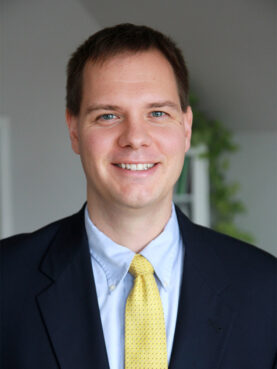
Matthew Soerens. (Photo courtesy of World Relief)
The U.S. Refugee Admissions Program, a bipartisan effort established in the wake of the fall of Saigon, has all but been gutted. Some of the most vulnerable communities in the world are now barred from seeking entry into the United States.
But many Christians are not aware, said some of the major faith-based refugee resettlement agencies.
“The average person in the average church I go to has no idea that the refugee resettlement program has been shut down,” Matthew Soerens, vice president of advocacy and policy for World Relief, told Religion News Service.
The change in policy has meant these agencies have had to make major staffing and programming adjustments. Some of them have had to survive the termination of significant U.S. grant funding. But more importantly, they say, the change has felt like an abandonment of these needy communities.
During the first Trump administration, the number of refugees admitted to the U.S. was cut drastically, leading resettlement agencies to cut staff and reduce programs. Those programs were rebuilt during the Biden administration, only to be shut down again when Trump returned to office.
In fiscal 2026 (which began Oct. 1, 2025), the vast majority of refugees who have been resettled are white Afrikaners, a minority community from South Africa. Persecuted Christians and other religious minorities, who have historically been a priority for the USRAP — such as through the Lautenberg Program — are no longer given special consideration.
“We’re unfortunately quite confident that zero Christian refugees from countries where Christians are known to face persecution will come to the United States as refugees this year, down from more than 29,000 two years ago,” said Soerens.

Deputy Secretary of State Christopher Landau greets Afrikaner refugees from South Africa, May 12, 2025, at Dulles International Airport in Dulles, Va. (AP Photo/Julia Demaree Nikhinson)
Despite the restrictions by the current administration, most Protestant pastors prefer a much wider net for refugee admissions. Only 18% of pastors in a 2026 poll run by Lifeway identified Afrikaners as a priority for refugee resettlement.
On the other hand, 70% of pastors identified those who have fled persecution and have family members already in the U.S. as a priority.
Families have been separated, and more families are at risk of separation.
Many of the individuals who come to the U.S. are hoping to chart a path for their families, said Matt Misterek, director of communications at Lutheran Community Services Northwest, one of the plaintiffs in an ongoing case against the U.S. government’s refugee restrictions.
“When individuals come, they’re often almost always here to put their front foot forward with the hope that in fact they’re going to be able to reunite with their families in the United States,” said Misterek.
Family reunification is considered a priority by Congress, especially uniting children with their families that are already stateside. Yet while exceptions to the ban are being made for South African refugees, the same is not true for these children.
One such child is a 9-year-old boy from the Democratic Republic of the Congo. He’s been stuck alone in Burundi, even though his parents and siblings are already in the U.S.
“These actions are discriminatory, cruel and arbitrary,” said Mevlüde Akay Alp, senior litigation attorney for IRAP and lead attorney in the case against the selective application of the refugee ban. The boy’s family is a new plaintiff in an amended complaint put forth by IRAP.
Other policies put in place by the Trump administration in November have made reunification much more difficult. They included a freeze on all asylum applications and a pause on immigration applications for individuals from a list of 39 countries.
The result? Millions of people whose cases were in process were left in limbo.
As of last week, a judge determined the policies were “arbitrary and capricious” and forced U.S. Citizenship and Immigration Services to restart processing applications. Milagro Sique is the CEO of Dorcas International Institute of Rhode Island, the primary plaintiff in the case that led to this ruling. She told RNS the ruling means folks can finally escape this limbo.
“It gives them some clarity, so that (they) the petitioner can make a meaningful decision on their lives,” Sique said.
For many, however, the pause on refugee resettlement means there is still no pathway for their families to join them.
Some refugees already in the U.S. could be in jeopardy.
As part of a crackdown, U.S. Immigration and Customs Enforcement has arrested some refugees already legally in the country and detained them for questioning. A federal judge has ordered the Trump administration to pause these detentions.
But refugees remain at risk of a “revetting” process, which could result in revocation of their permanent status.

Leliz Bonilla Castro, left, and her sister Xochina Michelle Castro, refugees from Honduras, participate in an English class for refugees, April 11, 2024, in Columbia, S.C. (AP Photo/Erik Verduzco)
For HIAS, the world’s oldest refugee resettlement agency, restrictions on immigration are something it has weathered in the past, particularly in the 1920s. But the refugee revetting process, which risks separating families who believe they have finally made it to safety, is unprecedented.
“This is one of the instances where there is a really fundamental attempt to transform the nature of immigration and refugee resettlement in the U.S. in ways that we haven’t previously seen,” said Noah Gottschalk, chief external relations officer at HIAS.
Gottschalk said the intention in revetting refugees — who already go through one of the most stringent vetting processes in the world — is to create a “climate of fear, a climate of confusion.”
Caring for refugees is a spiritual concern.
For HIAS, caring for refugees is not altruism; it’s an outgrowth of a deeply felt experience.
“We are motivated as we are, by our Jewish values, by the Jewish experience of being persecuted, of being discriminated against for who we are and what we believe,” said Gottschalk.
In June of 1939, the St. Louis, a ship carrying nearly 1,000 Jewish refugees from Germany, was refused entry into the U.S. Forced to return to Europe, 254 of its passengers were eventually murdered in the Holocaust.
For HIAS, remembering this tragedy is an inspiration to welcome refugees today.
People of faith have stepped up.
Many people of faith have done that and more in the past two years. Synagogues, mosques and churches have all met the gap in her community, Sique said, even though DIIRI is not a faith-based organization itself.
Some church members have even gone to great lengths to assist refugees impacted by the recent policies, such as a pair of families who traveled from Minnesota to Texas to assist a refugee who had been detained and released without documentation. For some detainees, this is a deadly experience.
Jewish communities across the country, likewise, have rallied in support of refugees, even in places where such support has come at great cost.
Despite the funding restrictions, many faith-based resettlement organizations have found new ways to support vulnerable communities.
Nevertheless, the support faith communities can offer is not sufficient to meet the needs long term. This is why Dorcas International Institute of Rhode Island has turned to fighting some of the restrictions in court.
“We need more of a sustainable plan for these folks,” said Sique.