






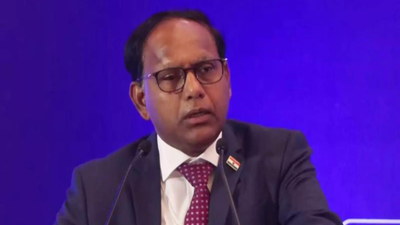
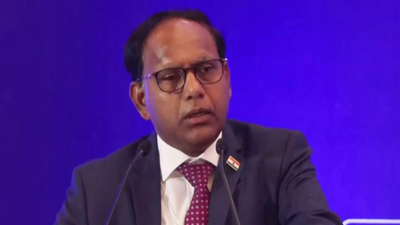
A proposed High-Level Committee on Banking for Viksit Bharat will examine balance sheet constraints faced by public sector banks and ways to better leverage their capital, Financial Services Secretary M Nagaraju said on Friday, PTI reported.The government is expected to announce the terms of reference for the panel soon.“This committee is expected to review the banking sector with a focus on making it more effective, more inclusive, and better aligned with India’s growth needs, while maintaining financial stability,” Nagaraju said at the ICPP Growth Conference, PTI quoted.“We will also likely examine intermediation cost, balance sheet constraints in banks and areas where regulators and institutions can improve the flow of credit,” he added.Finance Minister Nirmala Sitharaman had announced the proposal in the Union Budget on February 1, 2026.“I propose setting up a ‘High Level Committee on Banking for Viksit Bharat’ to comprehensively review the sector and align it with India’s next phase of growth, while safeguarding financial stability, inclusion and consumer protection,” she had said in her Budget speech.Nagaraju also called for urgent development of India’s corporate bond market so that companies beyond the top-rated segment can access long-term funds.“We need to seriously deepen India’s corporate bond market. Banks are not the right vehicle for long-term financing. They have a maturity constraint. They cannot comfortably lend for 10 or 20 years when their deposits are short-term. A well-functioning bond market fills that gap,” he said.He said such a market would provide companies a direct route to long-term capital, improve price discovery and create competition that keeps borrowing costs efficient across the system.Observing that 90-95 per cent of corporate bond issuances in India are AA-rated or above, Nagaraju said the US market has a much wider A and BBB-rated segment, while India lacks a strong middle tier.Because of this, many companies face difficulty in raising long-duration funds, he said.“The ability of long-term institutional investors to participate more actively in the corporate bond market will be an important factor in determining how deep and liquid that market can become,” he said.“The supply side needs to develop better secondary market liquidity, lower transaction friction, and greater coherence in how similar instruments are treated across different regulatory frameworks. The bond, the currency, and the derivatives markets need to work together effectively,” he added.He said regulators, the government and the high-level committee would need to consider these linkages with the wider banking system.“Beyond the market structure itself, the cost of capital ultimately reflects broader economic fundamentals. The quality of fiscal management, the stability of the monetary environment, and the confidence of the investor, that policy will be consistent and predictable,” Nagaraju said.He stressed that capital must also reach last-mile borrowers at competitive rates.“If capital reaches only the most credit-worthy borrowers, the financial system is doing its job at a basic level. If it also reaches those who are viable, but currently underserved, the system is working efficiently,” he said.“The question is not just whether capital is available. It is whether capital is affordable for the farmer who needs crop finance, the small business that wants to expand, or the infrastructure project that needs long-term financing,” he added.When borrowing costs remain above the actual risk level, viable projects fail to take off, he said, adding that the burden is felt most sharply by small businesses, first-generation entrepreneurs and rural borrowers.Nagaraju, however, said stronger oversight remains essential.“India’s own experience with the co-operative banks, non-banking financial companies, and parts of the microfinance sector shows what can go wrong without it. What I am arguing for is better-designed regulation,” he added.