











JERUSALEM (RNS) — This past spring, a case of a Jewish man assaulting a Catholic nun in Jerusalem made international headlines. And earlier this month, the Religious Freedom Data Center reported 88 incidents of anti-Christian harassment in Israel so far in 2026 — 63 of them between April and June.
The Israeli nongovernmental organization, which runs a hotline documenting such incidents targeting Christians, recorded 180 incidents in all of 2025 — up from 107 in 2024, putting this year on track for a continued spike in anti-Christian harassment. The majority of cases recorded involved vandalism and graffiti at Christian cemeteries, crosses and statues, as well as spitting and verbal abuse against Christians in Jerusalem, especially in the Old City.
For Christians living in the country who spoke with RNS, these types of incidents, almost always perpetrated by young Jewish extremists, are becoming increasingly normalized. While Christian clergy and the Israeli activists who track such harassment said the vast majority of Israelis consider such behavior abhorrent, they also accused law enforcement of largely ignoring victims’ complaints until they turn into an international scandal.
The Rev. Firas Abedrabbo, a Roman Catholic priest of the Latin Patriarchate of Jerusalem, said he was the victim of such an incident on June 2. He recalled that as he was leaving the Old City “three young religious Jewish men approached, spat in my direction, made insulting gestures, shouted remarks and walked away laughing.” The harassment continued until the priest’s companions confronted the youths.
When they filed a police complaint with the help of Israeli Jewish peace activists from the Bnei Avraham organization, Abedrabbo said they encountered “long delays” and “repeated attempts to discourage them from filing the complaint,” along with “persistent questioning” on why Israeli Jewish peace activists would be assisting a Palestinian Christian priest.
Other priests, nuns, monks, seminarians and some Christian pilgrims have reported cases of spitting, verbal abuse and intimidation, particularly when dressed in clerical attire or wearing a cross, Abedrabbo said. Some religious orders no longer permit their sisters to walk unaccompanied in certain parts of the Old City.

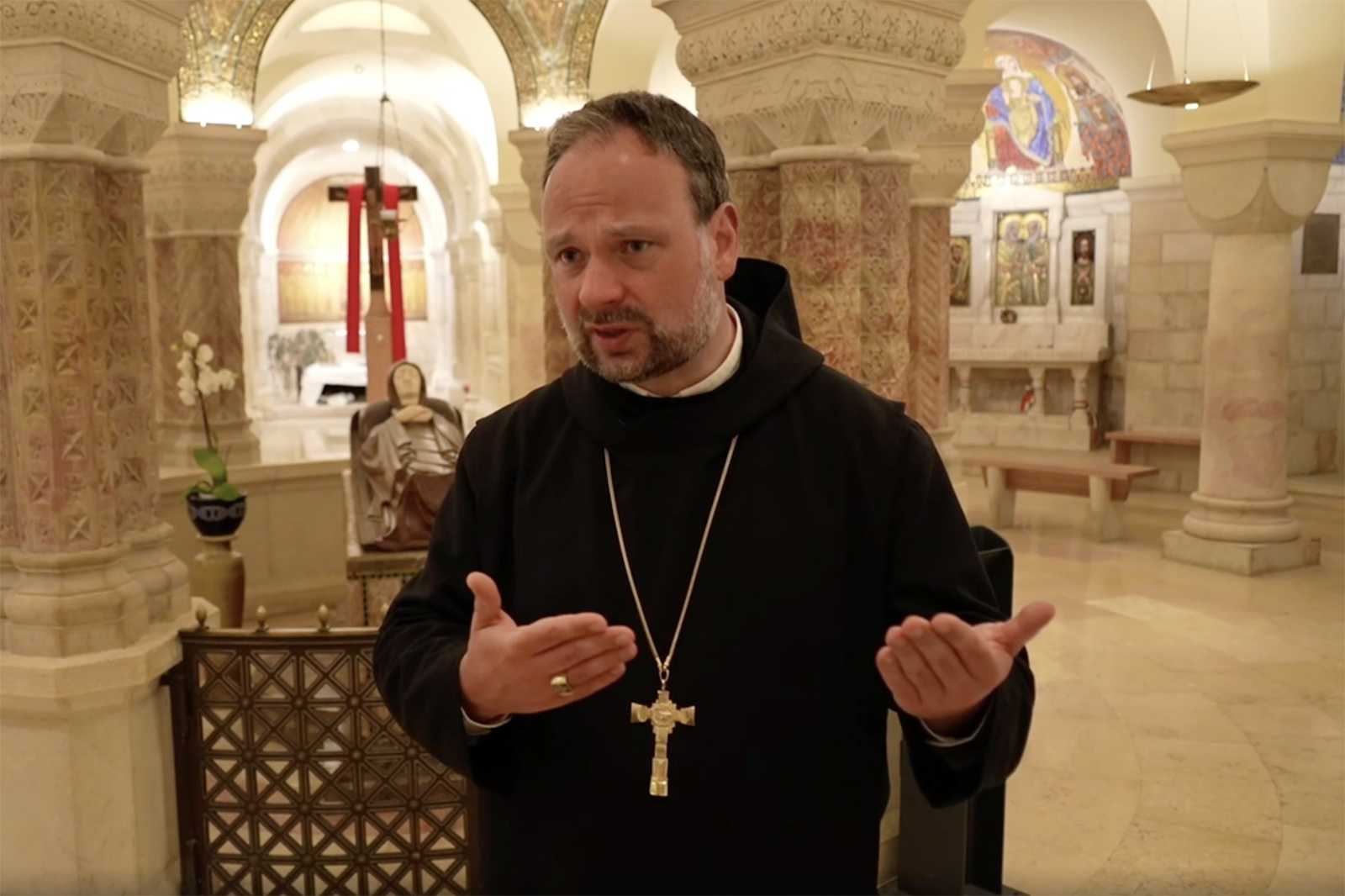
Abbot Nikodemus Schnabel. (Video screen grab)
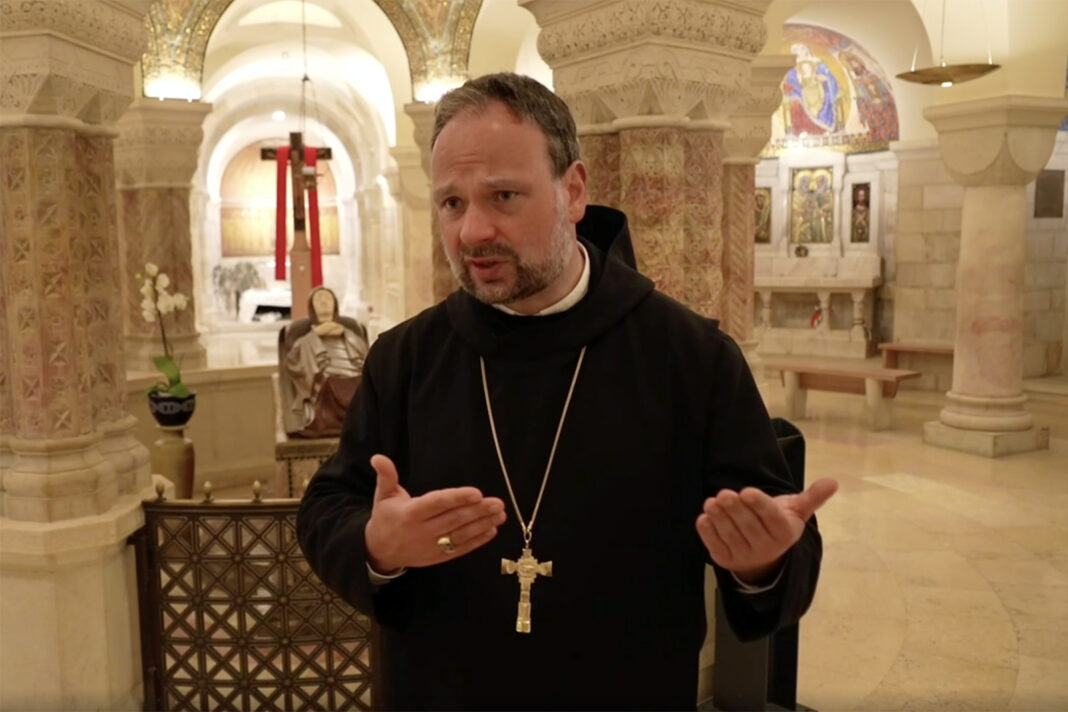
Abbot Nikodemus Schnabel, head of the Dormition Abbey in Jerusalem, said he has experienced several such incidents. In an interview with the German state-funded TV network Deutsche Welle, he recalled how, when he was a young Catholic monk several years ago, young Jewish men or teens would spit at night, when it was dark outside and there were no witnesses. “Now, it is occurring during daylight hours,” he said.
Schnabel said a huge increase in antisemitic acts against Jews worldwide, coupled with Christianity’s long history of antisemitism — from spitting on Jews and accusing them of killing Christ to murderous pogroms — is no doubt behind some of today’s anti-Christian harassment. But this does not diminish what Christians are experiencing today, he said.
“We know how badly we (Christians) treated Jews, and we see the really rising phenomenon of antisemitism,” he said. “But this is not an excuse not to look at the realities here on the ground.”
Yisca Harani, founder of the Religious Freedom Data Center, said several factors could help explain the uptick in anti-Christian incidents. One is the current far-right-wing government’s support and even encouragement of religious and nationalist extremists, she said. She also believes the trauma of the Oct. 7, 2023, Hamas attack on Israel has intensified negative attitudes toward “outsiders.”

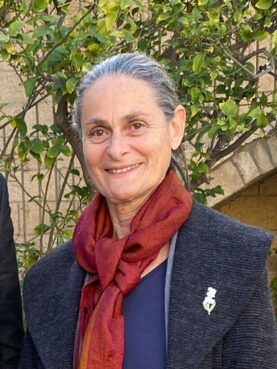
Yisca Harani. (Photo courtesy of RFDC)
“Oct. 7 marked a big change,” she said. “Israel as a society is post-traumatic. People feel attacked on all borders. But they aren’t distinguishing between the ‘other’ from within and the ‘other’ from outside Israel.”
Harani said ignorance about modern Christianity is another factor. Israeli schoolchildren study historical events such as the Spanish Inquisition and the Crusades — periods when Christians persecuted Jews — and many have only a basic knowledge of the Christian religion. Most have never spoken to a Christian, she said.
“There’s a growing negative attitude to Christians in general, and absolutely no ability to see the nuances or differences between historical pogroms and blood libels and the Christianity of today,” she said.
At the same time, Harani emphasized anti-Christian behavior is limited to a small minority: “The overwhelming majority of religious Jews don’t do that.”
Many Israelis became aware of the problem after the assault on the nun. Harani, who accompanied the nun through legal proceedings, said the attack finally prompted authorities to take the problem more seriously.
“For three years, the police saw me as a nudnikit (pest),” she said. “After the incident with the nun, I feel they are taking me a little more seriously.”
She noted that many Israelis actively oppose anti-Christian hatred and work to protect Christian communities. “We are hijacked by a fanatic government, but there is a very beautiful society here who is getting zero attention in the world because people are interested in a nun shoved, but not the person who rescued her,” she said. “I have a Haredi (ultra-Orthodox) rabbi who volunteered to escort a nun.”
Some Christian leaders acknowledge the rise in incidents but caution against overstating the problem.
The Rev. Piotr Zelazko, head of the St. James Vicariate for Hebrew-Speaking Catholics in Israel, said that while every act of anti-Christian hostility deserves condemnation, he worries that some reports create a misleading impression of daily life for Christians in Israel. Most of Israel’s estimated 185,000 Christians live openly and successfully in Israeli society, he said. His group of parishes serves seven Hebrew-speaking Catholic communities throughout the country.
“Israel is the only country in Middle East where the number of Christians is growing,” he said, adding that anti-Christian incidents should be viewed as part of a broader struggle against hatred and extremism rather than as a uniquely Christian problem. “We need to protest against all acts of hatred. The same day a Christian in Jerusalem was kicked by someone, two Jews were stabbed in London.”
Compared with the severe persecution experienced by Christians elsewhere in the Middle East and Africa — where churches have been bombed and converting to Christianity is a crime punishable by death in some places — Christians in Israel can worship freely, run for political office and enjoy legal protections, he said.
“Some church official said that soon, Israel will be like Disneyland, a place where people visit but where Christians don’t live,” Zelazko said. “I say that this person has no idea what they’re talking about.”