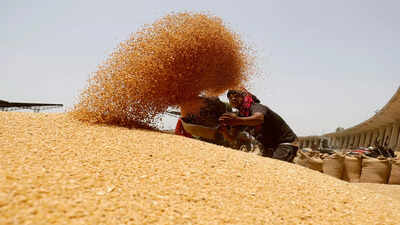








New Delhi: After the CAQM imposed Rs 61 crore fine on six thermal power plants within 300-km radius of Delhi for failing to co-fire crop residue as mandated by 2023 rules, four of them got conditional stay on around Rs 54 crore environmental compensation (EC) from the National Green Tribunal. Co-firing of crop residue is the process of burning agricultural waste (like straw) together with conventional fuels such as coal in power plants to generate energy.In separate orders dated April 24, the tribunal granted conditional stay to three power plants — Deenbandhu Chhotu Ram Thermal Power Plant in Haryana (Rs 6.7 crore), Rajiv Gandhi Thermal Power Plant in Haryana (Rs 5.6 crore) and Panipat Thermal Power Station (Rs 9 crore). Earlier, on April 13, the tribunal granted similar conditional relief to Talwandi Sabo Power Limited in Punjab against an EC of Rs 33 crore.As reported by TOI, the Commission for Air Quality Management (CAQM) imposed environmental compensation of Rs 61 crore on six thermal power plants for non-compliance with statutory provisions mandating the use of a 5% blend of pellets or briquettes made from paddy straw along with coal.The Environment (Utilisation of Crop Residue by Thermal Power Plants) Rules, 2023 require all coal-based thermal power plants to co-fire a minimum 5% blend of biomass pellets or briquettes derived from crop residue. For the financial year 2024-25, a minimum co-firing threshold of more than 3% was prescribed to avoid the imposition of environmental compensation. The CAQM said the rules were notified to promote ex-situ management of paddy straw, reduce incidents of stubble burning and mitigate air pollution in the National Capital Region and adjoining areas.Before the tribunal, the power plants argued that compliance was not feasible due to a shortage of torrefied biomass pellets. They contended that the CAQM failed to account for the practical difficulties in meeting the prescribed norms as torrefied pellets were not adequately available.The CAQM, however, submitted that the availability of torrefied or non-torrefied biomass pellets in the NCR was 564 tonnes per day, while utilisation by the appellants during 2024-25 was significantly lower. It told the tribunal that compliance had been insisted upon since 2021, beginning with advisories, followed by statutory directions and the enforcement of the 2023 rules.After hearing the arguments, the bench said, “grant of conditional stay in the matter will serve the interest of justice.”