



(RNS) — The Greek Orthodox patriarch of Jerusalem, Theophilos III, met with President Donald Trump last week in the White House and awarded him one of the highest honors in the church, the Grand Cross of the Order of the Holy Sepulchre.
In return, Theophilos came out of the meeting with an honor of his own, the suggestion of becoming a peacemaker in the Russia-Ukraine conflict, apparently backed by Trump, Israeli media reported.
The news left many observers scratching their heads. In the constellation of Orthodox Church leaders, Theophilos is seen as solidly in Russia’s camp. The patriarch is set to meet with Russian President Vladimir Putin in Moscow later this month.
The Ukraine-Russia war is the largest conflict affecting the world’s Orthodox Christians today, with majorities of both Russia and Ukraine’s population identifying with Orthodox churches.
The conflict has divided the wider Orthodox world too, after the Ecumenical Patriarchate of Constantinople granted autocephaly to a Ukrainian Orthodox Church independent of the Moscow Patriarchate, prompting Moscow to break communion with Constantinople and forcing many of the Eastern Orthodox churches to pick sides. The result has been the largest schism in the church since the break with Rome in 1054.
Though the Jerusalem Patriarchate does not acknowledge the legitimacy of the independent Ukrainian church, Theophilos is one of the leaders who — in some respects — straddles the divide. As a native Greek, he maintains ties with those in Constantinople’s orbit, but the long history of Russian pilgrimage to the Holy Land and number of Russian Orthodox Christians in Israel have kept him close to Moscow, explained Samuel Noble, a scholar of Orthodox Christianity at Belgium’s University of Liège.
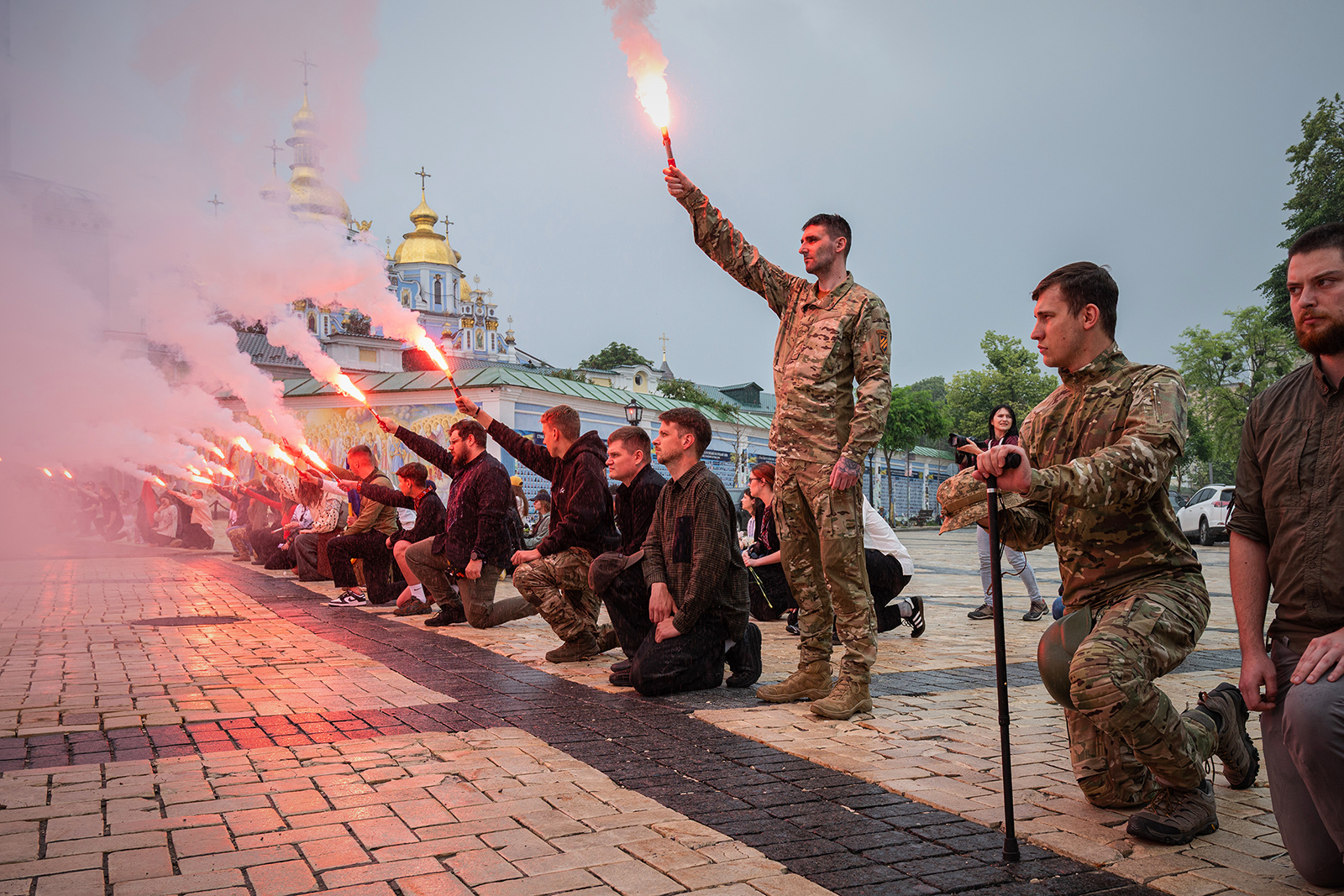
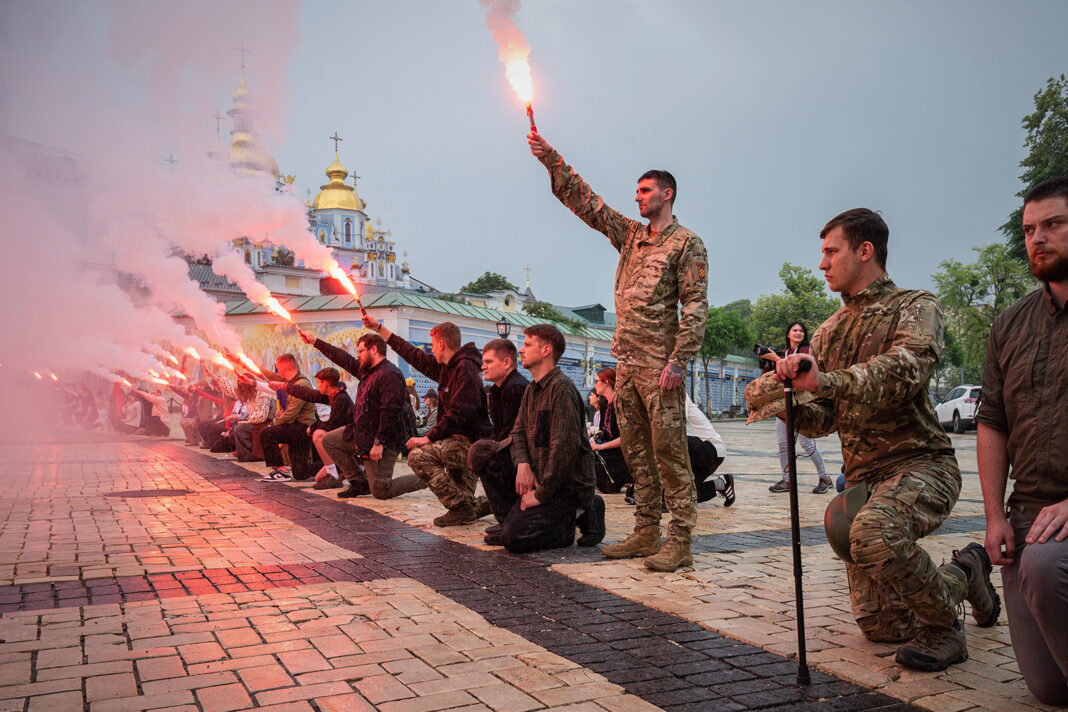
People light flares during the funeral ceremony of fallen Ukrainian servicemen in Kyiv, Ukraine, Monday, June 8, 2026. (AP Photo/Danylo Antoniuk)
“Having goodwill with both the Hellenic world and with Russia is an interesting diplomatic thing,” Noble told RNS, “but I don’t think that it all translates into diplomatic cachet with the Ukrainian state.”
Cyril Hovorun, a Ukrainian Orthodox theologian and scholar, told RNS he viewed the news as an attempt to replace the White House’s previous efforts to tap the Vatican as such a mediator. “The patriarch of Jerusalem is known for being quite closely attached to Putin,” he noted.
“I think it fits the policy of Donald Trump’s administration to distance itself from Ukraine as a mediator and to bestow this mission of mediation upon someone else,” Hovorun said. “Once upon a time, the Holy See, the Vatican, was considered as such a mediator. … Now that the relations between the White House and the Apostolic Palace — the Holy See — have deteriorated significantly and dramatically, I think this idea to ask someone else, some other religious figure, to do mediation emerged in the White House.”
Ukrainian officials quickly shut down the idea of Theophilos as a mediator, noting his opposition to the Ukrainian church’s independence.
“Patriarch Theophilos’ participation in negotiations with Ukraine is unrealistic,” a high-ranking diplomat of the Ukrainian Embassy in Israel told Ukrainian media. “Ukraine will never do such a thing.”
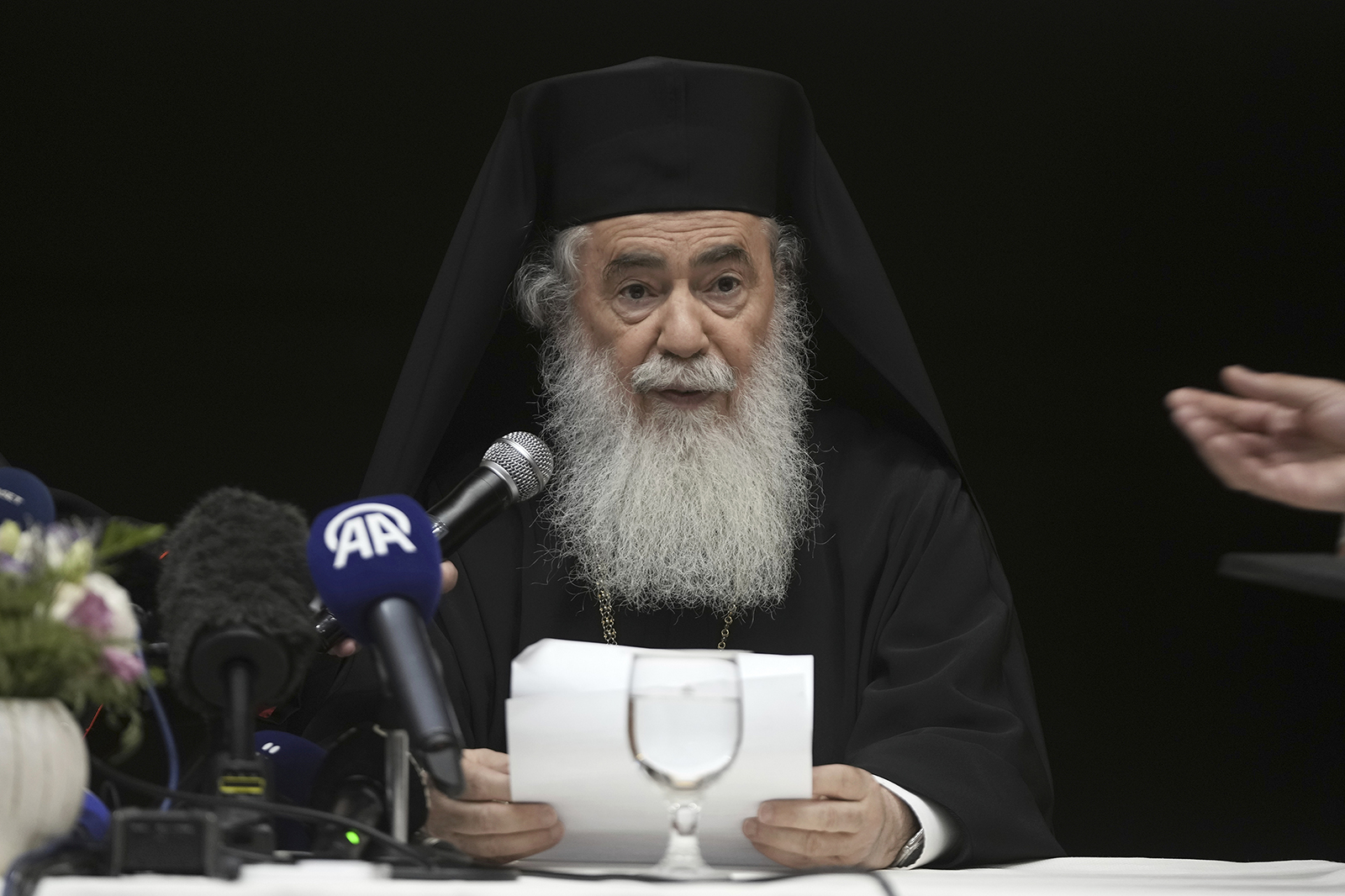
Greek Orthodox Patriarch Theophilos III speaks during a joint press conference with Latin Patriarch Cardinal Pierbattista Pizzaballa, not pictured, after their visit to the Gaza Strip in Jerusalem, July 22, 2025. (AP Photo/Mahmoud Illean)
The embassy also said Theophilos had not responded to any of the embassy’s initiatives previously but participated in Russian diplomatic events.
The ancient Jerusalem patriarchate, one of nine independent churches governing Eastern Orthodoxy, has long seen its role as protecting Christian communities and sites in the Holy Land. The meeting came at a time when the Christian population of the Holy Land, including many Orthodox Christians, are facing heightened tensions against their communities and while the Trump administration has shown signs of willingness with Israel to topple the fragile status quo governing sacred sites in the region.
“The Patriarch presented the President with a range of concerns and challenges confronting the churches of the Holy Land. Foremost among these were sustaining the authentic Christian presence, safeguarding holy sites, promoting human dignity, and reinforcing the Church’s mission of pastoral care, mercy, and peace building,” the patriarchate said in a statement.
After his meeting with Trump, Theophilos met with the Greek prime minister with the same agenda to protect Christians and the church’s holy sites.
Over the past several years, Jerusalem and the wider region have seen a rash of harassment, violence and legal pressures against Christian communities in the Holy Land. According to a recent report by the Jerusalem-based Rossing Center for Education and Dialogue, 2025 saw more than 150 attacks on Christians in Israel, up from 111 in 2024 and 89 in 2023. Only about 1.9% of Israel’s population is Christian, and 80% of Israeli Christians are Arab.
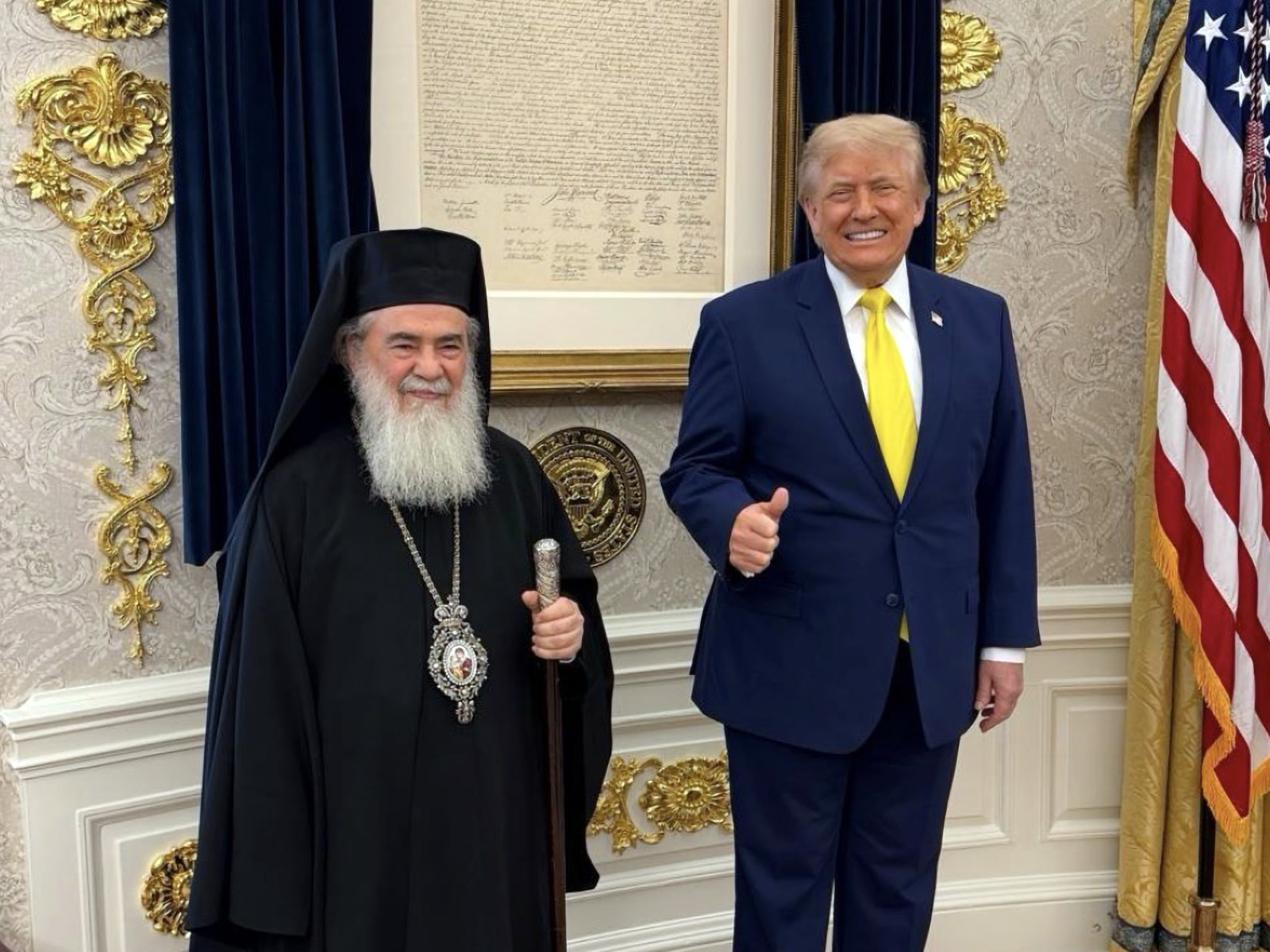
Patriarch Theophilos III of Jerusalem, left, meets with President Donald Trump at the White House in Washington, June 4, 2026. (Photo courtesy of Jerusalem Patriarchate)
Jonathan Kuttab, a Palestinian Christian and human rights lawyer, noted that despite the influence of Christian Zionism, anti-Christian sentiment — as something separate from anti-Palestinian or anti-Arab sentiment — is a growing problem in several sectors of Israeli society.
“There’s a very strong, almost gut level anti-Christian sentiment that is never acknowledged, but in some places and in some cases — like these days — it’s coming up to the surface,” Kuttab said, citing examples of ultra-Orthodox Jews spitting at nuns and priests and religiously motivated attacks against Christian villages, cemeteries and churches in the region.
“There is a very clear sentiment there, which is almost never addressed or expressed openly, unless, you know, you’re somebody crazy, like (Bezalel) Smotrich or (Itamar) Ben-Gvir who say it up front,” he said, referring to Israel’s finance and national security ministers, who both helm far right parties in the Knesset and have a history of defending sectarian attacks.
In April, an Israeli soldier smashed a statue of Jesus with a sledgehammer in southern Lebanon while another soldier photographed the act, resulting in their removal from combat service and prompting the Jewish state to appoint a special envoy to the Christian world. In May, a man chased, pushed down and kicked a French Catholic nun in Jerusalem.

An undated photo of an Israeli soldier smashing a statue of Jesus Christ with a sledgehammer in southern Lebanon. (Image via social media)
“We have witnessed incidents of harassment, acts of disrespect toward clergy and religious symbols, and growing concerns surrounding the preservation of Christian life and heritage in the city,” said Levon Kalaydjian, a Jerusalem Armenian Christian activist. “These are not abstract concerns; they affect the daily sense of dignity, belonging and safety of communities that have been rooted in Jerusalem for centuries.”
Rabbi Eugene Korn, the former academic director of the Center for Jewish-Christian Understanding and Cooperation, said the mentality has been growing in certain sectors, such as the ultra-Orthodox and religious Zionist communities.
“Problems that have gotten a lot of attention — and rightfully so — in Jerusalem, are kind of localized to Jerusalem, because you have these radicals and many of them are represented in the government and the government doesn’t take action against them,” Korn said.
Jerusalem’s many church bodies have faced legal pressures as well. The Jerusalem municipality froze the Greek Orthodox Church’s accounts last summer in a tax dispute that critics allege was an attempt to force the church to sell its prized land holdings. The Armenian Patriarchate of Jerusalem has similarly been embroiled in a long court battle to defend a portion of the Armenian quarter of Jerusalem’s Old City from being taken over by developers. The two patriarchates, and particularly the Greek Orthodox Church, are among the largest landholders in Israel, controlling large swaths of land far beyond historic churches and religious institutions. But the Jerusalem Patriarchate has also recently sold off properties — to the chagrin of its local Palestinian flock.
While the church’s flock is overwhelmingly Arabic-speaking Palestinian and Jordanian Christians, its leadership has for centuries been — almost invariably — transplants from Greece or Greek-speaking communities.
“The Greek Orthodox Church in Jerusalem has never reflected the sentiment of the Palestinian, the people in the pew,” Kuttab said.