



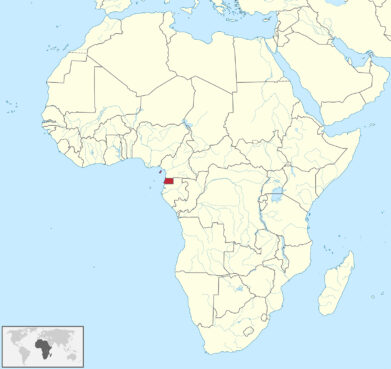
MALABO, Equatorial Guinea (RNS) — Pope Leo XIV arrived in Equatorial Guinea on Tuesday morning (April 21), greeted by cheering crowds and a Catholic Church that sees his visit as both a spiritual embrace and a moment for national reflection.
“This visit is like a sign that God has not forgotten His people,” said Malabo Archbishop Juan Nsue Edjang Mayé, ahead of the pope’s arrival. “It brings encouragement not only to Catholics, but to the whole nation, especially in times that call for unity and hope.”
The pontiff landed in Malabo after concluding his visit to Angola, marking the final leg of a multicountry African tour that has consistently emphasized peace, accountability and the moral responsibilities of leadership.
Observers say the pope’s visit comes at a sensitive moment in Equatorial Guinea, as growing economic pressures and long-standing governance concerns continue to shape daily life for many citizens. The Vatican has indicated that Pope Leo will address these issues during his visit.
Vatican spokesman Matteo Bruni said the pope is expected to speak about corruption, governance and the ethical responsibilities of leaders — themes that have defined his Africa tour.

His arrival comes at a time of mourning for the Catholic Church in the country, after the sudden death of the Rev. Fortunato Nsue Eson, vicar general of the Archdiocese of Malabo, who died Friday at the age of 39. Church leaders said the pope’s visit now carries an added spiritual weight as it coincides with a moment of collective grief.
The small oil-rich country on Africa’s west coast has a population of about 1.7 million people, according U.S. government estimates. Christianity is the dominant religion, with roughly 85% to 90% of the population identifying as Christian. Roman Catholics form the majority, while Protestant and Pentecostal communities make up smaller but growing groups. Muslims account for a small minority, alongside followers of Indigenous beliefs and other religions.
The country is defined by stark economic contrasts. The discovery of offshore oil in the mid-1990s transformed the economy, with petroleum accounting for nearly half of the country’s GDP and more than 90% of exports, according to the African Development Bank.
However, World Bank estimates that more than half of the population lives in poverty. Rights groups such as Human Rights Watch say oil revenues have largely enriched the ruling elite while leaving many citizens without access to basic services.
President Teodoro Obiang Nguema Mbasogo has ruled the country since he seized power in a 1979 coup, and he is widely accused of authoritarianism and corruption.
Leo is scheduled to meet with Obiang at the Presidential Palace and address government officials and members of the diplomatic corps. Observers said the pope faces a delicate task of encouraging the local Catholic Church and speaking on justice without appearing to legitimize an entrenched political system.

For decades, the church has played a central social as well as spiritual role in the country, and often walks a fine line between providing a prophetic voice and grappling with institutional survival.
The Rev. Sebastián Mba Nguema Mokuy, rector of the La Purísima seminary in Bata, Equatorial Guinea, said the pope’s presence “invites us to examine ourselves, as leaders and as citizens, and to ask whether we are truly serving justice, dignity and the common good.” Mokuy also said the visit offers an opportunity for renewal.
“It is a moment for the church to be strengthened,” he said, adding that the pope’s message is likely to challenge both leaders and ordinary citizens to live out their responsibilities with greater integrity and compassion.
Mayé also framed the visit as a moment of grace, describing it as “a gesture of closeness that renews faith and invites reconciliation.”
The pope’s arrival is also resonating beyond Catholic communities. The Rev. Manuel Ondo Owono, a Pentecostal pastor in Malabo, said the visit is a reminder that faith must confront social realities.
“The message is clear,” he said. “Faith must be visible in how people live, in justice, in fairness and in how leaders treat their people.”
Residents expressed both excitement and cautious hope.
“We are proud to welcome him,” said María Esono, a Malabo resident. “But people are also hoping this visit will shine a light on the struggles many families face every day.”
During his stay, Leo is expected to meet bishops, travel to the mainland cities of Bata and Mongomo — the president’s hometown — and celebrate Mass with thousands of faithful.
On Thursday, the final day of his visit, he will preside over a large public Mass at a stadium in Malabo before returning to Rome.
For many, the visit is more than a ceremonial moment, but a test of whether faith can inspire real change in a country where wealth and hardship exist side by side.
“People are listening carefully,” Owono said. “They want to hear words that speak to their lives and maybe words that can help change them.”