




(RNS) — Two days after a man allegedly stabbed a Muslim worker in a Utah mall at least 15 times, religious groups are warning of the effects of escalating anti-Muslim rhetoric.
“The hate crime is so abhorrent because it does not only affect the victim. It affects the whole Muslim community,” said Imam Shuaib Din, who leads the Utah Islamic Center in West Jordan, Utah.
The 48-year-old suspect told police he targeted the victim because of his religion and said he “intends to kill Muslims,” according to a probable cause statement.
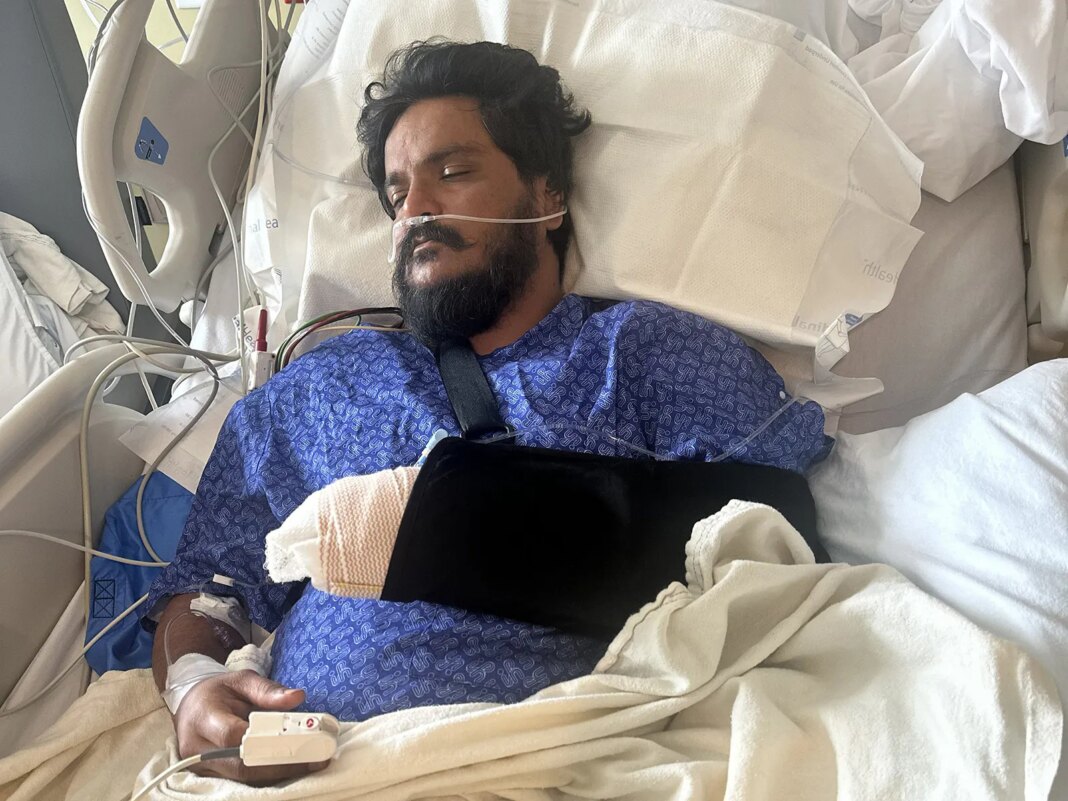
According to police records, Peter Michael Larsen approached Syed Sohail Uddin, a worker at a kiosk at the Valley Fair Mall near Salt Lake City, and asked him where he was from and what his religion was. Soon after, Larsen pulled out a knife and stabbed Uddin repeatedly. Court records and videos of the incident show bystanders punching and pinning down the suspect to get the knife from him.
Police said he posed a threat if released because of “his violent actions … ideologies and pre-planned mass casualty events. Larsen was held without bail at the Salt Lake County jail and charged with attempted murder and prohibited dangerous weapon conduct, jail and court records showed.
The Utah Muslim Civic League condemned the attack, calling it in a statement Tuesday a hate crime. The group praised bystanders who intervened, saying “their courage embodies the very best of our Utah community.”
Uddin is grateful he survived, said Din, who visited him at the hospital Tuesday. The husband and father of two will require multiple surgeries for his hands, heart and lungs, says a GoFund page me set up by his friend to help him pay medical expenses.
The Council on American Islamic Relations said in a statement that the stabbing is “a reminder that anti-Muslim rhetoric has real-world consequences.”
Less than 1% of Utah’s population is Muslim, according to Pew Research Center’s 2023-24 religious landscape study. Members of The Church of Jesus Christ of Latter-day Saints (LDS) make up 50% of the state’s population, the same study shows.
While data from the Utah Department of Public Safety shows there were seven hate crimes against Muslims in Utah from 2021-2026, hate crimes, in general, tend to be underreported, according to Liz Paige, associate director of the United Jewish Federation of Utah. As a member of the nonprofit Community Partners Against Hate, she works with officials and community leaders to improve reporting of hate crimes.
The stabbing follows several recent incidents targeting religious minorities in Utah. Last July, a Hindu temple in Utah was attacked three times, raising concerns about anti-Hindu violence. And in South Salt Lake, a man was charged with a hate crime for assaulting a woman wearing a hijab. A man who made anti-semitic threats online last year was also charged with multiple felonies, including for making pipe bombs at his home. And in 2023, another Utah man was charged with a hate crime for allegedly spitting on and yelling at a Muslim mother and her child.
“Unfortunately the rhetoric of the day has increasingly become hostile and normalized,” Paige said. “And when it becomes normalized, language can, and often has, led to violence.”
FBI crime data shows hate crimes across motivations doubled from 2015 to 2024. A poll conducted last year by the Institute for Social Policy and Understanding found that 63% of Muslim Americans said they experienced religious discrimination.
The Rev. Curtis Price, chair of the Salt Lake Interfaith Roundtable, said the stabbing and other recent hate incidents are jarring, especially because Utah has a thriving interfaith community that is generally welcoming of minority faith groups.
“We’re shocked and really taken aback and dismayed by it,” said Price, who is also pastor at First Baptist Church of Salt Lake City. He said the Roundtable and other interfaith groups have worked in recent years to counter hateful rhetoric.